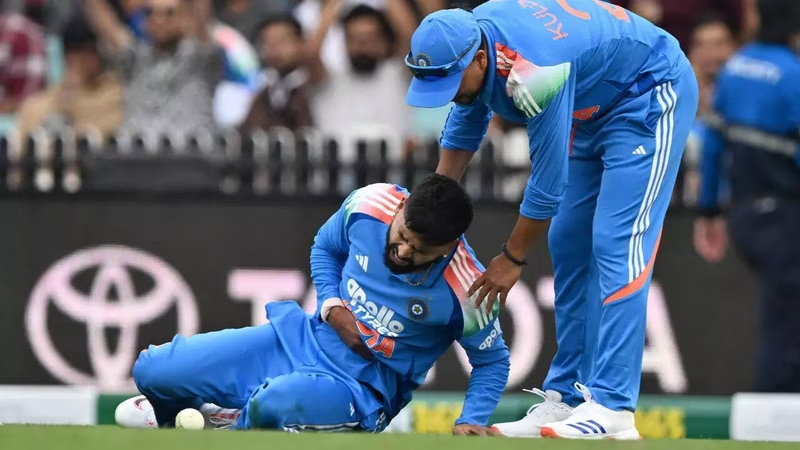
In a shocking and deeply concerning turn of events during India’s ODI tour of Australia, star batter Shreyas Iyer is currently fighting for his health in a Sydney intensive care unit. The 29-year-old suffered a severe internal injury—a splenic rupture with significant internal bleeding—following a sudden, violent fall while fielding in the third ODI at the Sydney Cricket Ground .
What initially appeared to be a routine dive quickly escalated into a medical emergency. Iyer collapsed on the field, his vitals dangerously low. Team medics and Australian paramedics rushed to his aid, and he was immediately transported to St. Vincent’s Hospital, where doctors confirmed the life-threatening nature of his condition.
Shreyas Iyer’s Critical Condition: What Happened?
According to medical sources close to the team, Iyer’s spleen—a vital organ located under the ribcage on the left side—ruptured due to blunt abdominal trauma during the fall. A splenic rupture can cause rapid, massive internal bleeding, leading to shock and organ failure if not treated within minutes.
“His blood pressure had plummeted, and he was showing signs of hypovolemic shock,” a senior team official revealed anonymously. “It was touch-and-go for a while. The quick response from both the BCCI medical staff and Sydney’s emergency services likely saved his life.”
Emergency interventions stabilized Iyer, but he remains in the ICU under constant monitoring. Doctors have advised at least 7–10 days of hospitalization, and his family has been flown in from India to be by his side.
A Scary Reminder of Cricket’s Hidden Risks
While cricket is often seen as a “gentleman’s game,” incidents like this underscore its physical dangers. Fielding at close-in positions—especially without protective gear for internal organs—exposes players to high-impact collisions. In Iyer’s case, the force of landing awkwardly on hard ground was enough to cause catastrophic internal damage.
This isn’t the first time such an injury has occurred. In 2019, Australian fast bowler Sean Abbott suffered a similar scare after a line drive struck his abdomen. Thankfully, both cases highlight the importance of on-ground medical preparedness—a standard now rigorously maintained in international cricket.
Team India’s Emotional Response
The entire Indian squad has been visibly shaken. Captain Rohit Sharma dedicated India’s series-clinching victory in Sydney to Iyer, saying, “This win is for Shreyas. We’re all praying for his full and speedy recovery.” Virat Kohli and head coach Gautam Gambhir visited the hospital daily, offering support to Iyer and his family .
The BCCI has assured full medical and financial support, and all focus has shifted from cricket to care. Iyer’s absence will be felt in the upcoming T20I series against Australia, but no one is thinking about replacements—only recovery.
Understanding Splenic Rupture: A Medical Breakdown
| Aspect | Details |
|---|---|
| Cause | Blunt trauma to the abdomen (e.g., hard fall, impact) |
| Symptoms | Severe left-side pain, dizziness, low BP, rapid heart rate, fainting |
| Treatment | Emergency surgery or non-operative management with strict bed rest |
| Recovery Time | 4–8 weeks minimum; return to sport requires full clearance |
For an elite athlete like Shreyas Iyer, recovery will be closely monitored. A premature return could risk re-bleeding—a potentially fatal complication.
Fan Outpouring and Global Support
Messages of support have flooded social media from fans, players, and legends alike. AB de Villiers, Steve Smith, and even rivals from Pakistan and England have sent prayers. The hashtag #GetWellShreyas has trended globally, a testament to Iyer’s popularity and the cricketing world’s unity in crisis.
As India prepares for its next challenge, the only scoreboard that matters right now is Shreyas Iyer’s vital signs. The nation—and the cricket fraternity—waits with hope.