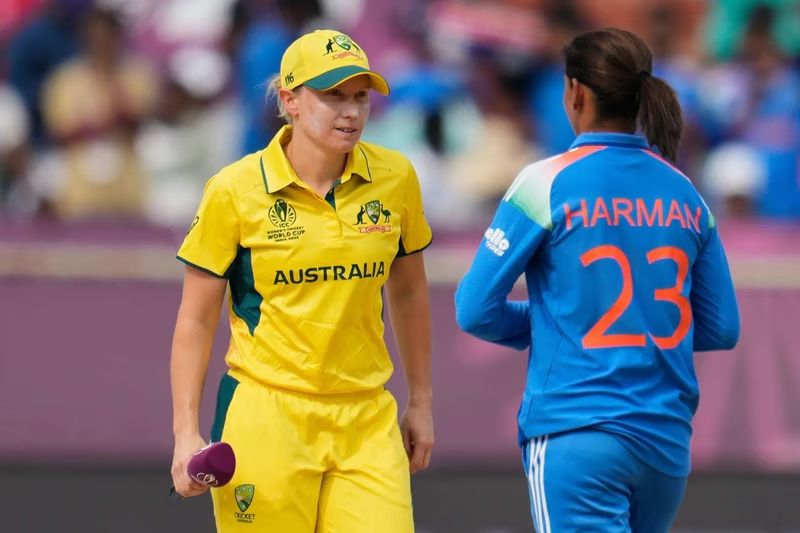
During the emotionally charged ICC Women’s Cricket World Cup 2025 semifinal between India and Australia, fans around the world noticed a solemn detail: every player on both teams wore a black armband. The gesture wasn’t part of a protest or team ritual—it was a heartfelt tribute to 17-year-old Ben Austin, a young cricketer whose life was tragically cut short after being struck by a cricket ball during a match in Australia.
Black Armbands Honor Fallen Teen Cricketer
The black armbands worn by India and Australia players served as a powerful symbol of unity, grief, and respect. Ben Austin, described by teammates as “passionate, humble, and full of promise,” collapsed on the field during a junior club game in New South Wales and later passed away in hospital. His death sent shockwaves through the global cricket community, prompting an outpouring of condolences from players, fans, and officials alike.
“Cricket is more than a game—it’s a family,” said Australian captain Alyssa Healy before the semifinal. “Today, we play with heavy hearts, but also with Ben’s spirit beside us.” Indian skipper Harmanpreet Kaur echoed the sentiment: “We wear this armband not just for Ben, but for every young player who dreams under the sun with a bat in hand.”
A Sport Confronting Its Risks
Ben Austin’s death has reignited conversations about player safety in cricket—particularly at the grassroots level. While elite players wear helmets, chest guards, and other protective gear, many junior and community leagues lack consistent safety protocols.
- Helmets: Mandatory in professional cricket, but not always enforced in youth matches.
- Coaching standards: Vary widely across regions; some volunteers lack formal first-aid training.
- Emergency response: Ambulances or medical personnel are not always present at local games.
Cricket Australia confirmed it is reviewing junior safety guidelines in the wake of the tragedy, while the BCCI has pledged to support global efforts to standardize youth cricket safety.
More Than a Match: A Moment of Shared Humanity
The semifinal itself was high-stakes—Australia won the toss and elected to bat first in what could be a World Cup–defining clash. Yet before the first ball was bowled, both teams gathered at the center of the pitch for a minute of silence. The crowd, usually roaring with partisan energy, stood in hushed reverence.
It was a rare moment where competition paused for compassion—a reminder that behind the stats, rankings, and rivalries are real people bound by a shared love of the game.
| Tribute Detail | Information |
|---|---|
| Name Honored | Ben Austin |
| Age | 17 |
| Incident | Struck by cricket ball during junior match in NSW, Australia |
| Tribute Worn | Black armbands by all players in IND vs AUS WC semifinal |
Global Cricket Mourns Together
From Lord’s to Eden Gardens, social media flooded with tributes using #PlayForBen. Former players like Sachin Tendulkar and Ricky Ponting posted messages urging better safety for young athletes. The ICC released a statement calling Ben’s death “a heartbreaking loss for the cricketing world.”
Even in the heat of a World Cup semifinal, the black armbands reminded everyone that cricket’s true legacy isn’t just in trophies—but in how it cares for its own.
What’s Next for Player Safety?
Advocates are now pushing for:
- Mandatory protective gear in all organized youth cricket
- Certified first-aid responders at every match
- Global safety standards endorsed by the ICC
As one coach in Sydney put it: “We can’t bring Ben back. But we can make sure his death leads to change.”
Sources
Times of India: IND vs AUS – Why Are India & Australia Players Wearing Black Armbands?