Table of Contents
- The Viral Moment: What Was Said and When
- What Does ‘Bauna’ Mean—and Why It Matters
- Fan Reactions: From Defense to Outrage
- Where’s the Line? Banter vs Sledging in Modern Cricket
- How This Compares to Past On-Field Controversies
- Did Bavuma React? The Captain’s Silence Speaks Volumes
- ICC Code of Conduct: Could There Be Fallout?
- Conclusion: A Teachable Moment for the Game
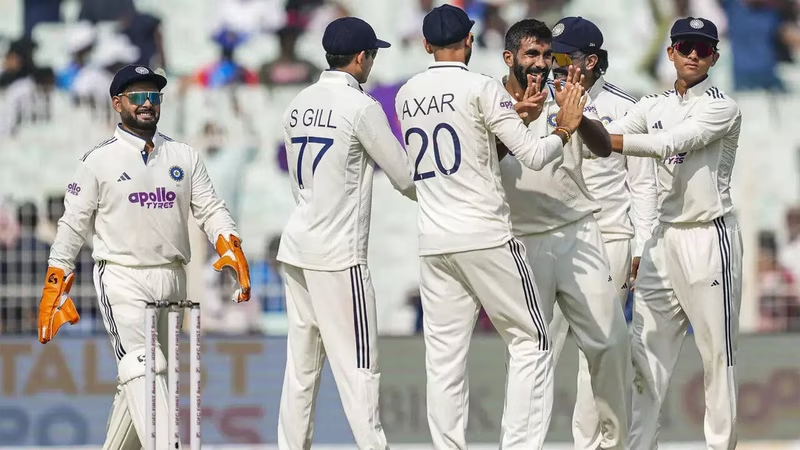
During an otherwise disciplined bowling spell by Jasprit Bumrah on Day 1 of the India vs South Africa 1st Test at Eden Gardens, a private conversation between Bumrah and wicketkeeper Rishabh Pant was accidentally broadcast to millions—thanks to the ever-present stump microphone. As the pair discussed a DRS review involving South African captain Temba Bavuma, one of them reportedly said, “Bauna hai, LBW hoga”—roughly translating to “He’s short; it’ll be LBW.”
The clip, quickly shared across social media, has since ignited a polarizing debate: was this harmless on-field chatter or a disrespectful jab at Bavuma’s height? The incident, now widely known as the Bumrah Pant Bavuma remark, has thrust the fine line between competitive banter and personal commentary back into the spotlight.
The Viral Moment: What Was Said and When
The exchange occurred in the 32nd over of South Africa’s innings. After Bumrah trapped Bavuma on the pads, the Indian team opted for a DRS review. As they awaited the decision, Pant turned to Bumrah and made the now-infamous comment. While it’s unclear whether Bumrah or Pant actually said “bauna,” both were seen smiling moments later when the not-out decision came through.
Crucially, the remark was made in Hindi—likely assuming it wouldn’t be understood by opponents or global viewers. But with real-time translation and social media amplification, the comment spread like wildfire within minutes .
What Does ‘Bauna’ Mean—and Why It Matters
In colloquial Hindi, “bauna” is an informal, often affectionate term for someone of short stature—similar to “shorty” in English. However, context is everything. When used among friends, it’s playful. When directed at an opponent during high-stakes competition, especially referencing a physical trait, it can easily be perceived as mocking.
Temba Bavuma stands at approximately 5’5”—shorter than the average international cricketer, but by no means unusual. His stature has never been a point of public discussion, making the remark feel unnecessary to many observers.
Fan Reactions: From Defense to Outrage
Online sentiment split dramatically:
- Supporters argued it was “just cricket talk” and not meant to insult. “Players say all sorts of things during reviews—it’s part of the game,” tweeted one fan.
- Critics called it “classless” and “a poor reflection of sportsmanship,” with some South African fans labeling it “disrespectful to a respected captain.”
- Neutral observers noted the irony: India, which has long championed “cricket with dignity,” now facing scrutiny over offhand comments.
Hashtags like #RespectBavuma and #JustBanter trended regionally, reflecting the cultural divide in interpretation.
Where’s the Line? Banter vs Sledging in Modern Cricket
The ICC distinguishes between “acceptable on-field communication” and “personal, offensive, or intimidating language.” According to its Code of Conduct, comments targeting physical characteristics—height, weight, skin color—are potential Level 1 offenses .
Historically, banter like “You’re nicking everything today” is tolerated. But references to immutable traits often cross the line. Former umpire Simon Taufel once said: “If it wouldn’t be okay in a boardroom, it shouldn’t be okay on the field.”
How This Compares to Past On-Field Controversies
This isn’t the first time mic’d-up moments caused waves:
- Virat Kohli–Babar Azam (2023): Kohli’s “How’s that?” barrage went viral but was deemed within limits.
- Ben Stokes–Carlos Brathwaite (2019): “You’ve just dropped the World Cup” became iconic—but targeted performance, not person.
- Shane Warne–Sachin Tendulkar (1999): Alleged “paan shop” remark (never confirmed) sparked a diplomatic row.
What makes the Bumrah Pant Bavuma remark unique is its casual, almost offhand nature—suggesting such language may be normalized in certain team cultures.
Did Bavuma React? The Captain’s Silence Speaks Volumes
As of Day 2, Temba Bavuma has not publicly addressed the incident. In post-day pressers, he focused on his team’s batting performance, saying only: “We’re here to play cricket, not react to noise.”
His restraint has been widely praised, with analysts noting it reflects his leadership ethos. “Bavuma chose dignity over drama,” wrote ESPNcricinfo’s Firdose Moonda [[INTERNAL_LINK:bavuma-leadership-style]].
ICC Code of Conduct: Could There Be Fallout?
While the remark was caught on mic, it’s unlikely to trigger formal action unless South Africa files a complaint. The match referee typically intervenes only if on-field officials report an issue or if language is deemed “abusive.”
Given the ambiguous tone and lack of malice, most experts believe this will remain a social media controversy rather than a disciplinary one.
Conclusion: A Teachable Moment for the Game
The Bumrah Pant Bavuma remark serves as a reminder: in the age of hyper-connectivity, every whisper can become a headline. While likely not intended as an insult, it underscores how casual language can be misconstrued—or rightly questioned—on the global stage.
As cricket becomes more inclusive and culturally diverse, players must remember that what sounds like harmless slang in the dressing room may land very differently outside it. Respect, after all, is the true hallmark of a champion.