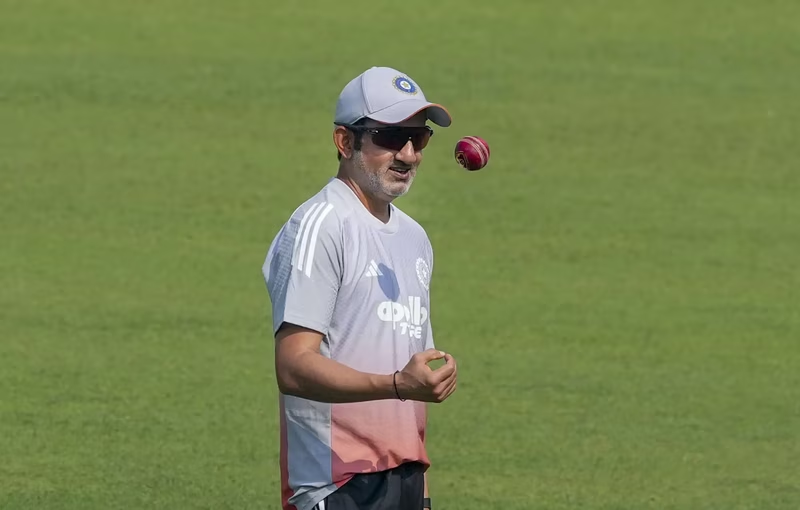
The dust hasn’t settled in Eden Gardens, but the cricketing world is already ablaze with debate. India’s shocking 30-run loss to South Africa in the first Test—played on a sharply turning track in Kolkata—has sparked a high-profile controversy over pitch selection. And at the center of it all? Newly appointed head coach Gautam Gambhir, who’s now being told to “go back” to the drawing board .
Table of Contents
- The Kolkata Defeat and the Pitch They Played On
- Wasim Jaffer’s Advice to Gautam Gambhir
- Global and Domestic Reactions to the Pitch
- Gambhir Defends the Decision
- The Evolution of Indian Test Pitches
- What’s Next for IND vs SA Series?
- Conclusion
- Sources
The Kolkata Defeat and the Pitch They Played On
In a stunning reversal of fortunes, India—historically dominant at home—collapsed against a disciplined South African side on a pitch that offered extreme turn from Day 1. The surface, prepared at Eden Gardens, saw 38 wickets fall in just four days. While spin is India’s traditional weapon, this track bordered on unplayable, even for the home batters .
India’s famed middle order, including Virat Kohli and Shreyas Iyer, struggled to negotiate the sharp, inconsistent bounce. The result? A rare home defeat that has left fans and experts questioning the very philosophy behind the pitch preparation for the IND vs SA series opener.
Wasim Jaffer’s Advice to Gautam Gambhir
Former Indian opener Wasim Jaffer didn’t mince words in his post-match analysis. On social media, he directly addressed head coach Gautam Gambhir, advising: “Go back to… traditional Indian pitches.”
Jaffer’s point was clear: while spin-friendly tracks are part of India’s home advantage, they should still allow for a contest between bat and ball over five days—not become a lottery on Day 2. His message resonated with many who felt the pitch undermined the quality of the contest and, ironically, hurt India more than it helped.
Global and Domestic Reactions to the Pitch
Jaffer wasn’t alone. The criticism came from all corners:
- Michael Vaughan (Former England captain): Called the pitch “a disgrace” on commentary, arguing it offered no value to the long-term development of Test cricket.
- Anil Kumble (Former India captain & spin legend): Expressed concern that such surfaces discourage batting and reduce viewer engagement, despite his own mastery on turning tracks.
- Harsha Bhogle (Veteran commentator): Noted that while spin is India’s strength, “a pitch should test skill, not just survival.”
Even South African players admitted the surface was “extreme,” though they capitalized on it brilliantly with Keshav Maharaj and Nandre Burger sharing 18 wickets between them.
Gambhir Defends the Decision
Facing mounting pressure, Gautam Gambhir stood his ground. In the post-match press conference, he revealed a crucial detail: the pitch was prepared “as per the team’s request” .
“We wanted a surface that gives our spinners the best chance to perform,” Gambhir stated. “This is our home advantage, and we have to use it.” His argument hinges on the belief that India’s batting lineup—stacked with players experienced in domestic red-ball cricket on similar tracks—should be able to handle such conditions better than the visitors.
However, the collapse suggests a miscalculation. This raises a key question for our [INTERNAL_LINK:Analysis] team: Is the current Indian batting unit truly equipped for these extreme conditions, or has the game evolved beyond them?
The Evolution of Indian Test Pitches
Historically, Indian pitches have offered turn, but not to this degree. In the 1970s–1990s, tracks in Chennai, Mumbai, and Delhi provided slow, low turn that tested patience over days—not just hours. Since the 2010s, pitches have become more variable, often designed for quick results.
A 2023 ICC report noted that India now produces the highest percentage of pitches rated “excessive” in terms of seam or spin movement among all Test nations. While this has yielded short-term wins, critics argue it’s a self-defeating strategy that hinders the development of resilient batting techniques needed for overseas tours.
What’s Next for IND vs SA Series?
With the second Test in Guwahati just days away, all eyes are on pitch curator Ranjit Singh and the BCCI. Will they prepare another extreme spinner, doubling down on Gambhir’s strategy? Or will they heed the calls from Jaffer, Kumble, and global voices and offer a more balanced surface?
For fans of the IND vs SA rivalry, the next pitch decision may be as pivotal as any batting or bowling performance.
Conclusion
The fallout from India’s defeat in the first IND vs SA Test is about more than just one loss—it’s a philosophical crossroads for Indian cricket. Wasim Jaffer’s call for a return to “traditional” pitches isn’t nostalgia; it’s a plea for pitches that reward skill, endurance, and strategy over chaos. As Gautam Gambhir navigates his first major crisis as coach, the choice of surface in Guwahati could define not just the series, but the future direction of Indian Test cricket.