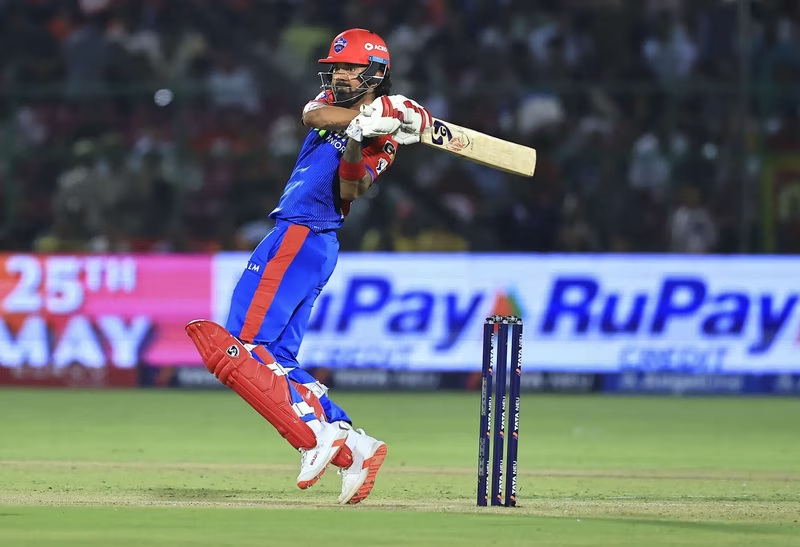
KL Rahul’s Honest Confession: Why IPL Captaincy Broke Him
In a rare and revealing admission, star Indian batter **KL Rahul** has opened up about the hidden toll of leading an IPL franchise—and it’s not the on-field pressure that got to him. Instead, it was the endless meetings, performance reviews, and constant questioning from team owners—many of whom, he says, “lack deep cricket insight”—that left him “mentally and physically drained” after every season .
Now playing for Delhi Capitals as a pure batter, Rahul has officially stepped down from captaincy duties across all franchises, marking a significant shift in his career. His candid take on **KL Rahul IPL captaincy** challenges the glamorous perception of T20 leadership and exposes a growing tension between sporting expertise and commercial oversight in modern cricket.
Table of Contents
- Why IPL Captaincy Is More Than Just Cricket
- “Giving Reviews to Owners”: Rahul’s Breaking Point
- IPL vs International Captaincy: A Surprising Comparison
- The Rise of Owner Involvement in Team Decisions
- Who Really Benefits From This Model?
- The Growing Concern for Player Wellbeing
- Conclusion: A Wake-Up Call for the IPL
- Sources
Why IPL Captaincy Is More Than Just Cricket
Unlike international captaincy—where decisions are largely made in consultation with selectors, coaches, and support staff—IPL skippers often answer to a different hierarchy: the franchise owners. These are high-net-worth individuals, celebrities, or corporate entities whose primary lens is often business, branding, and ROI, not cricketing nuance.
As Rahul revealed, this dynamic creates a unique pressure: “You’re not just managing 10 players. You’re explaining every tactical call—over 20 times—to people who watched one over and already have an opinion.”
“Giving Reviews to Owners”: Rahul’s Breaking Point
The phrase that went viral from Rahul’s interview was stark: “**The toughest part is giving reviews to owners.**” He elaborated that post-match debriefs often stretch for hours, with owners asking why a certain bowler wasn’t used in the 17th over or why a young player wasn’t promoted up the order—questions that ignore match context, pitch data, or player form.
“In international cricket, you’re judged on results over a series. In the IPL, you’re judged after every ball,” he said, highlighting the hyper-reactive culture fostered by social media and owner impatience .
IPL vs International Captaincy: A Surprising Comparison
Most fans assume leading India is the pinnacle of pressure. But Rahul insists the opposite is true:
- International captaincy has clear structures, experienced support staff, and long-term planning.
- IPL captaincy involves navigating ego, commercial agendas, and short-termism.
“Leading India is about legacy. Leading an IPL team sometimes feels like managing a reality show,” he quipped—though his tone was more weary than humorous .
The Rise of Owner Involvement in Team Decisions
Over the past decade, IPL franchises have become increasingly hands-on. While early seasons saw owners like Preity Zinta or Shah Rukh Khan as figureheads, today’s investors often sit in on strategy sessions, influence auction bids, and even suggest team compositions.
This trend has sparked debate. As cricket analyst Harsha Bhogle noted on a recent podcast, “When commercial instincts override technical judgment, the game suffers” .
Who Really Benefits From This Model?
Three groups are impacted:
- Players: Increased stress, blurred accountability, and mental fatigue (as Rahul experienced).
- Coaches: Reduced autonomy; forced to justify every call to non-experts.
- Fans: Teams may prioritize “marketable” players over tactically sound ones.
For deeper insights into leadership dynamics, see our piece on IPL vs international cricket leadership.
The Growing Concern for Player Wellbeing
Rahul’s exit from captaincy isn’t isolated. Other stars like Rohit Sharma and David Warner have also scaled back T20 leadership roles in recent years, citing burnout. The IPL’s short, high-intensity format—combined with off-field demands—creates a perfect storm for mental exhaustion.
With players already juggling international duty, leagues, and endorsements, adding bureaucratic oversight may be unsustainable long-term.
Conclusion: A Wake-Up Call for the IPL
**KL Rahul IPL captaincy** fatigue is a symptom of a larger issue: the blurring line between sport and spectacle. While the IPL’s commercial success is undeniable, Rahul’s experience suggests it’s time to rethink how leadership is structured. Perhaps it’s time for franchises to trust their captains—and their coaches—as true experts, not just performers for the boardroom.