Table of Contents
- Babar Azam’s Uncharacteristic Moment of Frustration
- What Is a Code of Conduct Breach in ICC Terms?
- The Incident That Triggered the ICC Penalty
- ICC’s Sanctions: Fine and Demerit Point Explained
- Babar’s Disciplinary Record Over the Years
- How This Affects His Standing as Pakistan Captain
- Broader Implications for Player Conduct in Modern Cricket
- Conclusion
- Sources
Babar Azam’s Uncharacteristic Moment of Frustration
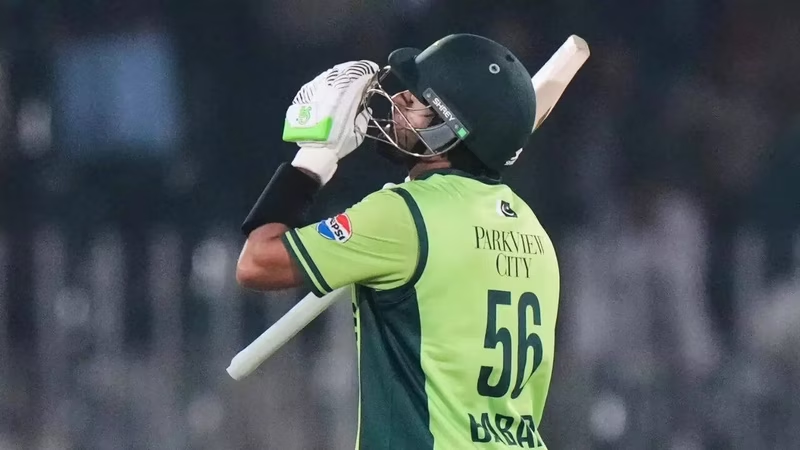
Pakistan captain **Babar Azam**, widely admired for his calm demeanor and sportsmanship, found himself in rare controversy during the third ODI against Sri Lanka. Following his dismissal, he vented his frustration by striking the stumps with his bat—an act deemed a **Code of Conduct breach** by the International Cricket Council (ICC) .
The ICC swiftly acted, imposing a **10% match fee fine** and awarding him one demerit point under Level 1 of its Code of Conduct regulations. While seemingly minor, this incident marks Babar’s first disciplinary offense in two years and has sparked debate about pressure, accountability, and emotional control in elite cricket.
What Is a Code of Conduct Breach in ICC Terms?
The ICC’s Code of Conduct is a framework designed to uphold the spirit of the game, ensuring players maintain respect for opponents, officials, and the sport itself. Breaches are categorized into four levels, with Level 1 being the least severe.
According to the ICC’s official Code of Conduct documentation, a Level 1 offense includes “showing serious dissent at an umpire’s decision” or “inappropriate physical contact with equipment in frustration”—which directly applies to Babar’s action of hitting the stumps .
Such infractions typically result in fines (5–50% of match fee) and/or demerit points, which remain on a player’s record for 24 months.
The Incident That Triggered the ICC Penalty
The moment occurred during Pakistan’s innings in the third ODI of the series. After being dismissed cheaply—reportedly caught behind off a delivery from Sri Lanka’s Dunith Wellalage—Babar, visibly upset, walked off the pitch and, in a moment of frustration, swung his bat into the base of the stumps.
While no damage was done and the gesture lasted less than two seconds, on-field umpires deemed it a breach of conduct. The match referee, Jeff Crowe, reviewed footage and confirmed the charge under Article 2.2.9 of the ICC Code: “Inappropriate and deliberate physical contact with equipment.”
ICC’s Sanctions: Fine and Demerit Point Explained
The penalties may seem light, but they carry symbolic weight:
- 10% match fee fine: A standard penalty for Level 1 offenses, serving as a financial and reputational nudge.
- One demerit point: Accumulating four demerit points within 24 months escalates to a suspension. Babar now has one on his record until November 2027.
Notably, Babar admitted the offense and accepted the sanction, waiving his right to a formal hearing—a gesture that likely mitigated further scrutiny.
Babar’s Disciplinary Record Over the Years
Babar Azam has largely maintained a clean disciplinary slate. His last—and only other—demerit point came in **2023** during a T20I against Afghanistan for a similar minor equipment-related outburst .
This contrasts sharply with some of his contemporaries, who have faced multiple sanctions for verbal altercations, dissent, or aggressive conduct. Babar’s reputation as a composed leader makes this incident stand out, underscoring how even elite athletes aren’t immune to moments of emotional lapse.
How This Affects His Standing as Pakistan Captain
As captain, Babar is held to a higher standard. The Pakistan Cricket Board (PCB) emphasizes leadership by example, especially during a transitional phase for the national team.
While this single incident is unlikely to trigger any official reprimand from the PCB, it does offer a teachable moment. Captains like MS Dhoni, Kane Williamson, and Dimuth Karunaratne have built legacies not just on runs, but on unflappable temperament—something Babar will aim to reinforce moving forward.
Broader Implications for Player Conduct in Modern Cricket
In an era of high-stakes cricket, social media scrutiny, and relentless pressure, emotional regulation is as crucial as technical skill. The ICC’s consistent enforcement of its Code—regardless of player stature—signals that **sportsmanship remains non-negotiable**.
Recent cases involving players like Jasprit Bumrah (2024, for dissent) and Quinton de Kock (2021, for refusing to take a knee) show that even fleeting actions can have lasting consequences. As noted by cricket ethicist Dr. Sarah Taylor in a ESPNcricinfo commentary, “Elite sport is a public stage—every gesture is amplified” .
Conclusion
Babar Azam’s **Code of Conduct breach** serves as a reminder that excellence on the field must be matched by discipline off it. While the 10% fine and demerit point are minor penalties, they underscore the ICC’s commitment to preserving cricket’s integrity. For Babar, it’s a rare blemish on an otherwise exemplary record—and a motivation to lead with even greater composure in future contests.