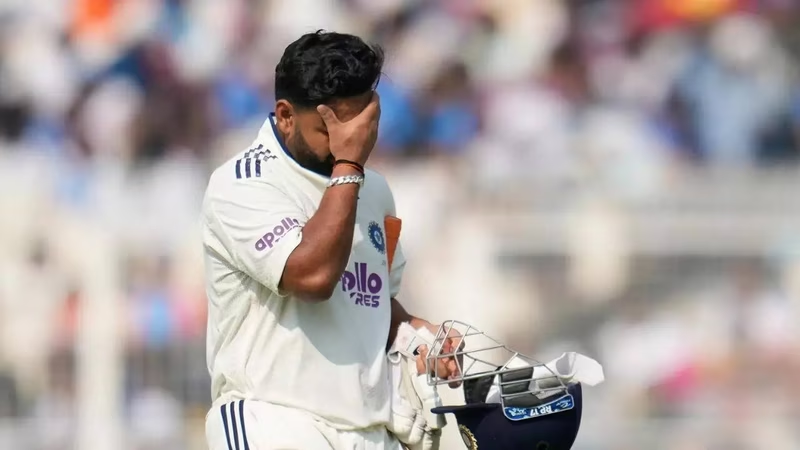
Historic Low: All 4 Innings Under 200 in Kolkata Test
Eden Gardens, a fortress for Indian cricket for decades, witnessed a performance for the record books—but for all the wrong reasons. In a match that will be remembered for its astonishing lack of runs, the first Test between India and South Africa delivered a historic first: all four innings concluded with a team being bowled out for less than 200 runs . This unprecedented Kolkata Test record not only shattered expectations but also handed South Africa a monumental, series-opening 30-run victory on Indian soil—a feat they haven’t achieved since 2019.
The match was a stark exhibition of high-quality bowling meeting fragile batting, with the absence of Indian captain Shubman Gill due to a neck spasm adding to the hosts’ woes. The resulting collapse has sent shockwaves through Indian cricket, prompting soul-searching from legends and fans alike.
Table of Contents
- The Historic Scorecard: A Record for the Ages
- How the Kolkata Test Record Unfolded
- The Gill Factor: Missing the Captain
- South Africa’s Spin Masters: The Architects of Collapse
- India’s Batting Failures: A Deeper Look
- Broader Implications for Indian Test Cricket
- Conclusion: A Wake-Up Call at Eden’s
- Sources
The Historic Scorecard: A Record for the Ages
The numbers tell the entire story of this extraordinary, low-scoring affair. The final innings totals were:
- South Africa 1st Innings: 153 all out
- India 1st Innings: 93 all out (their lowest at home since 2017)
- South Africa 2nd Innings: 183 all out
- India 2nd Innings: 196 all out
This is the first time in the 92-year history of Test cricket in India that all four innings of a match have been completed with sub-200 totals . It’s a statistical anomaly that underscores just how bowler-dominated and pressure-filled the contest was. For context, the previous lowest aggregate for all four innings in a Test in India was 793 runs; this match totaled just 625.
How the Kolkata Test Record Unfolded
The stage was set from the very first session. South Africa, batting first on a pitch that offered early turn, was bundled out for a modest 153. India’s batting unit, however, produced an even more meek response, collapsing to a paltry 93 in just 31.1 overs. This gave the visitors a crucial 60-run lead.
South Africa’s second innings showed more fight, with a 56-run partnership between David Miller and Kyle Verreynne pushing them to 183. This set India a target of 244—a manageable chase in theory, but one that proved insurmountable under the intense pressure created by a world-class spin attack on a wearing pitch.
The Gill Factor: Missing the Captain
A major subplot to this historic collapse was the absence of Shubman Gill. The Indian captain was stretchered off on Day 2 after facing just three balls due to a severe neck spasm . His injury not only cost India their best top-order batter but also their on-field leader at a critical juncture. The makeshift leadership and the psychological blow of losing their captain visibly rattled the Indian dressing room, contributing to their inability to chase a target they would have expected to chase comfortably.
South Africa’s Spin Masters: The Architects of Collapse
The true heroes of the match were South Africa’s spin duo: Keshav Maharaj and Aiden Markram. On a pitch that turned square from the outset, they were relentless.
- Keshav Maharaj: The left-arm spinner was the chief destroyer, finishing with match figures of 8/121. His ability to extract sharp turn and bounce made him unplayable at times.
- Aiden Markram: The part-time off-spinner, often used as a partnership breaker, was incredibly effective, claiming 6 wickets in the match. His control and subtle variations tied the Indian batters in knots.
Together, they proved that in the right conditions, spin remains a potent weapon, even for a team not traditionally known for its spin strength.
India’s Batting Failures: A Deeper Look
Beyond the missing captain, India’s batting displayed a concerning lack of application and technique against quality spin. Key players like Yashasvi Jaiswal, KL Rahul, and the middle order failed to show the necessary resilience. The batters appeared tentative, often playing away from their body or going for expansive shots on a pitch that demanded patience and respect.
This fragility has been a recurring theme in recent Indian batting performances and raises serious questions about their preparation and mindset, a concern echoed by legends like Sunil Gavaskar and Cheteshwar Pujara in the aftermath .
Broader Implications for Indian Test Cricket
This loss is more than just a single Test defeat. It signifies a potential shift in the balance of power in home conditions. India’s aura of invincibility at home has been punctured. With a crucial second Test in Guwahati next, the pressure on the team and new head coach Gautam Gambhir is immense. They must address the technical and mental frailties exposed in Kolkata or risk losing their first home series in over a decade.
Conclusion: A Wake-Up Call at Eden’s
The Kolkata Test record of all four innings falling under 200 runs is a stark, historic reminder that no team, regardless of its home record, is immune to collapse. For India, this match is a brutal wake-up call. It highlights the fine line between dominance and vulnerability in Test cricket and underscores the need for a return to the core principles of patience, technique, and mental fortitude that once made Eden Gardens an impenetrable fortress.
Sources
- Times of India: “First-ever in India! India, SA bowled out under 200 in all four innings at Eden” [[2], [5]]
- Match scorecard and ball-by-ball commentary from ESPNcricinfo.
- Reports on Shubman Gill’s injury from reputable news outlets .
- Post-match analysis and commentary from cricketing legends like Sunil Gavaskar and Cheteshwar Pujara .