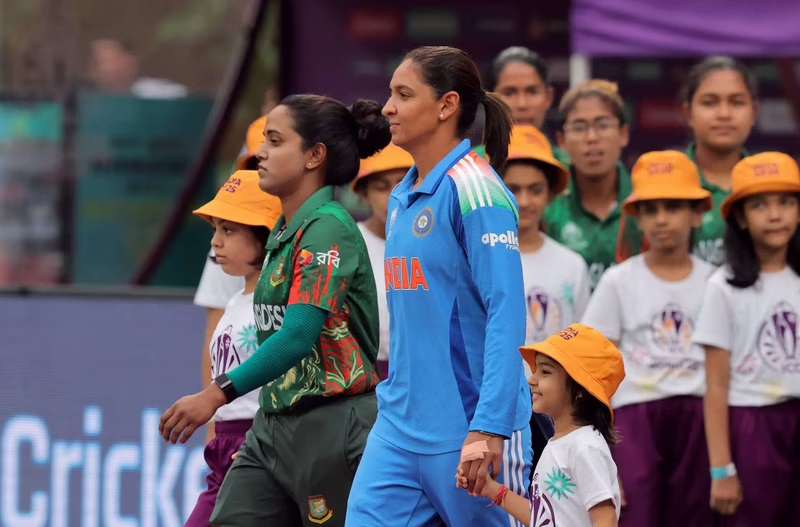
The world of women’s cricket has been rocked by serious allegations—and an even more explosive response. Bangladesh captain Nigar Sultana Joty has categorically denied claims of physically assaulting junior teammates, calling them “baseless” and “politically motivated.” But what’s truly ignited the controversy is her sharp, rhetorical question directed at one of the sport’s biggest stars: “Am I Harmanpreet?”
Table of Contents
- The Allegations Emerge
- Sultana’s Fiery Denial and the Harmanpreet Dig
- Context Behind the Complaints
- Harmanpreet’s Past On-Field Outburst
- Broader Implications for Women’s Cricket
- Conclusion: A Crisis of Trust and Leadership?
- Sources
The Allegations Emerge
Reports surfaced last week alleging that Nigar Sultana, the long-standing captain of the Bangladesh women’s cricket team, had engaged in physical altercations with younger players during a recent domestic camp. The accusations, which sent shockwaves through the cricketing community, were reportedly submitted to a former national player now based overseas—a detail Sultana herself found suspicious.
“If there were genuine grievances, why go to someone living abroad instead of reporting to the Bangladesh Cricket Board (BCB) directly?” Sultana questioned during a press briefing, casting doubt on the credibility and intent behind the complaints .
Sultana’s Fiery Denial and the Harmanpreet Dig
In her most forceful statement to date, Sultana not only denied ever harming a teammate but also invoked the name of Indian captain Harmanpreet Kaur to challenge the narrative. “Am I Harmanpreet?” she asked pointedly—a clear reference to a well-documented on-field incident involving the Indian skipper.
This rhetorical jab was both defensive and provocative. By drawing a parallel, Sultana appeared to suggest that emotional or intense behavior on the cricket field is not unique to her—and that such actions are often misinterpreted or unfairly singled out, especially when coming from a leader in a high-pressure environment.
Key Points from Sultana’s Statement
- She has “never assaulted or physically harmed any player in my life.”
- She finds it “strange” that complaints were sent to a former player outside the country.
- She questioned the timing and motives, implying a potential effort to destabilize her captaincy.
- Her reference to Harmanpreet was a direct challenge to double standards in how female captains are judged.
Context Behind the Complaints
While the specifics of the alleged incidents remain under investigation, sources close to the BCB suggest internal tensions have been brewing within the Bangladesh women’s setup. Issues reportedly include training discipline, team selection, and communication styles.
Cricket in Bangladesh is fiercely competitive, and national team spots are highly coveted. This environment can breed resentment, especially when a captain like Sultana—who has led the team through its most successful period, including a historic T20 World Cup quarterfinal appearance—holds significant influence over team dynamics .
Harmanpreet’s Past On-Field Outburst
To understand Sultana’s dig, one must revisit an incident from the 2022 Women’s T20 World Cup. During a high-stakes match against Pakistan, Harmanpreet Kaur was seen in a heated verbal exchange with a teammate, followed by a visible outburst that included kicking the pitch and gesturing angrily. The moment went viral, sparking debate about leadership and emotional control.
While Harmanpreet later clarified it was “passion, not anger,” the image stuck. Sultana’s reference seems to highlight a perceived hypocrisy: while Indian captains’ intensity is often framed as “leadership,” similar behavior from others—especially from smaller cricketing nations—may be labeled as “abuse.”
For a deeper look at leadership pressures in women’s cricket, the ICC’s official resources on player conduct and team management offer valuable context .
Broader Implications for Women’s Cricket
This controversy touches on larger issues facing the women’s game globally:
- Accountability vs. Scapegoating: How do we distinguish between legitimate misconduct and internal team politics weaponized against a leader?
- Double Standards: Are captains from Associate nations held to different standards than those from Full Members like India, Australia, or England?
- Mental Health & Pressure: The immense pressure on captains in emerging cricket nations is rarely discussed, yet it can manifest in ways misread as aggression.
- Governance Gaps: The fact that complaints went outside official channels points to a lack of trust in local boards—a systemic issue across many cricketing nations.
This situation also underscores the urgent need for transparent grievance redressal mechanisms within national boards, especially for women’s teams that often operate with fewer resources and less institutional support .
Conclusion: A Crisis of Trust and Leadership?
The Nigar Sultana assault denial saga is more than just a personal defense—it’s a flashpoint for deeper conversations about equity, leadership, and due process in women’s cricket. While the truth behind the allegations must be independently verified, Sultana’s bold reference to Harmanpreet Kaur has successfully shifted the narrative toward a critical question: Are we applying the same lens to all captains, regardless of nationality or stature?
As the BCB investigates, the cricketing world watches closely. One thing is certain: the outcome will set a precedent for how future conflicts within women’s teams are handled—and whether the sport can move toward a more just and consistent standard of accountability.