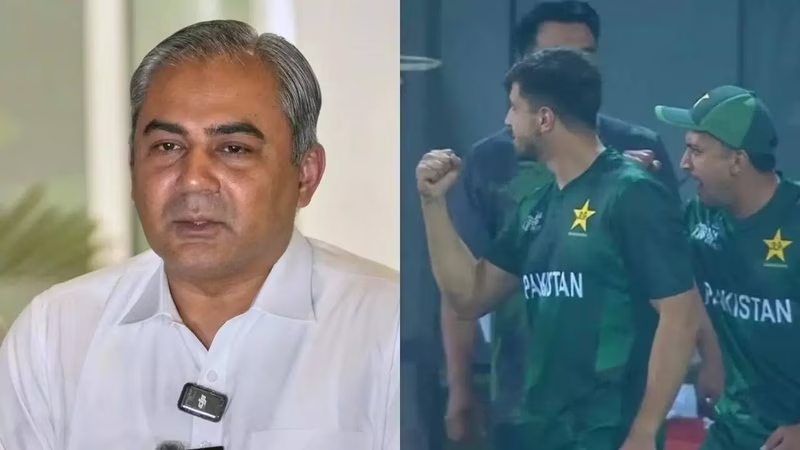
In a performance that blended clinical precision with youthful exuberance, the Pakistan Shaheens dismantled India A by eight wickets in the Rising Stars Asia Cup, storming into the semi-finals and igniting fresh optimism across the nation’s cricketing landscape. The victory—sealed with more than 12 overs to spare—wasn’t just another win on the scoreboard; it was a statement of intent from Pakistan’s next generation of stars.
And no one was more ecstatic than PCB Chairman Mohsin Naqvi. “The future of Pakistan is shining bright,” he declared in a jubilant social media post, capturing the mood of a cricket-crazy nation hungry for consistent success. This Pakistan Shaheens victory comes hot on the heels of the senior team’s clean sweep against Sri Lanka in the ODI series—a rare double that signals a potential renaissance in Pakistan cricket.
Table of Contents
- Match Summary: Pakistan Shaheens Dominate
- India A’s Batting Collapse: What Went Wrong?
- Pakistan Shaheens Victory: Key Performers
- Mohsin Naqvi and the New PCB Vision
- What This Means for Pakistan’s Cricket Future
- Conclusion: A Glimmer of a Golden Generation?
- Sources
Match Summary: Pakistan Shaheens Dominate
Chasing a modest target of 136, the Pakistan Shaheens made light work of the Indian bowling attack. Openers laid a solid foundation, and the middle order cruised to victory without breaking a sweat. The match was effectively over by the 38th over, underscoring the gulf in composure and execution on the day.
Earlier, India A had been bowled out for just 135 in 44.1 overs—a total that never looked competitive on a decent batting surface. The collapse, which saw the last seven wickets fall for a mere 52 runs, handed Pakistan the psychological upper hand before a ball was even bowled in the chase.
India A’s Batting Collapse: What Went Wrong?
India A’s innings started promisingly, but a mid-innings wobble turned into a full-blown crisis. Top-order batters failed to convert starts, while the lower-middle order crumbled under disciplined spin and accurate seam bowling from the Shaheens.
Key Issues in India A’s Batting
- Lack of partnerships: No pair added more than 30 runs for any wicket.
- Poor shot selection: Several wickets fell to loose strokes against quality spin.
- Pressure handling: The team seemed rattled after losing quick wickets, failing to regroup.
This performance raises questions about the depth and temperament of India’s next-tier talent—a concern worth monitoring as the senior team relies heavily on a core group of veterans.
Pakistan Shaheens Victory: Key Performers
The Pakistan Shaheens victory was built on collective excellence, but a few standouts deserve special mention:
- Mohammad Ali: His incisive opening spell broke the backbone of India A’s top order.
- Ghulam Murtaza: A tidy off-spinner who picked up crucial middle-order wickets.
- Awais Ali: Anchored the chase with a composed, unbeaten half-century.
- Arham Nawab: Provided the perfect foil with aggressive strokeplay early in the innings.
This blend of patience and aggression is exactly what modern cricket demands—and what Pakistan has often struggled to find in its developmental squads—until now.
Mohsin Naqvi and the New PCB Vision
Since taking over as PCB chairman, Mohsin Naqvi—an influential politician and media baron—has prioritized youth development and administrative stability. His “Project Renaissance” aims to rebuild Pakistan cricket from the grassroots up, with a strong emphasis on domestic structure and A-team exposure.
This Pakistan Shaheens victory is being hailed as early validation of that strategy. Naqvi’s public praise isn’t just celebratory—it’s strategic messaging. By spotlighting young talent, he’s building public trust in a system long criticized for inconsistency and short-term thinking.
Naqvi’s comments also come amid a broader resurgence: the senior ODI team’s 3-0 whitewash of Sri Lanka showcased a new-look lineup with fresh faces like Saim Ayub and Fakhar Zaman returning to form. The synergy between senior and emerging squads is finally aligning—a crucial step for sustained success.
What This Means for Pakistan’s Cricket Future
Historically, Pakistan has produced explosive talent but struggled with consistency and temperament at the international level. The current crop, however, appears different—more disciplined, better prepared, and playing with a sense of purpose.
The Rising Stars Asia Cup (a tournament featuring U-23 and A teams from Asian nations) serves as a critical bridge between domestic cricket and the international arena. Success here often translates to future Test and ODI caps. Players like Qasim Akram and Arshad Nadeem have already graduated from similar setups.
For more on how emerging tournaments shape international careers, the ICC’s development pathway documentation offers valuable insights into the global talent pipeline .
If this trend continues, Pakistan could be on the cusp of its most stable—and successful—era since the late 2000s.
Conclusion: A Glimmer of a Golden Generation?
The Pakistan Shaheens victory over India A is more than just a tournament win—it’s a symbol of systemic progress, smart leadership, and raw talent finally being nurtured effectively. While one match doesn’t define a generation, the manner of the win, the poise under pressure, and the all-round performance suggest something special may be brewing in Pakistan cricket.
As Mohsin Naqvi rightly noted, the future *is* shining bright. Now, the real test will be whether PCB can maintain this momentum, protect these young players from political interference, and give them the platform to flourish on the global stage. For now, Pakistan cricket fans have every reason to dream.