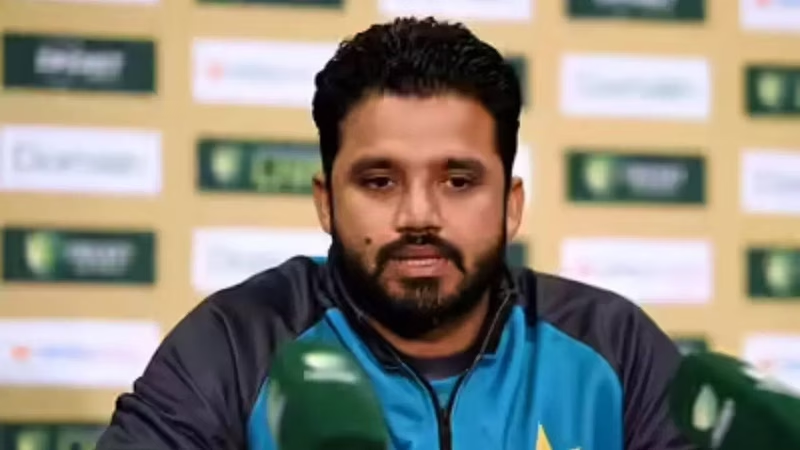
The Pakistan Cricket Board (PCB) is once again in the eye of a storm, but this time the crisis is self-inflicted. In a move that has sent shockwaves through the cricketing world, former Test captain Azhar Ali resigns PCB roles with immediate effect. His departure from the national selection committee and as Head of Youth Development is more than just a resignation—it’s a stark indictment of the board’s current operational chaos.
Table of Contents
- Why Azhar Ali Resigns from PCB: The Real Reason
- The Sarfaraz Ahmed Factor: A Power Shift?
- What This Means for Pakistan Youth Cricket
- A History of Turmoil in PCB Leadership
- What’s Next for Azhar Ali and the PCB?
- Conclusion
- Sources
Why Azhar Ali Resigns from PCB: The Real Reason
Azhar Ali’s resignation was not a spur-of-the-moment decision. According to multiple reports, the former captain had been growing increasingly frustrated with the board’s internal decision-making processes and a perceived lack of support for his proposals . His dual roles were meant to bridge the gap between the senior national team and the future pipeline of talent, a vision that appears to have been derailed from within.
The core issue, as insiders reveal, was a fundamental clash in vision and a feeling of being sidelined. His proposals for youth development were reportedly not being advanced, leading to a prolonged period of simmering differences . This isn’t just about administrative red tape; it’s about a systemic failure to value experienced, homegrown cricket minds like Azhar Ali.
The Sarfaraz Ahmed Factor: A Power Shift?
The final straw appears to have been the PCB’s decision to appoint former captain Sarfaraz Ahmed as the Director for both the Pakistan Shaheens (A-team) and the Under-19 squads . In this new role, Sarfaraz was given full authority to oversee coaches, manage tours, and supervise all cricketing activities for these crucial development teams .
For Azhar Ali, who was the Head of Youth Development at the National Cricket Academy, this move effectively nullified his authority and created a significant role overlap. He was left in a position where his strategic vision for youth cricket was being executed—or potentially ignored—by someone else with a different mandate. This power shift was reportedly the primary catalyst for his departure .
Key Details of Sarfaraz Ahmed’s New Role
The PCB’s restructuring placed immense responsibility on Sarfaraz Ahmed’s shoulders. His new position is not just a coaching job; it’s a directorial role with broad oversight.
- Scope: Full charge of Pakistan Shaheens and Under-19 teams .
- Responsibilities: Supervising all coaches, managing international tours, and overseeing training sessions .
- Rationale: The PCB is banking on Sarfaraz’s experience as a former captain to instill a winning culture in the younger squads .
What This Means for Pakistan Youth Cricket
This internal power struggle has direct consequences for the future of Pakistan cricket. A clear, consistent, and expert-led development pathway is essential for producing world-class talent. With Azhar Ali, a respected figure known for his technical acumen and calm demeanor, now out of the picture, there’s a vacuum in the strategic planning for the next generation.
While Sarfaraz Ahmed brings passion and a strong on-field record, his appointment in this manner has created an environment of uncertainty. The lack of a unified vision between the national team selection and the youth setup could lead to disjointed player development. This is a critical moment for Pakistan cricket, which has already had a tumultuous 2024, with some calling it a candidate for the team’s worst year in history .
A History of Turmoil in PCB Leadership
The Azhar Ali resigns PCB saga is just the latest chapter in a long history of instability. The board has been notorious for frequent leadership changes, political interference, and abrupt policy reversals. From removing Shaheen Shah Afridi as white-ball captain only to reinstate Babar Azam for the T20 World Cup , to appointing and then restructuring roles for directors of cricket , the PCB has struggled to maintain a consistent course.
This constant churn erodes trust, not just among players and staff but also among fans and sponsors. It creates an environment where long-term planning is impossible, and short-term, reactive decisions become the norm.
What’s Next for Azhar Ali and the PCB?
For Azhar Ali, his future in an official cricketing capacity with the PCB seems uncertain. His resignation is a powerful statement, and it’s unlikely he will return under the current administration. He may focus on his domestic career, commentary, or even explore opportunities with other cricketing nations or leagues.
For the PCB, the path forward is fraught with challenges. They must now find a way to restore credibility and reassure other experts who might be considering service to their country. They need to publicly address the reasons for this fallout and present a clear, unified plan for both the senior team and the youth academies. Failure to do so will only deepen the crisis in Pakistan cricket.
Conclusion
The resignation of Azhar Ali is far more than a personnel change. It is a symptom of a deeper, more systemic crisis within the Pakistan Cricket Board. His departure, driven by frustration over internal processes and a significant power shift to Sarfaraz Ahmed, highlights a lack of strategic coherence and respect for its own experts. For a team already grappling with on-field failures, this off-field chaos is a dangerous distraction that threatens the very future of Pakistan cricket. The PCB’s next moves will be crucial in determining whether they can stem this tide of discontent or continue down a path of self-destruction.