Cricket is a game of patience, endurance, and narrative arcs that unfold over days—not just a couple of sprints. Yet, in today’s hyper-commercialized cricket calendar, even marquee contests like **India vs South Africa** are being squeezed into just two Tests. And both captains are fed up.
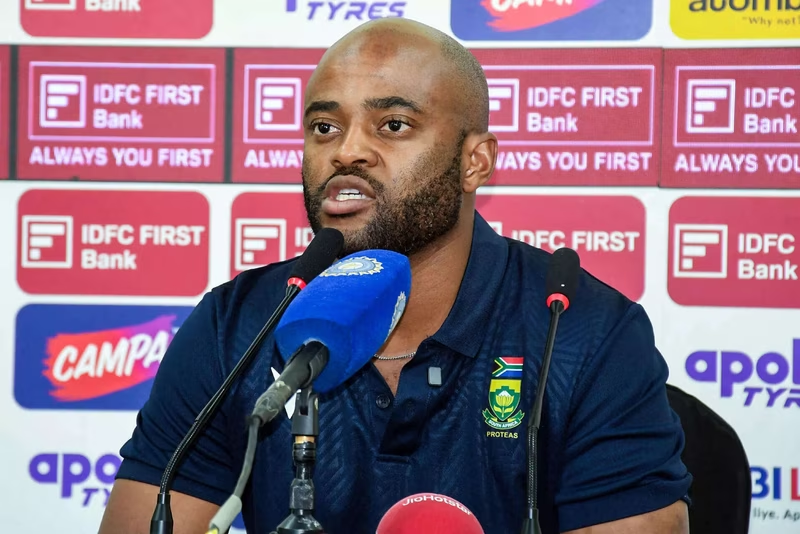
Speaking ahead of the crucial second Test in Guwahati, **South African skipper Temba Bavuma** didn’t mince words: “Two Tests? It’s just too short.” His frustration was echoed by India’s stand-in captain **Rishabh Pant**, who admitted the compressed format adds immense pressure and leaves little room for recovery or storytelling—the very soul of Test cricket .
This shared sentiment isn’t just about personal preference. It’s a growing chorus among players, purists, and fans who fear that the essence of Test cricket is being eroded in favor of shorter, flashier formats. With that in mind, let’s unpack why the **two-Test series** model is drawing criticism—and what the future might hold.
Table of Contents
- Why Two Tests Fall Short
- What Bavuma and Pant Actually Said
- The Business Behind the Short Series
- Historical Context: India-SA Series Length
- Is There Hope for Longer Series?
- Conclusion: Preserve the Spirit of Test Cricket
- Sources
Why Two Tests Fall Short
A **two-Test series** might seem efficient, but it fundamentally undermines the spirit of Test cricket. Here’s why:
- No Room for Comebacks: Lose the first Test? You’re already on the brink. There’s no time to regroup, adapt, or build momentum.
- Reduced Tactical Depth: Captains can’t experiment with lineups or strategies. Every decision becomes high-risk, stifling creativity.
- Diminished Narrative: Cricket thrives on drama that builds over matches—rivalries, redemption arcs, and turning points. Two games rarely deliver that.
In contrast, traditional three- or five-match series allow teams to evolve, learn from mistakes, and showcase true resilience—qualities that define great Test sides.
What Bavuma and Pant Actually Said
During a joint press conference in Guwahati, **Temba Bavuma** laid it bare: “When you play a team of India’s caliber, you want a proper contest. Two games don’t do justice to the history, the rivalry, or the players.” He added that longer series “test character, not just skill” .
**Rishabh Pant**, leading India in his debut Test as captain, nodded in agreement: “It’s stressful. One bad session can cost you the series. In a three- or four-match series, you have space to bounce back. That’s the beauty of Test cricket.”
Notably, both captains emphasized that their criticism isn’t about avoiding tough competition—it’s about preserving the integrity and richness of the format. Their candid remarks reflect a rare alignment between rival leaders, underscoring how widespread this concern truly is.
The Business Behind the Short Series
So why are marquee bilateral series being reduced to just two Tests? The answer lies in the economics of modern cricket.
With the IPL, SA20, The Hundred, and international T20 commitments crowding the calendar, boards like the BCCI and CSA are under pressure to maximize revenue while minimizing player workloads. Longer Test series are seen as less commercially viable—fewer broadcast windows, lower ticket sales predictability, and higher injury risks .
As a result, only high-value rivalries like **India vs Australia** or **England vs Australia (The Ashes)** still enjoy five-Test formats. Everyone else gets the short end of the stick—even historic contests like **India vs South Africa**.
For deeper insights into how the cricket calendar is reshaping the sport, see our analysis on [INTERNAL_LINK:analysis/future-of-test-cricket].
Historical Context: India-SA Series Length
This isn’t the first time India and South Africa have played a two-Test series—but it’s becoming the norm. Consider this:
| Year | Series Length | Host |
|---|---|---|
| 2019 | 3 Tests | India |
| 2021–22 | 3 Tests | South Africa |
| 2023–24 | 2 Tests | South Africa |
| 2025 | 2 Tests | India |
The trend is clear: a slow but steady shift toward shorter series. Cricket South Africa (CSA) and the BCCI may cite logistical and financial constraints, but fans and players alike miss the depth that longer contests provide.
Is There Hope for Longer Series?
Possibly—but it will require collective action. The ICC has already floated proposals to protect Test cricket, including a dedicated “Test Championship window” and financial incentives for boards that host longer series .
Moreover, player advocacy is growing. Voices like Bavuma’s and Pant’s add weight to the argument. If enough captains, past legends, and fans speak up, boards may reconsider. After all, **Test cricket’s survival** depends not just on marquee events like the Ashes, but on meaningful contests across all major nations.
Conclusion: Preserve the Spirit of Test Cricket
The frustration from **Temba Bavuma** and **Rishabh Pant** over the **two-Test series** format isn’t just a momentary gripe—it’s a wake-up call. Test cricket is more than a sport; it’s a cultural institution that rewards patience, strategy, and resilience. Squeezing it into two matches for convenience does a disservice to players, fans, and the game itself.
As the Guwahati Test begins, let’s hope this match isn’t just about avoiding a whitewash—but also about reigniting a conversation that could shape the future of the longest format. Because without longer series, Test cricket risks becoming a relic rather than a living, breathing spectacle.
Sources
- Times of India: Two Tests, Too Short
- ICC – Protecting Test Cricket: Official Statement
- ESPNcricinfo – India vs South Africa Series History
- Player quotes and context from TOI and BCCI press briefings .