Table of Contents
- A Classic Art Returns
- Kuldeep Yadav’s Day 1 Masterclass
- Why Wrist-Spin is Rare in Modern Test Cricket
- The Guwahati Pitch and Its Role
- What This Means for the Test
- Conclusion
- Sources
A Classic Art Returns
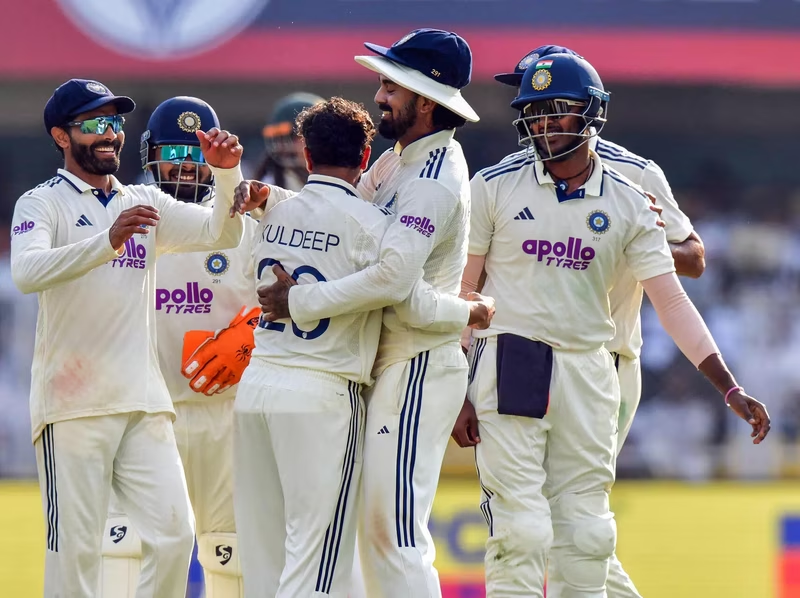
There’s something deeply nostalgic about the sound of a cricket ball fizzing off a red-soil pitch, its trajectory altered by the subtle, deceptive flick of a wrist. For decades, this art of wrist-spin has been a rare sight in Indian Test cricket, overshadowed by the metronomic accuracy of finger spinners. But on Day 1 of the second Test against South Africa in Guwahati, the ghosts of the past were summoned in the most electrifying way. Kuldeep Yadav didn’t just take wickets; he delivered a powerful reminder of a classic, almost forgotten, craft.
Kuldeep Yadav’s Day 1 Masterclass
After South Africa won the toss and elected to bat, they looked set for a commanding day. However, a disciplined Indian bowling attack, led by the mercurial Kuldeep Yadav, had other plans. Kuldeep finished the day with a stunning figure of 3 wickets for just 48 runs in his 16.5 overs, ripping through the heart of the Proteas’ middle order .
His spell was a clinic in wrist-spin bowling. He extracted sharp, unexpected turn from a surface that many expected to be placid, and his ability to drift the ball in the air before it spat off the pitch left the South African batsmen in a constant state of doubt. His victims included key players like Wiaan Mulder, showcasing his ability to deliver in high-pressure situations .
This performance wasn’t just about the numbers; it was about the quality of the wickets and the control he exerted. On a day where runs were scored at a healthy clip, Kuldeep’s economy rate was a miserly 2.87, underlining his exceptional control and guile .
The Supporting Cast
While Kuldeep was the star, he wasn’t alone. The ever-reliable Jasprit Bumrah chipped in with crucial breakthroughs, and Mohammed Siraj’s late wicket provided a perfect bookend to the day’s play, leaving South Africa at a precarious 247/6 at stumps . This collective effort ensured the match remains perfectly poised, a true testament to India’s bowling depth.
Why Wrist-Spin is Rare in Modern Test Cricket
The magic of Kuldeep Yadav’s performance is amplified by its rarity. In the modern era, wrist-spinners have become an endangered species in the longest format. The demands of T20 cricket have created a new breed of wrist-spinners, but their skills are often tailored for flight and variation in the shorter game, not the relentless patience and subtle control required in Tests .
Historically, India has been a land of legendary finger-spinners—Bedi, Prasanna, Kumble, and Harbhajan. True wrist-spinners like Kuldeep have had to carve out a unique niche. His success in Guwahati, where he now has a formidable record of 57 wickets in 13 home Tests at an average of just 21.60, proves that the art can not only survive but thrive .
The Guwahati Pitch and Its Role
A key factor in Kuldeep’s success was the red-soil pitch at the Barsapara Stadium. While it provided a good batting surface early on, it also offered enough assistance to the spinners as the day progressed—just the kind of subtle help a wrist-spinner like Kuldeep needs to be at his devastating best . This perfect balance is what made the day so compelling; it was a true test of skill for both bat and ball.
What This Means for the Test
South Africa’s total of 247/6 is far from insurmountable. Crucially, they lost four wickets in the final session of the day, a collapse masterminded by India’s spinners and seamers . This late fightback has given India a significant psychological and strategic advantage heading into Day 2.
For India, it’s a chance to build on this momentum. If the top order can capitalize on the platform Kuldeep and the bowlers have provided, they can seize complete control of the match. For South Africa, the task is clear: they must add quick runs to their total and then find a way to counter Kuldeep’s magic in the second innings.
For fans of the game, this Test is a gift. It’s a reminder that Test cricket, at its best, is a beautiful, complex, and deeply strategic contest. And on this day, Kuldeep Yadav was its most brilliant artist.
Conclusion
Kuldeep Yadav’s performance on Day 1 of the Guwahati Test was more than just a good bowling spell; it was a cultural moment for Indian cricket. He breathed life back into the art of wrist-spin, a skill that had been largely absent from the home Test scene. His figures of 3/48 have not only given India a crucial edge in the match but have also reignited a passion for a classic, deceptive, and utterly captivating form of bowling. As the Test unfolds, all eyes will be on Kuldeep to see if he can weave his magic once more.
Want more in-depth analysis of India’s bowling strategy? Check out our guide to [INTERNAL_LINK:indian-spin-bowling-history].
Sources
- “Kuldeep Yadav’s 3-48 restricts South Africa to 247-6 on 1st day of India’s 2nd Test vs SA.” Associated Press, as cited in various news reports .
- “India vs South Africa Highlights, 2nd Test Day 1: Kuldeep Yadav (3/48) led India’s fightback.” Times of India .
- “2nd Test: Kuldeep picks three as persistent India reduced South Africa to 247/6.” PTI .
- “IND Vs SA 2nd Test: Kuldeep Yadav Shines With Three Wickets On Day 1.” Cricbuzz .
- “In 13 Tests that the left-arm wrist spinner has played in India, he has taken 57 wickets at a terrific average of 21.60.” ESPNcricinfo .
- “On a surface that offered little natural assistance to spinners, Kuldeep’s performance underlined why India continues to trust him.” The Hindu .
- “IND vs SA Cricket Scorecard, 2nd Test at Guwahati.” ESPNcricinfo .
- “Where have all the wristspinners gone in Test cricket?” The Cricket Monthly .