Table of Contents
- The Dramatic Moment: “Give me 2 minutes!”
- What is the Follow-On Rule in Test Cricket?
- Why Bavuma Declined the Follow-On: A Deep Dive
- India’s Fighting Spirit: Sundar and Kuldeep Shine
- Jansen’s Dominant Performance: The Wrecking Ball
- Historical Context: Is This a New Trend?
- Conclusion: A Calculated Gamble for a Decisive Win
- Sources
The cricket world was on the edge of its seat during the 2nd Test between India and South Africa in Guwahati. After bowling India out for a paltry 201 in their first innings, South Africa found themselves with a commanding 288-run lead. The stage was set for captain Temba Bavuma to enforce the follow-on—a classic move to keep the pressure on and potentially secure a quick victory. But what happened next was a masterclass in modern, calculated captaincy.
The Dramatic Moment: “Give me 2 minutes!”
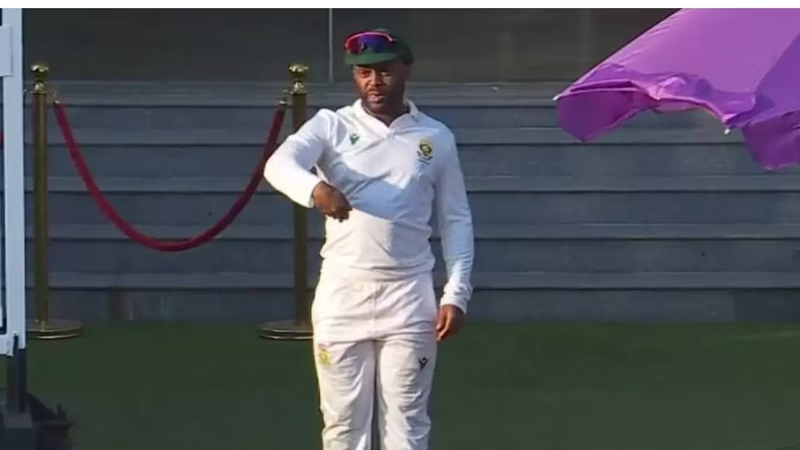
In a scene that felt ripped from a movie script, Bavuma, after consulting his teammates, suddenly dashed back to the dressing room, asking the umpires for a brief two-minute break. The reason? To take a crucial phone call—likely from his team management or a senior advisor—to weigh his options carefully . This moment of pause, this deliberate break from convention, signaled that a significant decision was brewing. Ultimately, he emerged to announce that South Africa would not be enforcing the follow-on.
What is the Follow-On Rule in Test Cricket?
For the uninitiated, the follow-on is a strategic option available in two-innings matches of five days or more. According to the official Laws of Cricket, “the side which bats first and leads by at least 200 runs shall have the option to require the other side to follow their innings immediately” . This rule is designed to prevent unnecessary time-wasting and to potentially force a result in a drawn-out contest.
Why Bavuma Declined the Follow-On: A Deep Dive
So, why would a captain pass up such a seemingly obvious advantage? Bavuma’s decision was likely driven by several shrewd tactical considerations:
- Fatigue Management: His bowlers, especially the star performer Marco Jansen, had just toiled for over 80 overs to bowl out India. Giving them a rest and allowing the batting unit to face the new ball from India’s fresh bowlers would keep them fresh for a decisive fourth-innings charge.
- Wearing Down a Tiring Pitch: By batting again, South Africa could further deteriorate the pitch, creating more variable bounce and turn that would heavily favor their spinners, Simon Harmer and Keshav Maharaj, in India’s second innings.
- Building an Unassailable Lead: A second innings for the Proteas could push their lead to well over 400 runs, making India’s task of saving the match virtually impossible. It’s a move aimed at a comprehensive, not just a probable, victory.
India’s Fighting Spirit: Sundar and Kuldeep Shine
While India’s top order crumbled, the match wasn’t without its moments of resistance. A crucial 52-run partnership between Washington Sundar and Kuldeep Yadav provided a late glimmer of hope . This defiant stand, though ultimately not enough to save India from a huge deficit, showcased their fighting spirit and prevented an even more embarrassing collapse .
Jansen’s Dominant Performance: The Wrecking Ball
The story of India’s first innings was undeniably written by South African all-rounder Marco Jansen. His spell of 6 wickets for just 48 runs in 19.5 overs was nothing short of devastating . He was the primary architect of India’s batting meltdown, cleaning up the middle and lower order with ease. His performance not only gave South Africa their massive lead but also cemented his status as a genuine match-winner on foreign soil.
Historical Context: Is This a New Trend?
Bavuma’s call echoes a growing trend in modern Test cricket. Captains are increasingly prioritizing their team’s physical condition and the state of the pitch over the traditional advantage of the follow-on. In the first Test of the same series, a similar situation arose where the follow-on was also a viable option but not taken . This shift reflects a more data-driven and player-centric approach to the game’s oldest format.
For more on Test cricket strategies, check out our analysis on [INTERNAL_LINK:test_cricket_tactics].
Conclusion: A Calculated Gamble for a Decisive Win
Temba Bavuma’s decision not to enforce the follow-on was far from a sign of weakness. It was a cold, calculated gamble rooted in modern sporting logic. By prioritizing his bowlers’ fitness and seeking to exploit a wearing pitch, he has set his team up for a potential series-sealing victory in Guwahati. It’s a bold captaincy call that has reignited the debate on the best way to win a Test match in the 21st century.