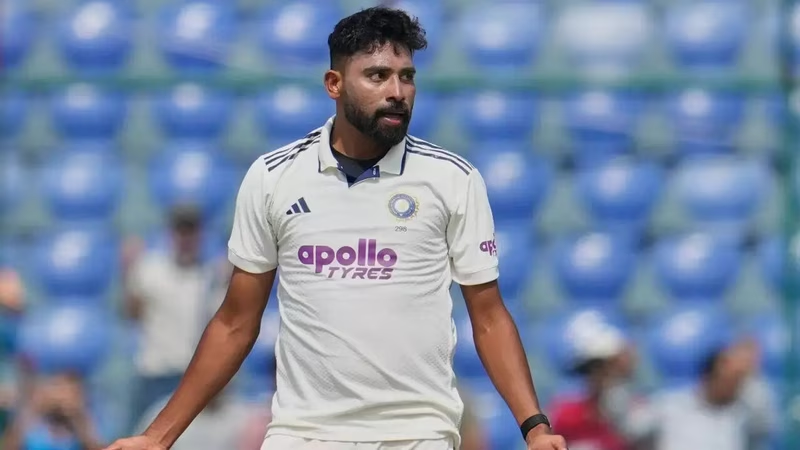
Mohammed Siraj Slams Air India Over Guwahati Stranding
Indian fast bowler Mohammed Siraj has publicly called out Air India Express after a distressing travel ordeal left him stranded in Guwahati for hours with no clear communication or assistance. Describing it as the “worst airline experience” of his life, Siraj’s frustration has resonated with countless air travelers in India who’ve faced similar disruptions—especially during peak travel seasons or amid operational chaos .
The incident, which occurred on a recent domestic flight from Guwahati to Hyderabad, has sparked a fresh debate about passenger rights, airline accountability, and the treatment of even high-profile individuals in India’s often unpredictable aviation sector. While Air India Express has since issued a formal apology, the episode highlights recurring systemic issues that go beyond a single cancellation.
Table of Contents
- What Happened to Mohammed Siraj in Guwahati?
- Mohammed Siraj Air India: The Public Outcry
- Air India Express Response and Apology
- Why This Case Matters Beyond One Cricketer
- Your Rights as an Air Passenger in India
- How Common Are Such Issues in Indian Aviation?
- Conclusion
- Sources
What Happened to Mohammed Siraj in Guwahati?
According to Siraj’s account, he arrived at Lokpriya Gopinath Bordoloi International Airport in Guwahati on schedule for his Air India Express flight to Hyderabad. However, after hours of waiting, passengers were abruptly informed that the flight had been cancelled due to “unforeseen operational reasons.”
What made the situation worse was the complete lack of proactive communication. Siraj reported that airline staff provided no updates, alternative arrangements, or even basic amenities during the prolonged delay. “No one told us anything. We were just left sitting there,” he said in a now-viral social media post .
For an international cricketer on a tight schedule—potentially returning for national camp, recovery, or personal commitments—such uncertainty is not just inconvenient; it’s professionally disruptive.
Mohammed Siraj Air India: The Public Outcry
Siraj’s candid post quickly went viral, with fans and fellow travelers sharing their own horror stories with Indian airlines. The phrase “Mohammed Siraj Air India” became a trending topic, reflecting widespread frustration with inconsistent service standards.
What made this incident particularly striking was that it involved a national sports star—a figure usually accorded VIP treatment. If even someone like Siraj could be left stranded without recourse, ordinary passengers felt, their chances of fair treatment were even slimmer.
Air India Express Response and Apology
Facing mounting criticism, Air India Express issued a public apology within 24 hours. In a statement, the airline acknowledged the inconvenience and cited “unforeseen operational reasons” for the cancellation—a common but often vague justification used across the industry .
The airline assured that affected passengers, including Siraj, were “provided with necessary assistance,” though the cricketer’s initial complaint suggests this support was either delayed or inadequate. The apology, while welcome, has done little to address the deeper issues of transparency and real-time passenger support.
Why This Case Matters Beyond One Cricketer
This isn’t just about one delayed flight—it’s a microcosm of larger challenges in India’s domestic aviation ecosystem:
- Lack of real-time communication: Passengers often learn about cancellations from airport screens, not staff.
- Inadequate rebooking protocols: Many airlines fail to automatically rebook passengers on next available flights.
- Weak enforcement of DGCA guidelines: The Directorate General of Civil Aviation has clear rules on compensation and care, but compliance is spotty .
Your Rights as an Air Passenger in India
According to DGCA regulations, if your flight is cancelled:
- You’re entitled to a full refund or free rebooking.
- For delays over 2 hours, airlines must provide meals and refreshments.
- If the delay exceeds 24 hours, free hotel accommodation must be arranged.
Yet, many passengers—including Siraj—report that these rights are rarely communicated or enforced without persistent follow-up.
How Common Are Such Issues in Indian Aviation?
Flight disruptions are increasingly common in India due to factors like:
- Aircraft shortages (especially post-pandemic)
- Staffing gaps among pilots and cabin crew
- Air traffic congestion at major hubs
- Weather and technical issues
While some disruptions are unavoidable, the handling of them—particularly communication and passenger care—is where most airlines fall short. For fans tracking [INTERNAL_LINK:Players] like Siraj, such incidents also raise concerns about athlete welfare during off-field travel.
Conclusion
The Mohammed Siraj Air India incident is more than a celebrity travel complaint—it’s a wake-up call for India’s aviation industry. In an era where customer experience defines brand loyalty, airlines must move beyond boilerplate apologies and implement real-time support systems, clear communication channels, and proactive rebooking. Siraj’s voice amplified a problem millions face silently. Now, it’s on carriers like Air India Express to ensure “unforeseen operational reasons” don’t become an excuse for poor passenger care.
Sources
- Times of India: ‘Worst experience’: Siraj slams Air India after being stranded in Guwahati
- DGCA Passenger Charter: https://www.dgca.gov.in/
- [INTERNAL_LINK:Indian cricket team travel protocols]