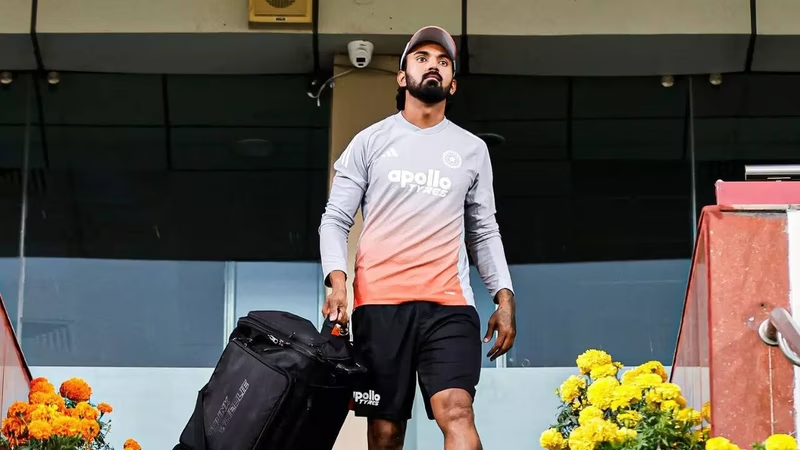
India’s recent outing in South Africa has brought a long-simmering problem to a full, uncomfortable boil: the India spin crisis. It’s not just about the bowlers; it’s about the batters’ increasing vulnerability against high-quality spin. And stand-in captain KL Rahul, thrust into a leadership role during a turbulent phase, has been left without easy answers.
Table of Contents
- Rahul’s Candid Admission on the Spin Struggle
- A Pattern, Not an Anomaly
- Why India Is Struggling Against Spin
- Kohli’s Masterclass in Strike Rotation
- The Path Forward for Indian Batting
- Conclusion: No Quick Fix, But a Clear Roadmap
- Sources
Rahul’s Candid Admission on the Spin Struggle
Faced with direct questions about India’s batting frailties, KL Rahul’s response was refreshingly honest, if not a little bleak. “I cannot give you a definitive answer. I can only say that we have not been able to play spinners well,” he admitted . This stark acknowledgment from the captain himself underscores the depth of the problem. He further emphasized that the team is fully aware of the issue, stating, “Yes, we have not been able to play spin that well for a series or two. We know it, we acknowledge it” .
Rahul was quick to temper expectations of an overnight solution. “It won’t change overnight. We’ll look at what improvements we need and hopefully by the time…” he trailed off, a clear sign that the road to recovery will be a process, not a single fix . This is a critical moment for Indian cricket, where a leader is forced to confront a systemic weakness in the batting unit.
A Pattern, Not an Anomaly
The struggles against spin in South Africa are not an isolated incident. They are the latest chapter in a worrying trend. Data shows a dramatic decline in India’s home performance against spin. From a formidable average of 53.30 against spin from 2016 to 2019, it has plummeted to a mere 27.60 since October 2024 . This isn’t just about failing in foreign conditions; it’s a crisis that has taken root on familiar soil.
Even in a recent ODI series in Colombo, where pitches were expected to be batting-friendly, India lost a staggering 27 of their 30 wickets to spinners while chasing modest targets . This consistent pattern across different venues and formats highlights a fundamental flaw in the current batting approach and technique against turning tracks.
Why India Is Struggling Against Spin
Several factors appear to be at play in this India spin crisis:
-
Overemphasis on Pace: Veteran off-spinner R Ashwin offered a telling insight: “It allowed many of our new-age players to get better against fast bowling, but they lost their grasp over spin” . The intense focus on preparing for express pace in leagues like the IPL might have inadvertently eroded the soft skills required to counter quality spin.
-
Technical Deficiencies: Many modern batters rely on a static base and powerful hitting down the ground, which can be disastrous against sharp turn and bounce. The classical art of getting to the pitch of the ball or using the feet decisively, a hallmark of past Indian greats, seems to be a lost skill for many in the current crop.
-
Lack of a Clear Game Plan: Without a go-to method for rotating the strike or building pressure on the bowler, batters often find themselves stuck in their crease, waiting for a bad ball that rarely comes from top-class spinners. This leads to passive dismissals.
Kohli’s Masterclass in Strike Rotation
Amidst this turmoil, KL Rahul pointed to a beacon of hope within his own dressing room: Virat Kohli. Rahul highlighted the importance of strike rotation in ODIs, drawing direct inspiration from Kohli’s “expertise” in this area. This is not just a casual comment; it’s a strategic observation.
Kohli’s technique against spin is a masterclass in control and accumulation. He is “adept at rotating the strike, nudging the ball into the gaps and picking up singles at will” . He uses soft hands, a compact technique, and exceptional placement to stay ahead of the bowler, preventing them from settling into a rhythm. His ability to work the ball on the leg side and find gaps square of the wicket keeps the scoreboard ticking, a skill that is “one of his most underrated” . For the rest of the Indian batting unit, emulating this aspect of Kohli’s game is a critical first step towards solving their spin woes.
The Path Forward for Indian Batting
Rahul’s admission is the first, crucial step. Now, the team needs a concrete plan. This could involve:
-
Specialized Coaching: Bringing in dedicated spin-bowling coaches to work with batters in the nets, simulating match situations and building confidence.
-
Domestic Cricket Focus: Encouraging pitches in domestic tournaments like the Ranji Trophy that offer more assistance to spin, forcing batters to develop their technique from a young age.
-
Technical Overhaul: Individual batters may need to revisit their fundamentals, focusing on footwork and shot selection against spin, as Rahul himself is now “open to” exploring such adjustments .
For more on India’s tactical shifts, check out our analysis on [INTERNAL_LINK:india-odi-batting-strategy].
Conclusion: No Quick Fix, But a Clear Roadmap
The India spin crisis is a complex problem with deep roots, and as KL Rahul rightly says, it won’t be solved overnight. However, his public acknowledgment of the issue is a sign of a leadership willing to confront its weaknesses. By looking to masters of the craft like Virat Kohli for guidance on strike rotation and building pressure, and by implementing a long-term, multi-faceted development plan, India can begin to turn the tide. The journey back to being the dominant force against spin, both at home and away, has to start now.
Sources
- Times of India: ‘Don’t have’: KL Rahul struggles for answers as India face spin crisis
- Cricbuzz: KL Rahul admits Indian batters’ spin struggles, open to changes
- ESPNcricinfo: Why are India struggling against spin? R Ashwin offers a theory
- Sports Meridian: Decoding Virat Kohli’s Technique Of Batting