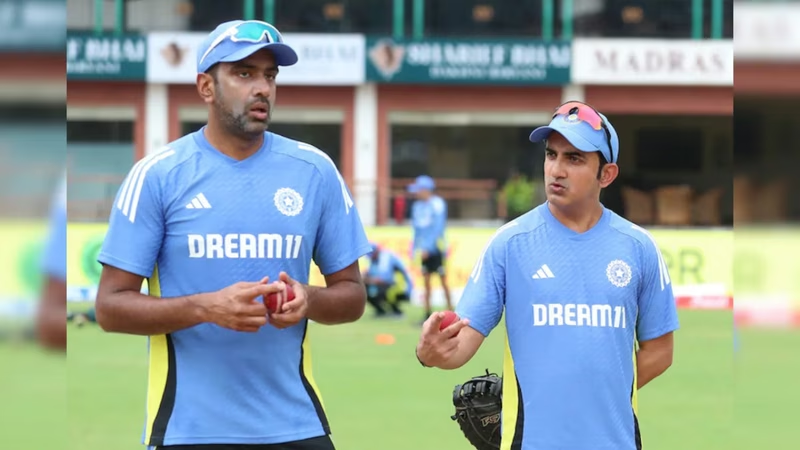
In an era where a single misfield or a lost toss can trigger a digital wildfire, veteran Indian off-spinner Ravichandran Ashwin has stepped up to throw water on the flames. His recent, impassioned plea isn’t just about a recent match or a specific player; it’s a direct appeal to the soul of Indian cricket fandom itself.
Ashwin’s message is clear: stop the character assassination. It’s a plea that resonates far beyond the boundary ropes, hitting at the heart of a growing problem that’s threatening to tarnish the beautiful game in the world’s most cricket-crazed nation .
Table of Contents
- Ashwin’s Statement: A Plea for Decency
- The Gambhir Backlash: What Sparked the Fire?
- Toxic Fan Culture: A Growing Epidemic in Indian Cricket
- From Shami to Rana: The Human Cost of Online Abuse
- What Constructive Criticism Actually Looks Like
- Conclusion: A Call for a Healthier Cricket Community
- Sources
Ashwin’s Statement: A Plea for Decency
Ashwin’s intervention wasn’t a reaction to a personal slight, but a principled stand against a systemic issue. He explicitly asked fans to shift the focus of their debates from the personal lives and character of players and coaches to the actual cricketing matters at hand: team selection, tactical decisions, and on-field performance .
His core argument is simple yet profound: dissecting a player’s intent or labeling them as “selfish” or “past their prime” based on a few poor performances is not analysis—it’s an attack. This kind of toxic fan culture doesn’t just hurt feelings; it erodes the supportive environment a team needs to thrive. Ashwin believes that by fostering discussions rooted in facts and strategy, fans can become a valuable asset to the sport rather than a source of immense pressure and negativity.
The Gambhir Backlash: What Sparked the Fire?
The immediate catalyst for Ashwin’s comments was the online vitriol directed at India’s new head coach, Gautam Gambhir. Since taking the reins in 2024, Gambhir has been a polarizing figure. His intense demeanor and strong opinions have drawn both praise and criticism .
Following a challenging home Test series against South Africa, a section of fans and media pundits launched a fierce campaign against the former captain. Criticisms ranged from his red-ball coaching record to his perceived handling of the team in transition [[19], [22]]. The situation became so intense that Gambhir was even booed by a section of the home crowd during the subsequent ODI series .
While criticism of a coach’s strategy is a normal part of sport, the discourse quickly devolved into personal attacks, questioning his competence and motives as a person, not just as a coach. It was this descent into character assassination that prompted Ashwin to speak out.
Toxic Fan Culture: A Growing Epidemic in Indian Cricket
The issue Ashwin is highlighting isn’t new or isolated to Gambhir. Toxic fan culture has been a dark cloud over Indian cricket for years, with social media acting as its primary amplifier. The anonymity of the internet has given a megaphone to the most extreme and hateful voices.
This toxicity often manifests in dangerous ways, including:
- Racist and communal abuse: Players like Mohammed Shami have been horrifically targeted with communal slurs after losses, particularly against Pakistan .
- Gendered harassment: The problem is even more acute for women cricketers and the families of male players, who often face misogynistic trolling and threats [[11], [14]].
- Targeting young talent: Emerging players like Harshit Rana have been subjected to intense online abuse, which can be devastating for their confidence and mental health .
This culture of abuse is not just a social issue; it’s a threat to the sport’s integrity. It can force players into early retirement, damage their mental well-being, and create a hostile environment that no professional should have to endure.
From Shami to Rana: The Human Cost of Online Abuse
The statistics on this abuse are shocking, but the human stories are what truly illustrate the cost. When Mohammed Shami was subjected to a torrent of online hate after a World Cup loss, it wasn’t just a PR problem for the BCCI; it was a personal trauma for a man who was giving his all for the nation .
More recently, young fast bowler Harshit Rana faced a similar barrage, prompting Ashwin himself to come to his defense and urge fans not to “get sucked into the toxic cycle” . This shows a worrying pattern where a player’s value is judged not on their potential or effort, but on the immediate, often unrealistic, expectations of a hyper-critical fanbase.
As former Australian cricketer Glenn Maxwell once pointed out, the situation can get so out of control that fans even harass the wives and families of players . This is not fandom; it’s a form of digital mob violence that has no place in sport.
What Constructive Criticism Actually Looks Like
Ashwin isn’t asking fans to stop being passionate or to refrain from criticism altogether. Passion is the lifeblood of cricket. Instead, he’s calling for a more mature and informed brand of fandom. Here’s what that looks like:
- Focus on the “what,” not the “who.” Critique the decision to promote a batter at number three, not the batter’s character.
- Use data and context. A player’s strike rate in a specific situation or their performance against a certain bowling attack is a valid point of discussion. Calling them “lazy” is not.
- Acknowledge the human element. Players are under immense pressure. A bad day at the office doesn’t make them a bad person or a traitor to the nation.
By adopting this approach, fans can elevate the discourse from a shouting match to a meaningful conversation that can actually contribute to the team’s growth. For more on how to be a better fan, check out our guide on [INTERNAL_LINK:positive_cricket_fandom].
Conclusion: A Call for a Healthier Cricket Community
Ravichandran Ashwin’s plea is a timely and necessary intervention. The toxic fan culture he’s fighting against is a self-destructive force that ultimately harms the very sport fans claim to love. The backlash against Gautam Gambhir was just the latest symptom of a deeper, more insidious disease.
It’s time for the community to take a hard look in the mirror. Cricket is a game of glorious uncertainties, of heartbreaking losses and euphoric wins. Our support should be a constant through both, not a fickle reward system that turns into a weapon at the first sign of failure. By choosing constructive criticism over character assassination, we can ensure that Indian cricket remains a source of joy, not a battlefield of online hate.