It was a cold, rain-affected evening in Gujranwala. The crowd buzzed—not for the match, but for war. India vs Pakistan. Always more than cricket.
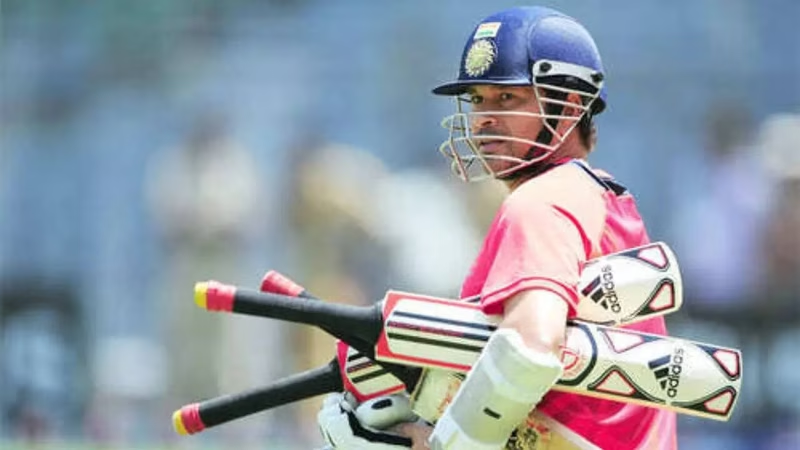
Into this cauldron stepped a boy with a bat too big for his frame, shoulder pads slipping, eyes wide with awe. At just 16 years and 213 days old, Sachin Tendulkar was about to make his ODI debut—and history would remember the moment not for glory, but for silence. He faced the raw, terrifying pace of Waqar Younis and was clean bowled for a duck.
Today, 36 years later, we look back not with pity, but with awe. Because that modest, even embarrassing beginning—a Sachin Tendulkar ODI debut that ended in failure—was the spark that lit the longest, brightest flame in cricket history.
Table of Contents
- Sachin Tendulkar ODI Debut: The Infamous Gujranwala Night
- Why Was a 16-Year-Old Playing Against Pakistan?
- From Duck to Dominance: The Evolution of a Legend
- Key Stats: Sachin’s Unmatched ODI Legacy
- The Psychological Resilience Behind the Comeback
- What This Debut Teaches Young Cricketers Today
- Conclusion: The Greatest Journey Began with a Failure
- Sources
Sachin Tendulkar ODI Debut: The Infamous Gujranwala Night
December 18, 1989. Gujranwala, Pakistan. India, chasing 188 in a rain-shortened 40-over match, lost by 7 runs. Tendulkar came in at No. 5. The score? 48/3. The bowler? A 19-year-old Waqar Younis, already feared for his toe-crushing yorkers and reverse swing.
On a green, seaming pitch, Sachin shouldered arms—too early, too trusting. The ball cut back in, clipped the off stump, and the boy walked back with his head down. Out for 0. In front of 40,000 hostile fans. On live television across two nations .
Had you told anyone that night that this same boy would go on to score 18,426 ODI runs—the most ever—you’d have been laughed out of the stadium.
Why Was a 16-Year-Old Playing Against Pakistan?
India’s squad was in shambles. Several senior players were banned for participating in a rebel tour of South Africa. The selectors turned to youth—and Sachin, already a phenomenon in domestic cricket, was the boldest call of all.
He’d scored a century for Mumbai against Gujarat just months earlier. His mentor, Ramakant Achrekar, had pushed him relentlessly. “If you’re going to play at this level, you must be ready for fire,” Achrekar had told him .
Still, many questioned the decision. Was it fair to throw a schoolboy into the India-Pakistan furnace? Former captain Sunil Gavaskar later admitted: “We knew he was special, but we didn’t expect him to carry the burden so soon.”
From Duck to Dominance: The Evolution of a Legend
Tendulkar didn’t let that duck define him. His response? Relentless work.
- 1990: First ODI fifty vs Sri Lanka.
- 1991: First ODI century—against Australia in Colombo.
- 1994: First ODI double-century partnership (with Navjot Singh Sidhu vs West Indies).
- 2012: Became first player to score 100 international centuries.
By the time he retired in 2012, he held records that still stand: 49 ODI centuries, 96 international centuries, and 664 ODI innings—a testament to longevity and consistency. [INTERNAL_LINK:sachin-tendulkar-career-milestones]
Key Stats: Sachin’s Unmatched ODI Legacy
Let the numbers speak:
| Record | Stat |
|---|---|
| Most ODI Runs | 18,426 |
| Most ODI Centuries | 49 |
| Most ODI Fifties | 96 |
| Most ODI Matches | 463 |
| Most Runs vs Pakistan in ODIs | 2,526 |
Remarkably, he scored more runs against Pakistan than any other player—turning his debut nemesis into his personal playground.
The Psychological Resilience Behind the Comeback
What separates legends isn’t talent—it’s response to failure. As sports psychologist Dr. Jim Afremow notes, “Elite performers reframe setbacks as data, not destiny.”
Sachin did exactly that. In his autobiography Playing It My Way, he wrote: “That duck taught me humility. It reminded me that talent isn’t enough—you need preparation, patience, and perseverance” .
He began shadow-batting for hours, studied Waqar’s action frame by frame, and developed the famed “shoulder-roll” against inswingers—all because of one ball in Gujranwala.
What This Debut Teaches Young Cricketers Today
In an age of instant fame and TikTok highlights, Sachin’s story is a masterclass in delayed gratification:
- Failure is not final. Your first match doesn’t define your career.
- Pressure is privilege. Playing for India at 16 wasn’t a burden—it was a blessing in disguise.
- Greatness is built in silence. While the world watched, Sachin trained.
Modern prodigies like Yashasvi Jaiswal or Dewald Brevis would do well to remember: even gods of cricket once walked off for zero.
Conclusion: The Greatest Journey Began with a Failure
December 18, 1989, wasn’t the day Sachin Tendulkar became a star. It was the day he began his apprenticeship with greatness. His Sachin Tendulkar ODI debut ended in silence—but that silence was the calm before a 24-year storm that reshaped cricket forever.
So the next time a young player gets out for a duck on debut, remember: legends aren’t born in glory. They’re forged in failure—and refuse to stay down.
Sources
- Times of India: Dec 18 Throwback: When 16-year-old Tendulkar began his ODI journey
- Tendulkar, Sachin. Playing It My Way. Hachette India, 2014.
- ESPNcricinfo Statsguru: Sachin Tendulkar ODI Career Records