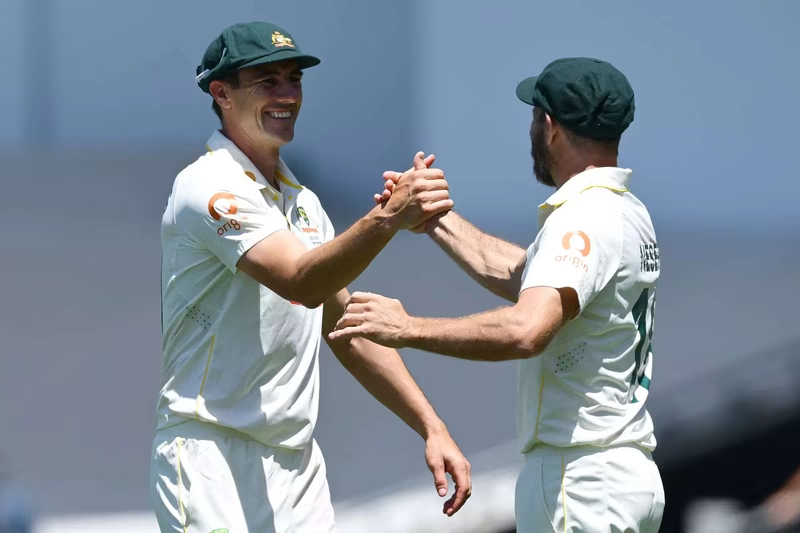
Before a ball was bowled in the 2025 Ashes, the narrative was already written: Australia’s squad was too inexperienced, too fragile, too… weak. Pundits and former players openly questioned whether this was the weakest Australian Ashes side in decades. Fast forward to today, and that narrative lies in tatters—shattered by a ruthless 3-0 series lead and the quiet confidence of a captain who never bought into the noise.
“We just crack on,” Pat Cummins said with a shrug after sealing the urn in Adelaide—a phrase that has become the understated anthem of Australia’s redemption arc. Far from crumbling under pressure, this so-called “weak” side has showcased remarkable depth, resilience, and tactical discipline to not just win, but dominate England on home soil.
Table of Contents
- Australia Reclaim Ashes: Defying All Odds
- Cummins Fires Back on ‘Weakest Side’ Tag
- How Australia Won Despite Squad Disruptions
- The Emergence of New Heroes
- Why the ‘Weakest Side’ Narrative Was Flawed
- England’s Missed Opportunities
- What This Means for Australia’s Future
- Conclusion: Crack On and Conquer
- Sources
Australia Reclaim Ashes: Defying All Odds
With a clinical 82-run victory in the third Test at Adelaide, Australia secured an unassailable 3-0 lead—officially reclaiming the Ashes urn with two matches to spare . This wasn’t just a win; it was a systematic dismantling of an England side that came armed with the aggressive “Bazball” philosophy but left battered by Australian pace, bounce, and precision.
What’s remarkable is that this triumph came amid genuine squad turbulence. Key players missed matches due to injury and illness, yet Australia’s bench strength shone. Reserve batters stepped up. Backup bowlers delivered. The team didn’t just survive—it thrived.
Cummins Fires Back on ‘Weakest Side’ Tag
When asked about pre-series criticism labeling his squad as the “weakest Ashes side,” Cummins didn’t rant. He didn’t point fingers. He simply said: **“We just crack on.”**
That phrase—equal parts humility and defiance—captures the ethos of this Australian unit. While outsiders focused on missing stars like David Warner (retired) or Cameron Green (injured), Cummins focused on solutions. “We’ve got 17 guys who are ready to play Test cricket. That’s the culture we’ve built,” he added .
In an era of hot takes and social media noise, Cummins’ calm leadership has been Australia’s secret weapon.
How Australia Won Despite Squad Disruptions
Australia’s success wasn’t built on star power alone—it was built on depth. Consider the challenges they overcame:
- Injuries to key all-rounders: Cameron Green’s absence forced tactical reshuffles.
- Spinning concerns: Nathan Lyon managed workload carefully across five Tests.
- Debutant pressure: Youngsters like Cooper Connolly and Sam Konstas were thrust into high-stakes roles—and delivered.
- Pitch volatility: Adelaide’s variable bounce tested technique and temperament equally.
Yet through it all, Australia maintained composure, rarely losing more than three wickets in a session and consistently bowling England out for under 250.
The Emergence of New Heroes
While Cummins and Steve Smith provided steady hands, the series was won by unexpected contributors:
- Travis Head: Two centuries, including a brutal 163 in Brisbane.
- Mitchell Starc: 19 wickets at 21.36, including match-winning spells with the old ball.
- Alex Carey: Solidified the wicketkeeping role with both gloves and bat (two fifties).
- Cooper Connolly: The 22-year-old debutant scored a composed 78 in his first innings, signaling a bright future.
This blend of experience and youth made Australia not weaker—but more adaptable.
Why the ‘Weakest Side’ Narrative Was Flawed
The “weakest Ashes side” label stemmed from nostalgia and selective memory. Critics compared this team to the 2006-07 Invincibles or the 2013-14 urn-winners—ignoring that modern Test cricket is more competitive than ever.
What they missed:
- Australia still had 5 current Test legends in their XI (Smith, Cummins, Lyon, Starc, Khawaja).
- Their domestic system (Sheffield Shield) remains one of the toughest in the world.
- Home advantage in Australia is historically one of the hardest to overcome in cricket .
Labeling them “weak” wasn’t just wrong—it was disrespectful to the preparation and professionalism of the current squad.
England’s Missed Opportunities
England showed flashes of brilliance—a 90 from Joe Root, a fiery spell from Mark Wood—but lacked consistency. Their much-touted Bazball approach faltered in Australian conditions, where reckless aggression led to collapses rather than comebacks.
When Australia batted, they built platforms. When England batted, they gambled. And in Test cricket, especially in Australia, platforms win urns—not fireworks.
What This Means for Australia’s Future
With the urn secured, Australia can now look ahead to the 2025-27 World Test Championship cycle with confidence. [INTERNAL_LINK:australia-cricket-future-path] The emergence of Connolly, the reliability of Head, and Cummins’ steady leadership suggest this team isn’t just defending a legacy—they’re building a new one.
Conclusion: Crack On and Conquer
The Australia reclaim Ashes story is more than a sporting triumph—it’s a lesson in ignoring noise and focusing on process. While the world called them weak, Pat Cummins and his men simply cracked on. And in the end, the urn speaks louder than headlines. Australia didn’t just win the Ashes; they rewrote the narrative—and reminded everyone why they remain the benchmark in Test cricket.
Sources
‘We just crack on’: Cummins fires back as Australia shrug off ‘weakest Ashes side’ tag – Times of India
Ashes 2025 Series Coverage – ESPNcricinfo
Ashes 2025: Live Analysis – BBC Sport
Australia Reclaim Ashes Urn – ICC Official