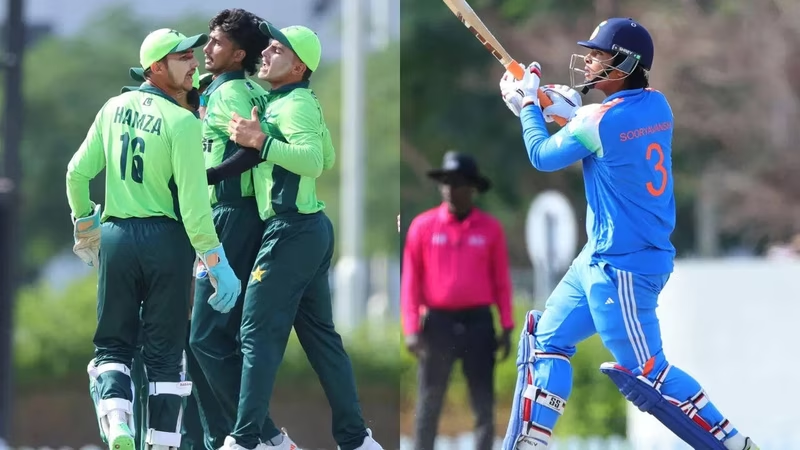
The stage was set for a star to be born. The U19 Asia Cup final. India vs Pakistan. Millions watching. The perfect launchpad for a young batting sensation. But for Vaibhav Sooryavanshi—once hailed as the next big thing in Indian cricket—the script didn’t go as planned. Yet again.
Coming into the final with sky-high expectations, Sooryavanshi managed just 26 runs before falling to Pakistan’s disciplined bowling attack. It was his second consecutive failure in a high-stakes knockout match, following a forgettable outing in the semi-final against Sri Lanka. While Pakistan’s opener Sameer Minhas lit up the Colombo skies with a breathtaking 172, India’s much-touted prodigy looked out of sorts, out of rhythm, and out of answers.
Table of Contents
- Vaibhav Sooryavanshi U19 Asia Cup Final Performance
- Sameer Minhas’ 172 Sets Record Chase
- A Pattern of Early Exits
- Pressure vs. Potential: The Prodigy Paradox
- How India’s U19 Top Order Collapsed
- Historical Context: India-Pakistan U19 Rivalry
- What Next for Sooryavanshi?
- Conclusion: Talent Needs Time, Not Just Hype
- Sources
Vaibhav Sooryavanshi U19 Asia Cup Final Performance
Batting at No. 3 in a chase of 348—a mountainous target on any surface—Sooryavanshi walked in with India already wobbling at 12/1. The onus was on him to stabilize and build a platform. Instead, he played a loose drive outside off stump in the 8th over and nicked behind for 26 off 38 balls .
His dismissal triggered a collapse. From 28/1, India slumped to 65/4, effectively ending their hopes of a historic chase. In a match where Pakistan’s batters showed composure and intent, India’s star youngster looked tentative, as if burdened by the weight of expectation.
Sameer Minhas’ 172 Sets Record Chase
While Sooryavanshi faltered, his Pakistani counterpart soared. Sameer Minhas delivered one of the greatest innings in U19 Asia Cup history—172 off just 134 balls, laced with 19 boundaries and 5 sixes. His marathon knock powered Pakistan to a mammoth 347/8, the highest total in a U19 Asia Cup final .
Minhas didn’t just score runs; he dictated terms. He punished loose deliveries, respected good balls, and rotated strike intelligently. In stark contrast to Sooryavanshi’s brief stay, Minhas batted for over three hours—showcasing maturity beyond his years.
A Pattern of Early Exits
This wasn’t an isolated failure. In the semi-final against Sri Lanka, Sooryavanshi was dismissed for a paltry 10, caught behind off a wide delivery while chasing 221. Across the two most critical matches of the tournament, he managed just 36 runs in two innings—a strike rate of 78, far below the 120+ expected from a modern top-order batter.
Compare that to his group-stage performances—where he scored a quick 58 against UAE and 41 against Nepal—and a troubling trend emerges: Sooryavanshi thrives against weaker attacks but struggles under pressure against quality bowling.
Pressure vs. Potential: The Prodigy Paradox
At just 16, Sooryavanshi has already played first-class cricket for Maharashtra and smashed a 135* in the Vinoo Mankad Trophy. His talent is undeniable. But the “prodigy” tag can be a double-edged sword.
Experts warn that excessive hype can distort a young player’s development:
- Unrealistic expectations: Fans and media expect instant stardom, not gradual growth.
- Technical overthinking: Young batters start playing to headlines, not to the ball.
- Lack of failure space: In social media age, every dismissal is dissected publicly.
As former India U19 coach Rahul Dravid often says: “Give them time. Let them fail. That’s how champions are made.”
How India’s U19 Top Order Collapsed
Sooryavanshi’s fall was part of a broader batting implosion:
- Openers failed: Both openers out within 5 overs.
- No partnerships: No stand crossed 30 runs.
- Poor shot selection: Four batters caught in the slips or behind square.
- Pitch misreading: Batters played for turn on a true Colombo surface.
Against a Pakistani attack that bowled tight lines and used the short ball effectively, India’s top order looked ill-prepared.
Historical Context: India-Pakistan U19 Rivalry
India has dominated U19 cricket for decades, winning five ICC U19 World Cups. But in recent Asia Cups, Pakistan has surged—winning the 2023 edition and now 2025. This shift reflects deeper changes: Pakistan’s renewed focus on age-group coaching and India’s overreliance on individual brilliance over system-driven development .
What Next for Sooryavanshi?
One tournament doesn’t define a career. Prithvi Shaw, Yashasvi Jaiswal, and even Virat Kohli had U19 struggles. The key is how Sooryavanshi responds.
[INTERNAL_LINK:india-u19-development-pathway] will be crucial. He needs structured coaching, mental conditioning, and—most importantly—protection from premature IPL auctions or media scrutiny. His talent is real; now, it needs nurturing, not noise.
Conclusion: Talent Needs Time, Not Just Hype
The Vaibhav Sooryavanshi U19 Asia Cup story isn’t over—it’s just entered a new chapter. Yes, he failed when it mattered. But failure at 16 is not the end; it’s the beginning of real learning. For India’s cricket ecosystem, the lesson is clear: stop rushing prodigies. Let them grow. Let them fail. And one day, they might just rise—stronger, wiser, and ready for the big stage.
Sources
U19 Asia Cup: Vaibhav Sooryavanshi fails again; departs cheaply in final – Times of India
Pakistan U19 vs India U19 Final Report – ESPNcricinfo
ICC U19 Cricket History – ICC Official
India U19 Asia Cup 2025 Squad – BCCI