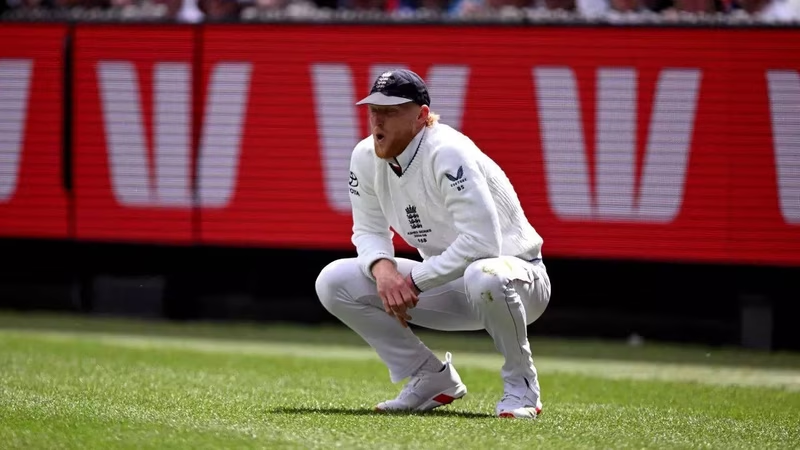
Bazball in Crisis: When Aggression Meets Australian Reality
Back in 2022, Bazball was the buzzword that electrified cricket fans worldwide. Spearheaded by England captain Ben Stokes and head coach Brendon McCullum, it promised fearless, fast-scoring, entertaining Test cricket—free from the shackles of attrition and fear of failure. Fast forward to December 2025, and that same philosophy is being buried under the unforgiving pitches of the Ashes, exposed not just by Australia’s clinical dominance, but by its own internal contradictions.
What started as a breath of fresh air now smells like a cautionary tale. As England trail 0-3 in the series, questions are mounting: Is Bazball sustainable under pressure? Or was it always just a home-condition fairytale destined to crumble Down Under?
Table of Contents
- What Is Bazball and How Did It Start?
- Bazball vs. Australia’s Test Cricket Brutality
- The Off-Field Hangover: ‘Boozeball’ Allegations
- Why Bazball Failed in the Ashes 2025
- Is There a Future for Bazball?
- Conclusion: Rebrand or Rebuild?
- Sources
What Is Bazball and How Did It Start?
Coined by journalist Tim de Lisle, the term Bazball blends ‘Baz’ (Brendon McCullum’s nickname) and the free-spirited ethos of baseball. Launched in mid-2022, the strategy prioritized intent over preservation: batters were encouraged to play their shots from ball one, bowlers to attack relentlessly, and fielders to embody relentless energy.
It worked spectacularly on English pitches—leading to dramatic wins over India, Pakistan, and New Zealand. But as critics warned early on, the model was built on benign conditions, weak opposition, and a luxury of time rarely afforded in high-stakes overseas tours .
Bazball vs. Australia’s Test Cricket Brutality
Australia’s brand of Test cricket is the antithesis of Bazball. It’s disciplined, relentless, and unforgiving—especially at home. The Gabba, Adelaide, and now the MCG have historically punished loose shot selection and poor concentration.
England’s batting collapses tell the story: chasing big totals with reckless abandon, only to be dismantled by Pat Cummins’ precision and Nathan Lyon’s guile. In the fourth Test at the MCG, despite Josh Tongue’s heroic five-wicket haul, England’s top order once again threw their wickets away, chasing quick runs instead of building partnerships .
As former Aussie captain Ricky Ponting remarked, “You can’t play Test cricket like it’s a T20 death over in Australia. The ball moves, the bounce is steep, and the fielders don’t drop catches.”
The Off-Field Hangover: ‘Boozeball’ Allegations
Compounding the on-field chaos are reports of off-field indiscipline. Dubbed “Boozeball” by critics, the narrative paints a picture of an England camp more focused on camaraderie and nightlife than tactical preparation .
While unconfirmed, these whispers have gained traction in the Australian media, contrasting sharply with the intense professionalism of the hosts. Whether fair or not, perception matters—and right now, Bazball is being perceived not as courageous, but careless.
Why Bazball Failed in the Ashes 2025
Several critical flaws have been exposed during this tour:
- Over-reliance on intent over technique: Bazball assumes batters can survive while playing aggressively. In Australia, where edges carry and bounce is variable, that assumption is fatal.
- Lack of bowling depth: England’s attack is potent but inconsistent. Without a reliable spinner or a 150+ kph quick, they struggle to contain or dominate on hard pitches.
- No Plan B: When the aggressive script fails—as it has repeatedly—the team has no fallback strategy. There’s no “grind mode” in Bazball’s playbook.
- Cultural mismatch: Australian crowds, pitches, and opposition feed off hesitation. Bazball’s all-or-nothing approach plays right into their hands.
Is There a Future for Bazball?
Not necessarily—but it must evolve. The core spirit of Bazball—positive cricket, mental freedom, attacking intent—is valuable. But it needs nuance.
As ESPNcricinfo analyst Gideon Haigh notes, “You can play aggressive cricket without being reckless. The best Test teams combine freedom with discipline.”
Going forward, England must develop situational awareness: when to unleash Bazball, and when to play “Test ball.” A hybrid model—call it “Smartball”—might be the path to redemption, especially with tough tours to India and South Africa looming.
Conclusion: Rebrand or Rebuild?
Bazball was never just a strategy—it became a movement, a brand, even a cult. But cults collapse when reality bites. The 2025 Ashes have been that reality check. The question isn’t whether Bazball should be abandoned, but whether it can mature beyond its teenage rebellion phase into a sustainable, adaptive philosophy.
England still has two Tests left in this series. If they use them to learn—not just to entertain—they might yet salvage something more valuable than a win: wisdom.
Sources
- Times of India: Boozeball or Bazball? The hangover of wannabe cricket Ultras
- ESPNcricinfo Ashes 2025 Coverage: Ashes 2025
- Analysis by Gideon Haigh on Test cricket philosophy: The Guardian Cricket