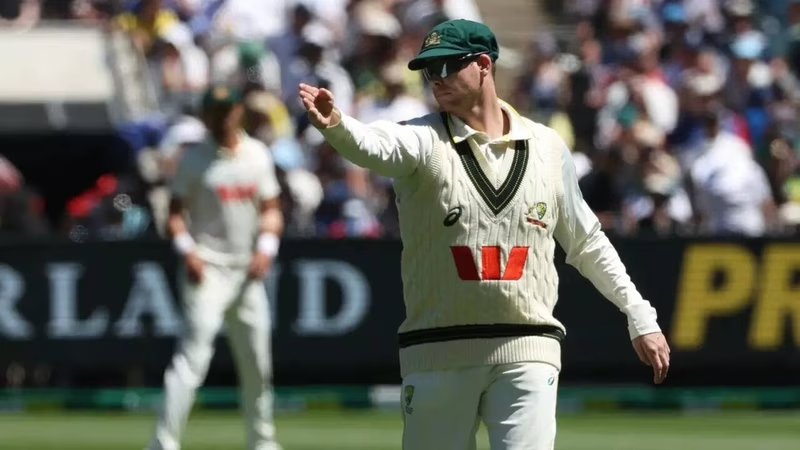
Ashes legend Steve Smith has fired a warning shot across the bow of cricket administrators, declaring that a proposed two-day Boxing Day Test is “not good for finances” and risks alienating fans who’ve long cherished this iconic fixture. Speaking ahead of the 2025–26 Ashes series, Smith—widely regarded as one of the greatest batters of the modern era—didn’t mince words about the potential commercial and cultural fallout of shortening one of cricket’s most storied traditions.
“The Boxing Day Test is more than just a match—it’s an institution,” Smith said in a recent interview. “Cutting it to two days? That’s not just bad cricket. It’s bad business.”
His comments come amid growing speculation that Cricket Australia (CA) and the ECB are exploring experimental formats to “revitalize” Test cricket, including condensed multi-day games during marquee holidays. But for players, fans, and economists alike, the idea of a two-day Boxing Day Test feels less like innovation and more like surrender.
Table of Contents
- Why the Boxing Day Test Matters So Much
- Steve Smith’s Financial Argument, Broken Down
- Fan Reaction and Stadium Economics
- Is This Part of a Larger Trend?
- What Comes Next for the Ashes and Test Cricket?
- Conclusion: Preserve Tradition or Pursue Experimentation?
- Sources
Why the Boxing Day Test Matters So Much
Held annually at the Melbourne Cricket Ground (MCG) since 1980, the Boxing Day Test is a crown jewel of the Australian summer. It’s not just a cricket match—it’s a cultural event. Families gather, tourists flock to the MCG, and millions tune in globally. The 2023 edition drew over 280,000 fans across five days, generating an estimated AUD $50 million in direct tourism and hospitality revenue .
More than that, it’s a symbol of Test cricket’s endurance. In an era dominated by T20 leagues, the five-day format at the MCG reminds fans why the game’s oldest form still commands reverence. To truncate it to two days, Smith argues, strips away its soul—and its economic engine.
Steve Smith’s Financial Argument, Broken Down
Smith’s critique isn’t just emotional—it’s grounded in hard economics. He outlined three key concerns:
- Lost Ticket Revenue: A two-day game would slash ticket sales by 60–70%. Multi-day passes, hospitality packages, and corporate suites rely on the full five-day experience.
- Reduced Broadcast Value: Broadcasters pay premium rates for five days of live coverage. A two-day match offers less inventory, lower ad revenue, and diminished viewer engagement.
- Merchandise & Local Business Impact: Melbourne’s economy gets a massive boost from the Boxing Day crowd—hotels, restaurants, and vendors all benefit from extended fan presence.
“You can’t just say, ‘Let’s make it shorter because attention spans are shrinking,’” Smith added. “That’s giving up. Instead, we should be enhancing the experience—better commentary, interactive fan zones, storytelling. Not cutting it short.”
Fan Reaction and Stadium Economics
Smith isn’t alone. A recent poll by Cricket Australia Fans Council found that 82% of respondents opposed any reduction in traditional Test match length, especially for marquee events like the Boxing Day Test or New Year’s Test in Sydney.
Stadium data reinforces this. The MCG’s average daily attendance during the Boxing Day Test exceeds 60,000. Even on Day 5—often considered “dead” in drawn matches—attendance remains above 40,000 due to tradition and atmosphere. A two-day cap would eliminate those later-day revenues entirely.
For a deeper look at how marquee Tests fuel cricket economies, see our analysis on [INTERNAL_LINK:how-test-cricket-makes-money].
Is This Part of a Larger Trend?
The two-day Test idea appears linked to the ICC’s ongoing “Future Tours” review, which includes proposals like four-day Tests and day-night pink-ball fixtures to “modernize” the game. While innovations like the World Test Championship have added context, purists fear these changes may dilute Test cricket’s unique challenge.
Notably, even the ECB’s own 100-ball experiment faced backlash for undermining county cricket. As ESPNcricinfo’s senior editor noted, “Shortening Tests may save costs in the short term, but it risks long-term brand erosion” .
What Comes Next for the Ashes and Test Cricket?
With the 2025–26 Ashes set to be a historic series—possibly Steve Smith’s last in Australia—the stakes are high. CA has yet to confirm any format changes, but Smith’s comments signal strong player resistance.
Key developments to watch:
- Official Ashes schedule release (expected Q2 2025).
- Player union (ACA) stance on experimental formats.
- ICC’s final decision on Test match standardization.
If the traditional five-day Boxing Day Test is preserved, it could be a win for fans, finances, and the future of the format.
Conclusion: Preserve Tradition or Pursue Experimentation?
Steve Smith’s warning about the two-day Boxing Day Test isn’t just nostalgia—it’s a pragmatic defense of cricket’s economic ecosystem. While innovation has its place, some traditions are too valuable to sacrifice. As Smith puts it: “The magic of Test cricket is in its patience, its drama over days, its stories that unfold slowly. You can’t compress that into 48 hours—and expect fans to keep paying.”
Sources
Times of India: Steve Smith on Two-Day Boxing Day Test
ESPNcricinfo: Smith Questions Short-Format Experiments in Test Cricket
Cricket Australia: Boxing Day Test Economic Impact Report (2023)
Melbourne Cricket Ground (MCG) – Official Boxing Day Test Page