Table of Contents
- The Two-Day Ashes Collapse That Sparked the Controversy
- What Does an ‘Unsatisfactory’ MCG Pitch Rating Mean?
- How the ICC’s Demerit Points System Works
- MCG’s Pitch History: A Troubled Legacy?
- What This Means for Future Ashes and International Matches
- Player and Fan Reactions to the Chaotic Conditions
- Conclusion: A Wake-Up Call for Groundkeepers?
- Sources
The Two-Day Ashes Collapse That Sparked the Controversy
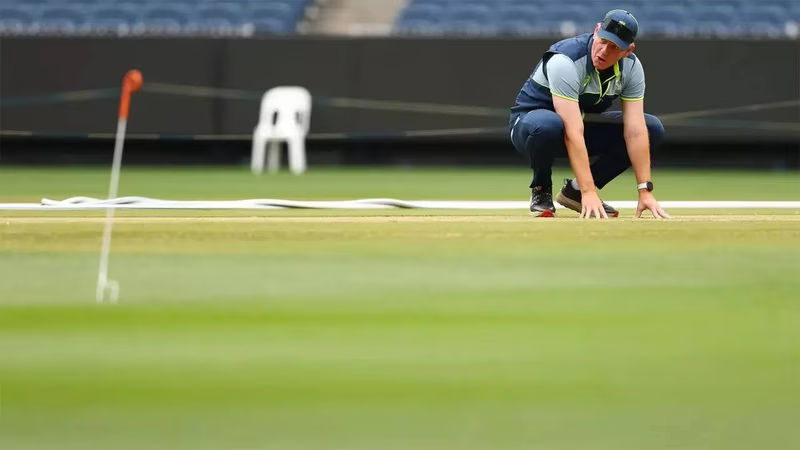
Cricket fans around the world watched in disbelief as the Boxing Day Ashes Test at the iconic Melbourne Cricket Ground (MCG) ended in just two days—a rare and dramatic conclusion for a format known for its patience and endurance. England sealed a four-wicket victory, but the real story was the pitch itself.
A staggering 36 wickets fell in 48 hours, with 20 of those crashing on Day 1 alone. Batsmen from both Australia and England struggled to survive more than a few overs, as the surface offered excessive seam movement and variable bounce from the outset . What was meant to be a festive celebration of Test cricket turned into a ghost of a match—over before the holiday leftovers ran out.
What Does an ‘Unsatisfactory’ MCG Pitch Rating Mean?
In response, the International Cricket Council (ICC) conducted a formal review and handed down a damning verdict: the MCG pitch rating was officially classified as “unsatisfactory.” Under ICC regulations, this is the second-lowest possible rating a pitch can receive—just above “poor”—and signals that the surface failed to meet the expected standard for a fair and balanced contest between bat and ball .
Notably, the ICC emphasized that while some assistance for seamers is expected in Melbourne, the degree of unpredictability and the rapid degradation of the pitch compromised the integrity of the game. “A Test pitch should provide a contest over five days, not two,” stated an ICC spokesperson .
How the ICC’s Demerit Points System Works
Alongside the rating, the ICC awarded the MCG one demerit point. This might sound minor, but it’s part of a strict regulatory framework:
- Venues receive demerit points for pitches rated “below average” or “unsatisfactory.”
- Accumulating six demerit points within a five-year period results in a 12-month ban from hosting international matches .
- Each demerit point remains on record for five years before expiring.
While this is the MCG’s first demerit point in recent memory, the warning is clear: repeated failures could jeopardize its status as a premier Ashes venue.
MCG’s Pitch History: A Troubled Legacy?
The MCG has long walked a fine line between being a bowler-friendly track and an outright minefield. Historically, Melbourne’s pitches have offered seam and bounce—attributes that defined the careers of Aussie quicks like Dennis Lillee and Glenn McGrath.
However, recent years have seen growing criticism:
- The 2017 Ashes Test saw only 165 runs scored on Day 1.
- In 2022, New Zealand was bowled out for 166 and 171 on a surface that offered sharp turn by Day 2—unusual for Melbourne .
- Grounds staff have faced pressure to balance tradition with modern expectations of longer, more engaging Tests.
Cricket Australia and the MCG Trust will now face intense scrutiny over pitch preparation protocols [INTERNAL_LINK:mcg-pitch-preparation-history].
What This Means for Future Ashes and International Matches
The repercussions of this MCG pitch rating extend far beyond one match:
- Ashes 2025–26: With the next Ashes cycle in Australia, the ICC’s report will force Cricket Australia to overhaul pitch curation at the MCG to avoid further sanctions.
- World Test Championship: As a regular host of WTC matches, the MCG must demonstrate consistent pitch quality to retain its elite venue status.
- Player Safety: Erratic bounce raises concerns about head and body injuries—especially with the rise of concussion substitutes and player welfare protocols.
Experts suggest that the MCG may need to consult international pitch curators or even adopt techniques used at more reliable venues like Adelaide Oval.
Player and Fan Reactions to the Chaotic Conditions
Reaction from the cricketing community was swift and divided. Some former players defended the pitch as “true to Melbourne’s character,” while others called it “unfit for international cricket.”
“You can’t call it a Test match if it’s over before lunch on Day 3,” tweeted a former England captain . Meanwhile, fans on social media lamented the wasted travel, tickets, and holiday plans—many had booked multi-day passes expecting a full Test.
Broadcasters also took a hit, with reduced viewership on Days 3–5, highlighting the commercial fallout of excessively short matches.
Conclusion: A Wake-Up Call for Groundkeepers?
The ICC’s “unsatisfactory” MCG pitch rating isn’t just a slap on the wrist—it’s a red flag for one of cricket’s most storied grounds. While the Ashes rivalry thrives on intensity, the game’s essence lies in balance and endurance. If the MCG wants to remain a crown jewel of the international calendar, its curators must deliver pitches that challenge players without compromising the spectacle. Otherwise, that one demerit point could be the first step toward a much harsher penalty.