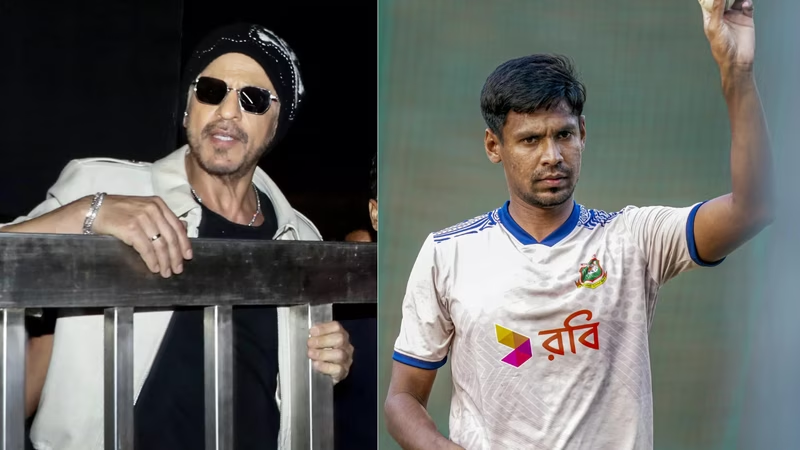
What was meant to be a routine IPL roster move has exploded into a full-blown geopolitical crisis. Kolkata Knight Riders’ signing of Bangladeshi star Mustafizur Rahman for the 2026 season has ignited a firestorm of political and religious protests, drawing sharp criticism from BJP leaders and Hindu nationalist groups. The backlash has escalated to the point where threats have been issued—not just against the player, but against KKR’s iconic owner, Bollywood superstar Shah Rukh Khan, with one leader bluntly stating, “We won’t even let SRK enter” if matches are held in Kolkata.
This unprecedented controversy underscores how deeply intertwined cricket has become with regional diplomacy and domestic politics in South Asia. Once celebrated as a unifying force, the sport now finds itself caught in the crosshairs of escalating tensions between India and Bangladesh—raising urgent questions about the future of cross-border sporting ties in the IPL.
Table of Contents
- Mustafizur Rahman KKR: The Signing That Sparked Outrage
- BJP and Religious Groups Lead the Charge
- Security Threats Against Shah Rukh Khan
- The Geopolitical Context: Why Now?
- BCCI’s Delicate Balancing Act
- Has the IPL Faced Similar Controversies Before?
- How Fans and Players Are Responding
- Conclusion: Cricket at a Crossroads
- Sources
Mustafizur Rahman KKR: The Signing That Sparked Outrage
Kolkata Knight Riders, seeking to bolster their death-bowling options, quietly retained Mustafizur Rahman during the IPL 2026 player acquisition window. The move made perfect sporting sense: Mustafizur is a proven T20 performer with 78 IPL wickets at an economy of 8.12 and a reputation for nailing yorkers under pressure .
However, in the current political climate, sporting merit appears to be taking a backseat. Within hours of the news breaking, social media was flooded with calls for his removal, quickly amplified by political voices citing “national interest” and “public sentiment.”
BJP and Religious Groups Lead the Charge
Several BJP leaders in West Bengal and nationally have condemned the signing. They cite recent unrest in Bangladesh, particularly reports of violence against Hindu minorities, as justification for severing sporting links.
“How can we welcome a player from a country where our brothers and sisters are being persecuted?” asked one BJP spokesperson during a press conference. Religious organizations like the Vishva Hindu Parishad (VHP) have echoed this sentiment, organizing small-scale protests outside Eden Gardens and demanding that KKR “show national loyalty over commercial interests.”
Security Threats Against Shah Rukh Khan
The rhetoric has turned alarmingly personal. In a now-viral video, a local BJP functionary declared, “If KKR brings Mustafizur to Kolkata, we won’t even let Shah Rukh Khan enter the city.” While the party distanced itself from the specific threat, it has not reined in the broader campaign.
Security agencies are reportedly evaluating the risk to SRK, who has owned KKR since 2008 and is a beloved figure in Kolkata. The franchise has not commented publicly, but internal sources say contingency plans for alternate home venues (like Pune or Mumbai) are being discussed.
The Geopolitical Context: Why Now?
India-Bangladesh relations, once a model of regional cooperation, have cooled significantly in recent months. Disputes over water sharing, border management, and alleged religious discrimination have strained diplomatic ties.
While the two nations continue limited cricketing engagement—including Bangladesh’s participation in the 2023 ODI World Cup in India—the IPL operates under a different, more sensitive lens. Unlike ICC events governed by global regulations, the IPL is a domestic league where the BCCI holds full discretion over player eligibility.
BCCI’s Delicate Balancing Act
The BCCI finds itself in a precarious position. On one hand, it champions the IPL as a global, inclusive league. On the other, it operates under the oversight of the Indian government and cannot ignore political realities.
While no official directive has been issued yet, whispers from within the board suggest an emergency review is underway. The precedent is clear: Pakistani players have been barred since 2008 due to government policy. Could Bangladeshi players be next? For more on the BCCI’s foreign policy, see [INTERNAL_LINK:bcci-foreign-player-rules].
Has the IPL Faced Similar Controversies Before?
This isn’t the first time politics has intruded on the IPL, but it is the most direct challenge to a contracted player’s participation:
- 2009: IPL moved to South Africa due to Indian general elections.
- 2015: Chennai Super Kings and Rajasthan Royals suspended due to betting scandals.
- 2020–2022: Chinese sponsors dropped after border clash, but no player bans.
Never before has a duly signed foreign player from a non-Pakistan nation faced such organized political opposition.
How Fans and Players Are Responding
Cricket fans are deeply divided. While some support the political stance, many others see it as a betrayal of the sport’s spirit. Hashtags like #LetMustafizurPlay and #CricketNotPolitics are trending on X.
Former players like Aakash Chopra have urged calm: “Mustafizur is an athlete, not a diplomat. Punishing him won’t solve geopolitical issues—it only harms the game we love.”
Conclusion: Cricket at a Crossroads
The backlash against Mustafizur Rahman KKR is more than a sports story—it’s a referendum on whether cricket can remain a sanctuary from politics. If the BCCI yields to pressure, it sets a dangerous precedent that could isolate Indian cricket from its neighbors. If it stands firm, it risks political fallout. Either way, the beautiful game loses a little of its innocence.