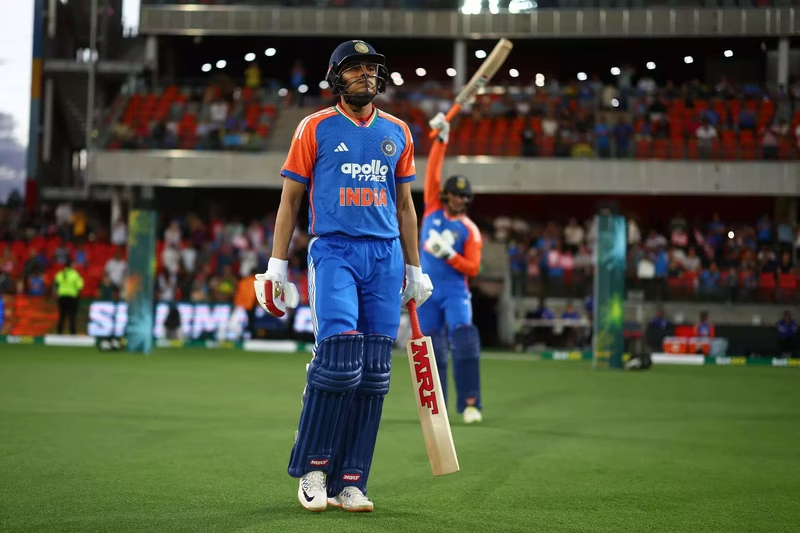
Cricket fans are reeling. Just days after leading the side as vice-captain in a T20I series, Shubman Gill has been left out of India’s squad for the ICC Men’s T20 World Cup 2026. The decision—handed down by the Ajit Agarkar-led selection committee—has sparked outrage, confusion, and a fierce debate about India’s selection philosophy. And at the heart of the storm is former India fast bowler Yograj Singh, who didn’t hold back in his scathing criticism of the panel.
“Why drop Gill?” Singh asked in a now-viral commentary, echoing the sentiment of millions. His frustration isn’t just about one player—it’s about what this move signals for the future of Indian cricket: a shift from nurturing world-class talent to chasing short-term tactical fixes. In this deep dive, we unpack the controversy, the stats, and what Gill’s omission truly means for Team India.
Table of Contents
- The Shock Omission: From Vice-Captain to Outsider
- Yograj Singh’s Blistering Critique
- Shubman Gill Dropped: What the Numbers Really Say
- How the Selection Panel Is Justifying the Decision
- Historical Context: Gill’s Rise and Recent Form
- Fan and Expert Reactions Flood In
- What This Means for India’s T20 World Cup Campaign
- Conclusion: A Question of Vision vs. Panic
- Sources
The Shock Omission: From Vice-Captain to Outsider
Just last month, Shubman Gill wore the vice-captain’s armband in the T20Is against South Africa—a clear signal that the team management viewed him as a future leader. Fast forward to the World Cup squad announcement, and his name is nowhere to be found. This whiplash-inducing reversal has left fans and pundits questioning the selectors’ consistency and long-term planning.
Was it due to form? Team balance? Or a strategic pivot toward power-hitters in the death overs? The official statement cited “format-specific requirements,” but offered little clarity—fueling speculation and frustration.
Yograj Singh’s Blistering Critique
Yograj Singh, never one to mince words, launched a passionate defense of Gill. In a televised interview, he compared the current selectors’ impatience to the faith shown in legends like Kapil Dev and Sunil Gavaskar during lean patches. “You don’t build a champion by dropping him after four bad innings,” Singh argued. “You build him by standing behind him.”
He emphasized that Gill is not just another batter—he’s a future pillar of Indian cricket across all formats. Dropping him from the T20 side, Singh warned, sends a dangerous message: that even vice-captaincy offers no security if results don’t come instantly. This, he believes, could stifle the confidence of other young players groomed for leadership roles.
Shubman Gill Dropped: What the Numbers Really Say
Let’s look beyond emotion and examine the data:
- T20I Career (as of Jan 2026): 36 matches, 869 runs, avg. 28.03, SR 126.5
- Last 10 T20Is: 237 runs at an average of 26.33, strike rate of 122
- ODI Record: Over 2,500 runs at an average above 50
- Test Record: Consistent performer with 3 centuries
Yes, his T20 strike rate lags behind players like Rinku Singh or Ruturaj Gaikwad. But his ability to anchor an innings and rotate strike—especially in high-pressure World Cup games— is a unique asset. The selectors appear to have prioritized explosive hitting over stability, a gamble that may backfire on slower Caribbean pitches.
How the Selection Panel Is Justifying the Decision
Chief selector Ajit Agarkar has defended the squad, stating that “team balance and current T20-specific form were paramount.” The inclusion of Hardik Pandya (returning from injury) as a key all-rounder, along with power-hitters like Rinku Singh and Shivam Dube, suggests a strategy built around late-order aggression.
Additionally, with Yashasvi Jaiswal and Ruturaj Gaikwad opening, the panel may have felt Gill’s role as a No. 3 or 4 was redundant. Yet, critics argue that Gill’s experience in high-stakes games—unlike some of the newer inclusions—was undervalued.
Historical Context: Gill’s Rise and Recent Form
Shubman Gill burst onto the scene as India’s U-19 World Cup-winning captain in 2018. Since then, he’s been fast-tracked as a batting mainstay. His 2023 ODI World Cup campaign was stellar, and his Test performances in Australia and England silenced doubters.
His recent T20 struggles are real—but they come after a grueling international schedule. Many believe he simply needed a mental reset, not a public axing from the squad.
Fan and Expert Reactions Flood In
Twitter erupted with #BringBackGill trending for hours. Former players like Aakash Chopra called the decision “rushed,” while fans pointed out the irony of dropping a vice-captain who was being “groomed for the future.” Fantasy cricket platforms also reported a surge in queries about Gill’s absence—highlighting his perceived value even among casual followers.
What This Means for India’s T20 World Cup Campaign
India’s T20 World Cup squad now leans heavily on power and versatility. But without a stabilizing batter like Gill, the middle order could collapse under pressure—especially if early wickets fall. The team’s success may hinge on perfect conditions and flawless execution, leaving little room for error.
For a deeper look at India’s T20 World Cup chances, see our preview: [INTERNAL_LINK:india-t20-world-cup-2026-preview].
Conclusion: A Question of Vision vs. Panic
The controversy over Shubman Gill dropped is more than a selection debate—it’s a clash of philosophies. On one side: patience, long-term vision, and faith in proven talent. On the other: adaptability, immediate impact, and format-specific pragmatism. Only time—and the World Cup results—will tell who was right. But one thing is certain: by sidelining a player of Gill’s caliber, the selectors have taken one of the boldest, and riskiest, gambles in recent Indian cricket history.