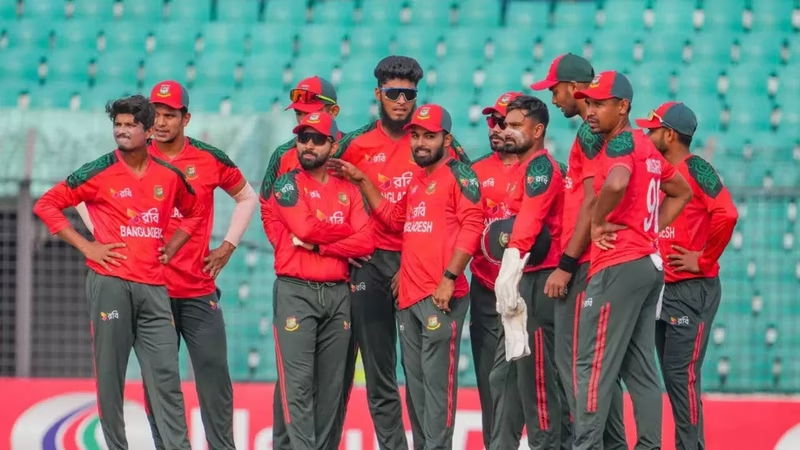
The cricket bat isn’t just a piece of willow anymore—it’s become a political statement. In a move that sends shockwaves through the subcontinent’s sporting world, SG sponsorship for Bangladesh’s top cricketers has been abruptly put on ice. This decision by India’s legendary sports equipment manufacturer, Sanspareils Greenlands (SG), directly ties the fate of athletes to the volatile state of India-Bangladesh diplomacy in early 2026.
Table of Contents
- The SG Sponsorship Freeze: A Major Setback
- Who Is Affected by the SG Sponsorship Halt?
- The Diplomatic Backdrop: India-Bangladesh Tensions
- Financial and Career Implications for Bangladeshi Players
- Broader Impact on Bangladesh Cricket and Sports Industry
- What Next for SG and Bangladesh Cricket?
- Conclusion: When Sport Meets Statecraft
- Sources
The SG Sponsorship Freeze: A Major Setback
Indian sports manufacturing giant SG has reportedly decided not to renew its bat sponsorship contracts with several leading Bangladeshi cricketers . This isn’t just a routine business decision; it’s a direct consequence of the rapidly deteriorating political climate between New Delhi and Dhaka. The company has also halted its equipment distribution and manufacturing supply lines to Bangladesh, creating a ripple effect across the nation’s entire sports infrastructure .
This development marks a significant shift. For years, SG has been a trusted brand in Bangladesh, equipping some of the country’s most prominent stars. The sudden withdrawal of this support leaves a void that will be incredibly difficult to fill, especially on short notice.
Who Is Affected by the SG Sponsorship Halt?
The list of players caught in this crossfire reads like a who’s who of Bangladesh cricket. The most high-profile name is undoubtedly the national captain, Litton Das, whose individual endorsement deal with SG was a cornerstone of his off-field earnings . But he’s far from alone.
Other key players whose careers are now in limbo include:
- Mominul Haque, the Test specialist known for his gritty batting .
- Yasir Rabbi, a promising all-rounder who has been a regular in the national setup .
- Several other members of the national squad who relied on SG for their official match gear and personal branding .
For these athletes, the loss of a major sponsor like SG isn’t just about losing a free bat; it’s a substantial financial hit that can affect their training, lifestyle, and future marketability.
The Diplomatic Backdrop: India-Bangladesh Tensions
To understand why a sports brand would make such a drastic move, one must look beyond the boundary ropes. Early January 2026 has seen a sharp escalation in diplomatic friction between the two neighbors. The core of the dispute appears to revolve around Bangladesh’s reported reluctance to play its upcoming ICC Men’s T20 World Cup matches in India .
This political standoff has spilled into every facet of bilateral relations. Bangladesh has already taken steps like temporarily suspending visa services for Indians at its consulates in Kolkata, Mumbai, and Chennai . In this charged atmosphere, a major Indian corporation like SG likely faces immense pressure—both public and possibly governmental—to distance itself from its Bangladeshi partners. As one report noted, “sport becomes a diplomatic tool” in such scenarios .
Financial and Career Implications for Bangladeshi Players
The immediate impact on the players is severe. Top-tier international sponsorships are a critical part of a cricketer’s income, often rivaling or even surpassing their central contracts from the board. Losing a deal with a globally recognized brand like SG can mean a loss of hundreds of thousands of dollars over a contract period.
Beyond the money, there’s a branding crisis. Being dropped by a premier equipment supplier can send a negative signal to other potential sponsors, making it harder for these players to secure new deals quickly. They now face the urgent task of finding a new bat sponsor—a process that involves not just contractual negotiations but also adapting to a completely new piece of equipment, which can drastically affect a batsman’s performance at the highest level.
Broader Impact on Bangladesh Cricket and Sports Industry
The fallout extends far beyond individual players. The halt in SG’s equipment distribution and manufacturing supply lines is a body blow to Bangladesh’s domestic cricket scene and its wider sports industry . Local clubs, academies, and aspiring young cricketers who rely on affordable, quality SG gear may now find themselves scrambling for alternatives.
This situation also serves as a stark warning to other international brands about the fragility of commercial partnerships in a region where geopolitics can override business logic in an instant. It could lead to a chilling effect, where companies become hesitant to invest heavily in cross-border sports sponsorships for fear of similar political fallout.
What Next for SG and Bangladesh Cricket?
It remains unclear if this suspension is a temporary measure or a permanent severing of ties. If diplomatic channels can cool the current tensions, a path to reconciliation might open. However, if the political rift widens, Bangladesh Cricket Board (BCB) will be forced to look elsewhere, potentially towards brands from England, Australia, or even local manufacturers, to fill the massive void left by SG.
For SG, the decision, while politically expedient in the short term, risks damaging its long-standing reputation and market share in a cricket-crazy nation of over 160 million people.
Conclusion: When Sport Meets Statecraft
The suspension of SG sponsorship for Bangladesh’s cricket stars is a powerful reminder that sport rarely exists in a vacuum. In today’s interconnected world, the lines between politics, business, and athletics are increasingly blurred. What happens in the corridors of power in Dhaka and New Delhi now directly impacts what bat a player like Litton Das will wield on the field. This episode is more than just a commercial dispute; it’s a case study in how geopolitical currents can reshape the very landscape of a beloved game.
Sources
- Times of India: SG puts sponsorship for top Bangladesh players in limbo
- HICGI News Agency: India-Bangladesh tensions spill into cricket as sport becomes diplomatic tool
- CricTracker: Bangladesh cricket suffer major setback as big Indian brand pulls out of sponsorship deal
- ICC Official Website: [INTERNAL_LINK:international-cricket-council-news]