Table of Contents
- Rahul’s Masterclass Under Pressure
- The Dhoni Comparison: What It Really Means
- Breaking Down Rahul’s Single-Taking Genius
- Why This Innings Changes the Narrative
- Chopra’s Praise and the Evolution of Rahul as a Finisher
- What This Means for India’s T20 World Cup Hopes
- Conclusion
- Sources
Rahul’s Masterclass Under Pressure
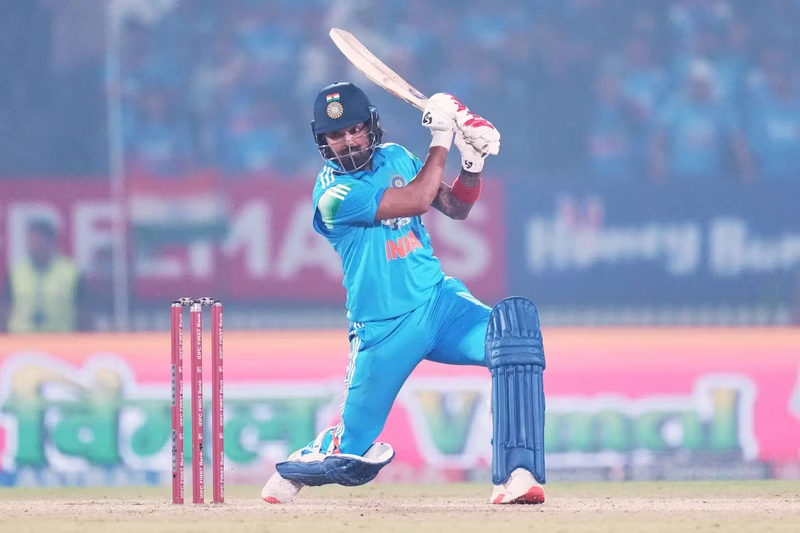
In India’s tense four-wicket victory over New Zealand, all eyes were on the top order. But it was KL Rahul who emerged as the true architect of the chase—not with brute force, but with surgical precision. Tasked with shepherding the innings through tricky middle overs and then finishing strong, Rahul showcased a brand of cricket that was equal parts intelligent and ice-cool.
His final score may not have been flashy, but his impact was undeniable. He rotated the strike with uncanny awareness, shielded less experienced partners from pressure deliveries, and timed his acceleration perfectly—unleashing his power only when the situation demanded it in the death overs . This wasn’t just an innings; it was a statement of maturity from a player often criticized for inconsistency in high-stakes games.
The Dhoni Comparison: What It Really Means
Former India opener and respected analyst Aakash Chopra didn’t mince words. He declared that Rahul’s demeanor and decision-making during the chase were “almost like Dhoni” . Now, comparing any modern batter to MS Dhoni—the legendary finisher who redefined clutch performances—is no small compliment.
But Chopra wasn’t talking about six-hitting or last-ball heroics. He was referring to something deeper: the calmness under fire, the ability to read the game state, and the selfless prioritization of team needs over personal milestones. Like Dhoni, Rahul didn’t panic. He trusted the process, worked the singles, and waited for the right moment to pounce. In today’s era of boundary-or-bust cricket, that restraint is rare—and invaluable.
Breaking Down Rahul’s Single-Taking Genius
What made Rahul’s knock so effective? It was his elite-level strike rotation. In T20 cricket, boundaries get the headlines, but smart captains know that consistent ones and twos keep the scoreboard ticking and prevent bowlers from settling into rhythms.
Rahul’s footwork, placement, and understanding of field placements allowed him to find gaps even against disciplined Kiwi bowlers like Mitchell Santner and Matt Henry. He turned near-dots into productive balls, constantly keeping the required run rate manageable. This skill—often overlooked by casual fans—is what separates good finishers from great ones.
Consider this: in the 15th to 18th overs, a phase where many batters either freeze or perish trying to clear the ropes, Rahul scored 24 runs off 18 balls with just one boundary—but kept the momentum alive through clever running and precise placement . That’s textbook finishing.
Why This Innings Changes the Narrative
For years, KL Rahul has been labeled inconsistent, especially in overseas conditions or high-pressure chases. Critics pointed to soft dismissals and a tendency to play across the line early. But this innings in the India vs New Zealand clash flips that script.
It proves he can adapt his game based on context. When the pitch offered variable bounce and the ball gripped, he didn’t force shots. When lower-order batters were at the crease, he took responsibility without hogging strike selfishly. This level of situational awareness is exactly what India needs heading into major tournaments.
Chopra’s Praise and the Evolution of Rahul as a Finisher
Aakash Chopra, known for his incisive technical breakdowns, highlighted Rahul’s “game awareness” and “maturity” as standout traits . These aren’t just buzzwords—they reflect a tangible evolution in Rahul’s approach.
Gone is the impatient aggressor of 2022. In his place stands a more rounded cricketer who understands that finishing isn’t always about fireworks—it’s about control, calculation, and composure. Much like Dhoni, who famously said, “I don’t believe in taking risks unless necessary,” Rahul now seems to operate with a similar philosophy.
This transformation didn’t happen overnight. It’s the result of hard lessons, dropped catches, missed opportunities—and now, redemption.
What This Means for India’s T20 World Cup Hopes
With the T20 World Cup on the horizon, India’s middle-order stability has been a lingering concern. The return of a reliable, adaptable finisher like KL Rahul could be the missing piece.
His ability to bat anywhere from No. 3 to No. 6, keep wickets if needed, and anchor or accelerate as required makes him a Swiss Army knife in the lineup. If he can replicate this Dhoni-esque calm in high-stakes games in the Caribbean or USA, India’s chances of lifting the trophy improve dramatically.
Conclusion
KL Rahul’s innings against New Zealand was more than just a match-winning performance—it was a declaration of his arrival as a true finisher in the Indian setup. The comparison to MS Dhoni isn’t about replicating stats; it’s about embodying the same cool-headed, team-first mentality that defined an era. As Aakash Chopra rightly noted, it’s this maturity that sets champions apart. For fans and selectors alike, this knock should silence doubters and cement Rahul’s role as a linchpin in India’s white-ball future.