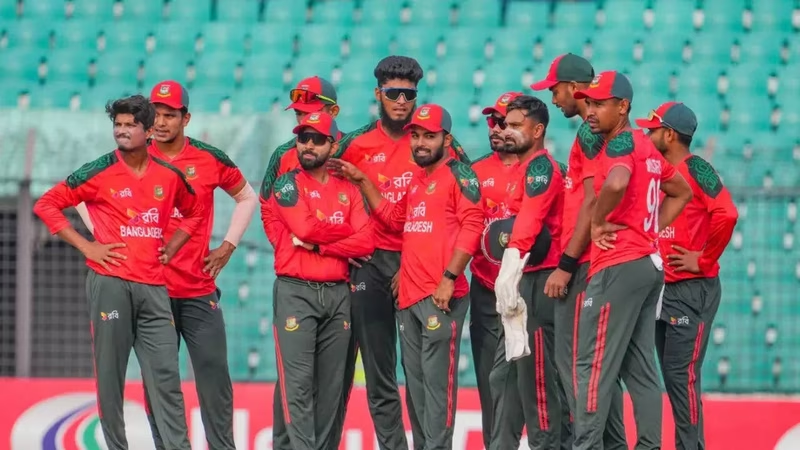
The fragile ecosystem of Bangladesh cricket is facing its most severe internal test in years. What began as a few controversial remarks from a board official has rapidly escalated into a full-blown Bangladesh cricket crisis, with star players threatening a complete boycott of all cricketing activities and the prestigious Bangladesh Premier League (BPL) grinding to a halt .
The epicenter of this storm is M. Nazmul Islam, a director at the Bangladesh Cricket Board (BCB). His “objectionable comments” made in public about the country’s national cricketers have ignited a firestorm of protest from the players’ camp, who are now demanding his immediate resignation .
Table of Contents
- The Spark That Ignited the Crisis
- Player Power: A Unified Boycott Threat
- BCB in Damage Control Mode
- BPL in Chaos: Match Tosses Delayed
- A Deepening Trust Deficit
- What Happens Next?
- Conclusion
- Sources
The Spark That Ignited the Crisis
While the exact nature of Nazmul Islam’s comments hasn’t been fully detailed in public reports, their impact has been undeniable. Described by the BCB itself as “objectionable,” these remarks were perceived by the players as a direct and unacceptable attack on their professionalism and integrity . In a sport where the relationship between the board and its athletes is often delicate, such public criticism from a high-ranking official was seen as a profound breach of trust.
This incident didn’t occur in a vacuum. It follows a period of growing tension between the players and the board over various issues, including pay disputes, selection policies, and administrative decisions. The director’s comments appear to have been the final straw that pushed the players to take collective action.
Player Power: A Unified Boycott Threat
In a rare and powerful display of unity, the national cricketers have issued a clear ultimatum: they will boycott all cricket unless Nazmul Islam steps down from his position on the board . This isn’t just a threat to skip a single series; it’s a complete shutdown of their participation in the sport, which would have catastrophic consequences for Bangladesh’s international schedule and its domestic league.
Their stance appears firm. Despite the BCB’s initial response, reports indicate that the players “refuse to relent” on their demand for his resignation . This unwavering position highlights the depth of their anger and their belief that his continued presence on the board is untenable.
BCB in Damage Control Mode
Faced with a potential national sporting disaster, the BCB has scrambled to contain the fallout. Their primary action has been to issue a formal show-cause notice to Director Nazmul Islam, demanding he explain his comments . This is a standard first step in any disciplinary process, signaling that the board recognizes the severity of the situation.
Furthermore, the BCB has publicly expressed “regret” over the comments, attempting to distance the institution from the director’s personal views and to appease the furious players . However, this apology may not be enough. The players’ core demand is not just an apology but a structural change—a removal of the individual they hold responsible.
BPL in Chaos: Match Tosses Delayed
The immediate and tangible impact of this Bangladesh cricket crisis is being felt on the field, specifically in the high-profile Bangladesh Premier League. The player boycott threat has cast a long shadow over the tournament, leading to significant disruptions.
Reports confirm that at least one BPL match experienced a delayed toss, a direct consequence of the ongoing standoff . With players uncertain about their future and their relationship with the board in tatters, their focus and commitment to the league are understandably compromised. If the crisis isn’t resolved swiftly, the entire BPL season could be in jeopardy, causing massive financial and reputational damage.
A Deepening Trust Deficit
This episode is symptomatic of a much larger problem: a deep and growing trust deficit between the players and the BCB’s administration. For years, there have been whispers of mismanagement, political interference, and a lack of transparency within the board. The current crisis has brought these underlying issues to the surface in the most dramatic way possible.
The players’ unified front suggests they feel they have no other recourse. By leveraging their collective power—their irreplaceable skill on the field—they are forcing a conversation about governance and respect that has long been overdue. This is not merely about one man’s comments; it’s about the culture and accountability within the BCB itself.
What Happens Next?
The ball is now firmly in the BCB’s court. They face a critical decision with far-reaching implications:
- Option 1: Stand Firm. The BCB could uphold its director, arguing for due process and refusing to bow to player pressure. This would almost certainly lead to a full-scale player strike, crippling the sport in the country.
- Option 2: Capitulate. The board could ask for Nazmul Islam’s resignation to appease the players and save the BPL and upcoming international fixtures. While this would resolve the immediate crisis, it might set a precedent that could complicate future board-player relations.
- Option 3: Negotiate. A middle path might involve a formal apology from the director, his temporary suspension pending an inquiry, and a commitment from the BCB to review its internal communication policies.
Whatever the outcome, the relationship between the BCB and its players will be forever changed. The players have shown they are willing to risk their careers for a principle, a move that could reshape the power dynamics in Bangladesh cricket for years to come.
Conclusion
The Bangladesh cricket crisis is more than just a headline-grabbing dispute; it’s a pivotal moment for the nation’s most beloved sport. The BCB’s handling of this situation will not only determine the fate of the current BPL season but also signal whether the board is capable of evolving into a more transparent, respectful, and player-centric organization. The world of cricket is watching closely to see if Bangladesh can navigate this internal storm and emerge stronger, or if the game in the country will be left fractured and weakened.
Sources
- Times of India. “Bangladesh cricket crisis deepens: BCB issues show-cause to director.” https://timesofindia.indiatimes.com/sports/cricket/news/bangladesh-cricket-crisis-deepens-bcb-issues-show-cause-to-director-as-players-boycott-threat-hits-bpl/articleshow/126541450.cms [[1], [3], [4], [5], [8]]
- ESPNcricinfo. “Players refuse to relent on BPL boycott as BCB president…” https://www.espncricinfo.com/story/bangladesh-cricket-crisis-players-refuse-to-relent-on-bpl-boycott-1457892