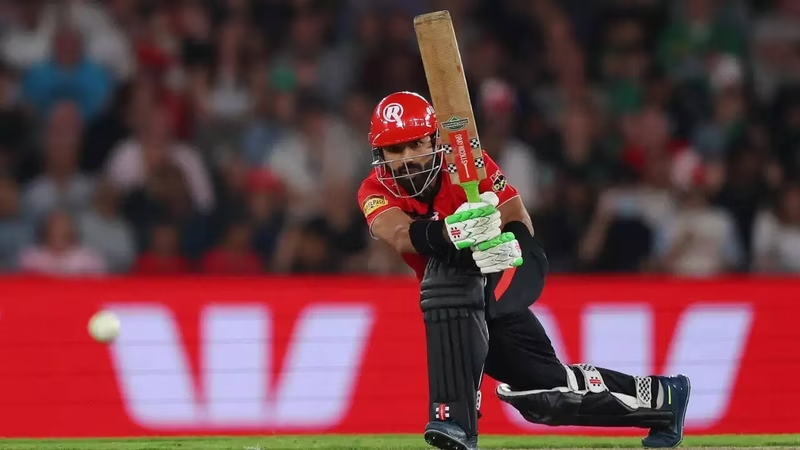
It was meant to be a strategic masterstroke. Instead, it became a national talking point. When Pakistan’s star wicketkeeper-batter Mohammad Rizwan walked off the field during a Big Bash League (BBL) match under the rarely used ‘retired out’ rule, he didn’t just raise eyebrows—he sparked a full-blown controversy that reached all the way back to Lahore.
The fallout was swift: reports emerged that Rizwan was effectively asked to cut his BBL stint short and return home. But why did a tactical move—one permitted by the laws of cricket—trigger such a backlash? And more importantly, does this incident reveal a deeper clash between traditional cricketing values and the ruthless demands of modern franchise leagues?
Table of Contents
- What Happened During the BBL Match?
- Why Did ‘Mohammad Rizwan Retired Out’ Spark Outrage?
- Kamran Akmal Defends Modern T20 Demands
- The Evolving Expectations of Franchise Cricket
- How Other Leagues Handle Slow Batting
- What This Means for Pakistani Players Abroad
- Conclusion: A Cultural Clash in Cricket Clothing?
- Sources
What Happened During the BBL Match?
During a recent BBL fixture, Rizwan—playing for the Melbourne Renegades—was batting at a strike rate well below the league average. With the team needing quick runs and wickets in hand, the coaching staff reportedly suggested he voluntarily retire to allow a more explosive batter to come in. Rizwan complied, walking off under Law 25.4.2: “Retired – out.”
Unlike “retired hurt,” which is medical and temporary, “retired out” is a permanent dismissal. It’s a legal but seldom-used tactic in T20 cricket, mostly seen in exhibition matches or extreme situations. In the high-stakes environment of the BBL, however, it was interpreted by many as an admission of inadequacy—or worse, a lack of fighting spirit.
Why Did ‘Mohammad Rizwan Retired Out’ Spark Outrage?
Back in Pakistan, social media exploded. Critics, including former players and pundits, labeled the move as “disrespectful to the jersey” and “unacceptable for a national captain.” The core argument? That a player of Rizwan’s stature should never willingly give up his wicket, regardless of context.
This reaction highlights a deep-seated cultural expectation in subcontinental cricket: batters must fight until the very end. Strategic exits—even if they benefit the team—are often viewed through a lens of personal honor rather than collective tactics. For many fans, Rizwan’s decision felt like surrender, not strategy.
The Strike Rate Debate Heats Up
Rizwan’s strike rate in the BBL hovered around 110—a solid number in international T20s but below par in a league where 140+ is increasingly the norm. This gap between international and franchise expectations is at the heart of the controversy. As one analyst put it: “You can’t play Test-match cricket in a T20 world.”
Kamran Akmal Defends Modern T20 Demands
Not everyone piled on. Former Pakistan wicketkeeper Kamran Akmal offered a nuanced take. While acknowledging the sensitivity of the situation, he stressed that modern T20 leagues demand adaptability. “Players have to understand the format,” Akmal said. “If you’re not scoring at the required rate, sometimes the best thing for the team is to make way for someone who can.”
Akmal’s comments reflect a growing school of thought among ex-players who’ve transitioned into coaching or commentary: franchise cricket isn’t just about individual glory—it’s about maximizing team output within 120 balls. In that light, Rizwan’s selfless act could be seen as professional, not shameful.
The Evolving Expectations of Franchise Cricket
Franchise leagues like the BBL, IPL, and SA20 operate under different rules—not just on paper, but in philosophy. Teams invest millions, and every run matters. Coaches use data analytics to determine optimal batting orders, and player roles are hyper-specialized.
In this ecosystem, a batter with a low strike rate isn’t necessarily “bad”—they might just be miscast. The solution isn’t always to “try harder,” but to adjust the lineup. Rizwan, known for his anchor role in international cricket, may simply be a poor fit for the BBL’s all-guns-blazing approach.
How Other Leagues Handle Slow Batting
Compare this to the Indian Premier League (IPL), where teams have quietly benched stars like Shikhar Dhawan or even Virat Kohli when their form dipped below franchise standards. The message is clear: no one is untouchable.
The BBL, while smaller in scale, follows the same principle. According to ESPNcricinfo, several overseas players have been released mid-season in past editions for underperformance . Rizwan’s case is unique only because of his profile and the dramatic nature of the “retired out” exit.
What This Means for Pakistani Players Abroad
This incident could have ripple effects. Will Pakistani boards or franchises become more selective about which players they send overseas? Will batters like Babar Azam or Saud Shakeel face extra scrutiny if their strike rates dip in foreign leagues?
There’s also a risk of double standards. While Western players are praised for “smart cricket,” South Asian stars are often held to emotional, almost heroic, standards. This cognitive dissonance needs addressing if global T20 cricket is to remain truly inclusive.
Conclusion: A Cultural Clash in Cricket Clothing?
The Mohammad Rizwan retired out saga isn’t really about one man or one match. It’s a flashpoint in cricket’s ongoing identity crisis—between tradition and innovation, individual legacy and team optimization, national pride and global commerce.
Rizwan may have left the BBL early, but his departure has left behind a vital conversation. As T20 leagues continue to dominate the calendar, players, fans, and boards alike must decide: are we watching cricket for entertainment, or for honor? Maybe, just maybe, it can be both—if we’re willing to evolve.