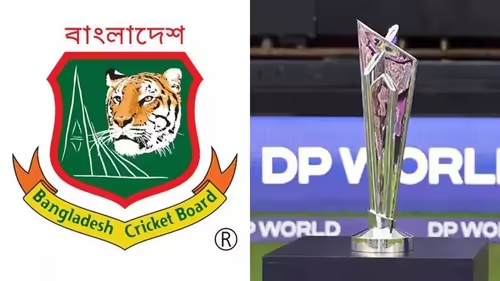
The countdown to the 2026 ICC Men’s T20 World Cup has been overshadowed by a high-stakes political and logistical standoff. In a move that has sent shockwaves through the cricketing world, the Bangladesh Cricket Board (BCB), backed by the nation’s Ministry of Youth and Sports, has officially declared it will not allow its national team to travel to India for any matches during the upcoming tournament .
Citing long-standing and unresolved security concerns, Bangladesh is demanding that all its scheduled games be relocated to Sri Lanka, the co-host of the event. This ultimatum has placed the ICC in a precarious position, forcing the global governing body to prepare for an emergency visit to Dhaka to engage in direct talks with BCB officials and government representatives . The stakes couldn’t be higher: the potential withdrawal of a full-member nation threatens the integrity and smooth execution of one of cricket’s premier events.
Table of Contents
- The Core of the Standoff: Security Concerns
- Bangladesh T20 World Cup Participation Hangs in Balance
- The ICC Dilemma: A Delicate Diplomatic Mission
- Historical Context: A Pattern of Tension
- Possible Outcomes and Scenarios
- Sources
The Core of the Standoff: Security Concerns
The BCB’s refusal is not a sudden decision but the culmination of years of anxiety over the safety of its players and staff in India. While specific incidents are rarely detailed publicly, the board has consistently pointed to a perceived lack of adequate security guarantees from Indian authorities, especially in the context of the intense and often volatile nature of India-Bangladesh cricket matches .
This tension was notably visible during the 2015 World Cup quarter-final in Bengaluru, where the atmosphere was charged with hostility. Since then, the BCB has maintained a cautious stance, and the current political climate between the two nations appears to have exacerbated these fears. The board’s official line is clear: without ironclad assurances that meet their standards, they will not risk their team’s safety.
Bangladesh T20 World Cup Participation Hangs in Balance
The 2026 T20 World Cup is set to be co-hosted by India and Sri Lanka, a format designed to share the logistical and financial burden while expanding the tournament’s footprint. For Bangladesh, this presented a potential lifeline. Their firm position is that they are willing to participate fully in the tournament, but only if all their matches are played on Sri Lankan soil .
This demand, however, creates a massive headache for the ICC. The tournament schedule is built on a complex matrix of venues, broadcast rights, and fan logistics. Unilaterally moving all of Bangladesh’s fixtures to Sri Lanka would require a complete overhaul of the group stage, potentially disadvantaging other teams and disrupting carefully laid plans. It’s a request that, while understandable from a security perspective, is logistically near-impossible to fulfill without significant concessions from all parties involved.
The ICC Dilemma: A Delicate Diplomatic Mission
Faced with the prospect of a major team pulling out, the ICC has no choice but to act as a mediator. Its upcoming visit to Dhaka is a critical diplomatic mission aimed at de-escalating the situation . The ICC’s primary goal will be to broker a compromise that addresses Bangladesh’s security anxieties while preserving the integrity of the tournament schedule.
Possible solutions on the table could include providing enhanced, independent security details for the Bangladesh team in India, or negotiating a limited number of matches in Sri Lanka while ensuring the rest are played in the most secure venues in India, like Ahmedabad or Mumbai. The ICC’s challenge is to convince the BCB that their concerns can be met within the existing framework, a task that requires immense political finesse and trust-building.
Historical Context: A Pattern of Tension
This is not the first time security concerns have threatened Bangladesh’s participation in an Indian-hosted event. In 2011, there were similar murmurs, though they were ultimately resolved. The underlying issue speaks to a deeper, more complex relationship between the two cricketing nations—one marked by fierce rivalry on the field and a complicated political and social dynamic off it .
For many in Bangladesh, cricket is a powerful symbol of national identity and pride. The fear of their heroes being subjected to hostile crowds or inadequate protection is a deeply emotional issue that transcends sport. The BCB, therefore, is under immense domestic pressure to take a hardline stance, making any negotiation even more delicate.
Possible Outcomes and Scenarios
As the ICC prepares for its crucial talks, several scenarios could unfold:
- Full Compromise: The ICC and BCCI provide unprecedented security guarantees, and Bangladesh agrees to play its full schedule in India.
- Partial Relocation: A few key matches for Bangladesh are moved to Sri Lanka, with the rest played in high-security Indian venues.
- Complete Withdrawal: If no agreement is reached, Bangladesh could withdraw from the tournament, a decision that would have severe sporting and financial consequences for all parties.
- ICC Sanctions: In a worst-case scenario, the ICC could impose sanctions on the BCB for failing to fulfill its obligations as a full member, though this is seen as a last resort.
The next few weeks will be decisive. The future of the Bangladesh T20 World Cup campaign—and the smooth running of the entire tournament—rests on the success of these high-level negotiations. For fans of the game, it’s a stark reminder that cricket, at its highest level, is often as much about diplomacy and politics as it is about boundaries and wickets. Stay updated on all developments with our coverage on [INTERNAL_LINK:t20-world-cup-2026-schedule] and [INTERNAL_LINK:icc-news].