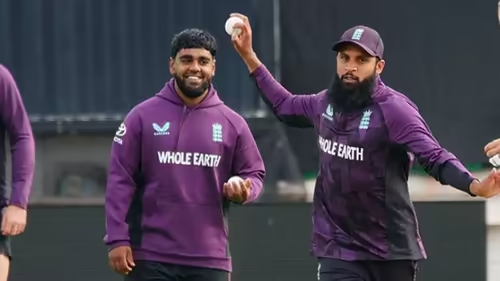
The stage is finally set for a drama-free start to the T20 World Cup 2026. After weeks of uncertainty that threatened to overshadow the build-up, the International Cricket Council (ICC) has stepped in with a decisive solution, ensuring that players of Pakistani origin from various nations, including England’s star-studded lineup, have received their Indian visas.
Table of Contents
- The Visa Crisis: Averted Just in Time
- Who Are England’s Pakistani-Origin Stars Heading to India?
- The ICC’s Crucial Role in Facilitating Visas
- Visa Status for Other Nations: A Mixed Bag
- Why This Visa Resolution Matters for the Tournament
- Conclusion: A Collective Sigh of Relief
- Sources
The Visa Crisis: Averted Just in Time
Just a few weeks ago, the prospect of a smooth T20 World Cup 2026 was looking increasingly bleak. Reports emerged that several international cricketers and officials of Pakistani descent were facing significant delays or outright denials in their applications for Indian visas. This created a major logistical and ethical headache for the ICC, which is determined to host an inclusive and globally representative tournament .
The situation was particularly tense for the England and Wales Cricket Board (ECB), whose squad features multiple key players born in the UK to Pakistani parents. The potential absence of these players would have severely weakened a top contender for the title. However, thanks to direct intervention from the sport’s global governing body, this crisis has been averted—at least for the majority of affected individuals .
Who Are England’s Pakistani-Origin Stars Heading to India?
England’s squad is a proud testament to its diverse cricketing culture, and several of its most impactful players are of Pakistani heritage. The good news is that their participation in the T20 World Cup 2026 is now confirmed. The players who have successfully cleared the visa hurdle include:
- Adil Rashid: The veteran leg-spinner and a cornerstone of England’s white-ball success.
- Rehan Ahmed: The young, exciting leg-spinner who burst onto the scene and has become a regular in the T20 setup.
- Saqib Mahmood: The right-arm fast bowler known for his lethal yorkers and death-over prowess .
Their presence is non-negotiable for England’s hopes of lifting the trophy. Securing their visas wasn’t just a bureaucratic win; it was a victory for the integrity of the competition itself.
The ICC’s Crucial Role in Facilitating Visas
Faced with a growing diplomatic and sporting challenge, the ICC didn’t wait for the problem to resolve itself. It took proactive, behind-the-scenes action to streamline the process. According to multiple reports, the ICC has been working directly with the relevant authorities to facilitate the visa formalities for all 42 players and officials of Pakistani origin who are scheduled to participate in the tournament .
Their goal is ambitious but clear: to have all necessary clearances finalized by January 31, 2026, well ahead of the tournament’s commencement. This deadline is critical to allow teams ample time for final preparations, travel arrangements, and acclimatization without the last-minute stress of unresolved documentation . This level of involvement underscores the ICC’s commitment to ensuring a level playing field for every competing nation.
Visa Status for Other Nations: A Mixed Bag
While England’s contingent is in the clear, the situation for other teams remains more complex. The news isn’t universally positive.
- Netherlands: The Dutch team appears to be in a stable position. Their player of Pakistani heritage, Saqib Zulfiqar, has reportedly not encountered any issues with his visa application .
- USA: This is where the biggest concern lies. Reports confirm that USA cricketer Ali Khan, who was born in Pakistan, has been denied an Indian visa. This casts a shadow over his participation and highlights that the ICC’s efforts, while successful for many, haven’t resolved every single case . Other Pakistani-origin players from the USA are also believed to be in a state of limbo .
This disparity creates an uneven landscape and raises questions about the consistency of the visa policy, a topic that will likely continue to be debated in the cricketing world.
Why This Visa Resolution Matters for the Tournament
Beyond the immediate relief for the players and their boards, this resolution is vital for the T20 World Cup 2026 on several levels:
- Competitive Integrity: A world cup without its best players is a diminished product. Ensuring stars like Rashid and Ahmed can play maintains the tournament’s high quality and credibility.
- Global Representation: Cricket’s strength lies in its global appeal. Excluding players based on their ancestry, rather than their nationality or team affiliation, would have sent a damaging message about the sport’s inclusivity.
- Logistical Certainty: With the January 31 deadline in sight, teams can now focus entirely on their cricket—training, strategy, and team bonding—without the distraction of an administrative nightmare .
For fans eagerly awaiting the tournament, this news means they can look forward to seeing their favorite players in action on the grandest stage, free from off-field controversies.
Conclusion: A Collective Sigh of Relief
The ICC’s timely intervention has pulled the T20 World Cup 2026 back from the brink of a significant pre-tournament controversy. While challenges remain for a few individuals, particularly from the USA, the core issue for major contenders like England has been resolved. This outcome not only secures the participation of key talent but also upholds the spirit of a truly global sporting event. Now, all eyes can turn to the cricket itself, where the real battles will be fought on the pitch. For more on team preparations, check out our guide on [INTERNAL_LINK:england-t20-world-cup-2026-squad-preview].