Table of Contents
- Crisis in Bangladeshi Cricket: A World Cup on the Line
- What Did the ICC Demand?
- BCB’s Fiery Response: Calling Out ‘Unreasonable Conditions’
- The High Stakes for Bangladesh T20 WC Participation
- Historical Context: A History of Tensions
- Global Reactions and Broader Implications
- Possible Paths to Resolution
- Conclusion
- Sources
Crisis in Bangladeshi Cricket: A World Cup on the Line
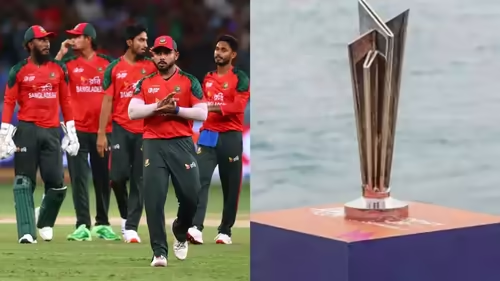
In a dramatic turn of events that could reshape the landscape of the 2026 T20 World Cup, the Bangladesh Cricket Board (BCB) has thrown down the gauntlet against the International Cricket Council (ICC). The BCB has officially denied complying with an ICC-imposed deadline, labeling the governing body’s demands as “unreasonable conditions.” This unprecedented public clash now puts the very Bangladesh T20 WC participation in serious jeopardy .
For fans and players alike, the prospect of a T20 World Cup without Bangladesh—a passionate cricketing nation with a proven track record in the format—is almost unthinkable. Yet, the current impasse suggests that principle may be valued over participation in this high-stakes diplomatic row.
What Did the ICC Demand?
While the ICC has not publicly detailed its specific requirements, credible reports suggest the dispute centers around governance and operational protocols. The ICC is believed to have set a firm deadline for the BCB to meet certain administrative and compliance benchmarks as a prerequisite for its official entry into the T20 World Cup 2026.
These benchmarks are widely understood to be part of the ICC’s broader push for standardized governance across all Full Member nations, a framework designed to ensure financial transparency, anti-corruption measures, and smooth tournament operations. However, the BCB appears to view these as an overreach into its internal affairs.
BCB’s Fiery Response: Calling Out ‘Unreasonable Conditions’
The BCB’s statement was unambiguous and defiant. In a strongly worded release, the board declared that the ICC’s stipulations were not just stringent but “unreasonable” and “not in line with the spirit of mutual cooperation among member boards” .
This language is significant. It moves beyond mere disagreement and frames the issue as a matter of sovereignty and respect. The BCB is essentially arguing that while it is committed to the sport’s integrity, it will not be coerced into accepting terms it deems unfair or disproportionate. This stance has galvanized support from many within the Bangladeshi cricket ecosystem, who see it as a defense of their board’s autonomy.
The High Stakes for Bangladesh T20 WC Participation
The consequences of this standoff are immense for all parties involved.
For Bangladesh:
- Player Morale: The national team, including stars like Shakib Al Hasan and Mustafizur Rahman, faces an uncertain future. Their preparation for the biggest T20 stage is now clouded by administrative chaos.
- Fan Disappointment: Millions of passionate fans in Bangladesh would be devastated to see their team excluded from a major global event.
- Financial Impact: Participation guarantees crucial ICC funding, broadcast revenue, and sponsorship opportunities that are vital for the BCB’s development programs.
For the ICC and the Tournament:
- Credibility Risk: Excluding a Full Member nation over a governance dispute could damage the ICC’s image as a unifying body.
- Competitive Integrity: The T20 World Cup would lose a competitive and entertaining team, potentially weakening the overall quality of the event.
- Precedent Setting: How the ICC handles this situation will set a precedent for its future dealings with other member boards.
Historical Context: A History of Tensions
This is not the first time the BCB and ICC have found themselves at odds. In recent years, there have been recurring points of friction, from disagreements over the Future Tours Programme (FTP) to concerns about the distribution of ICC revenues. The BCB has often positioned itself as a voice for the ‘smaller’ Full Member nations, advocating for a more equitable share of the sport’s growing wealth .
This current dispute can be seen as an extension of that ongoing struggle for greater influence and respect within the global cricket hierarchy. You can read more about the power dynamics in world cricket in our analysis on [INTERNAL_LINK:icc-governance-structure].
Global Reactions and Broader Implications
The cricketing world is watching this saga unfold with bated breath. While no other boards have publicly taken sides yet, the situation is being closely monitored. A resolution that forces the BCB into submission could embolden the ICC to take a harder line with others. Conversely, a compromise could signal a more collaborative approach in the future.
According to the ICC’s own regulations, the exclusion of a Full Member from a World Cup is an extreme measure, typically reserved for cases of severe non-compliance or government interference. The fact that we are even discussing this possibility highlights the severity of the current rift.
Possible Paths to Resolution
Despite the tough rhetoric, a last-minute resolution remains the most likely outcome. Both sides have too much to lose. Potential paths forward include:
- Mediation: A neutral third party, perhaps a former ICC official, could facilitate talks between the BCB and ICC leadership.
- Revised Terms: The ICC could offer a grace period or slightly modified conditions that allow the BCB to save face while still meeting the core objectives.
- Public Pressure: The outcry from fans and media globally may force both parties back to the negotiating table to find a pragmatic solution before the final entry deadline.
Conclusion
The controversy surrounding Bangladesh T20 WC participation is far more than a bureaucratic squabble. It’s a critical test of the relationship between the ICC and its member nations. At its heart, it’s a question of how much autonomy a national board should retain versus the need for global standardization. While the BCB’s principled stand is admirable, the ultimate cost of a missed World Cup would be borne by the players and fans who live and breathe the game. The hope now is that cooler heads will prevail, and a compromise will be found to ensure that Bangladesh’s vibrant cricketing spirit is on full display at the T20 World Cup 2026.
Sources
[1] Times of India. “T20 WC Participation Live: BCB denies ICC deadline, calls it ‘unreasonable conditions'”.
[2] ESPNcricinfo. “The evolving power struggle within the ICC”. https://www.espncricinfo.com/