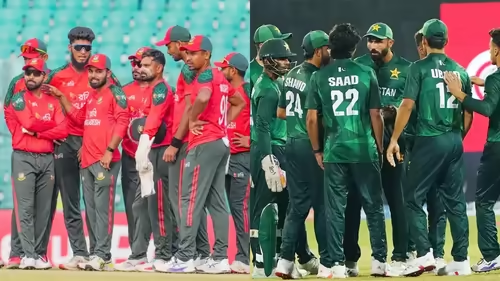
The countdown to the T20 World Cup 2026 has barely begun, but it’s already mired in geopolitical tension. With the tournament set to be hosted in India, neighboring nations—particularly Bangladesh and Pakistan—are grappling with complex political and security considerations. Now, former Pakistan leg-spinner Danish Kaneria has thrown gasoline on the fire with a brutally candid take that’s dividing fans across the subcontinent.
In a recent interview, Kaneria dismissed Bangladesh’s expressed security concerns as irrelevant to the global cricketing calendar. “If Bangladesh don’t play, it won’t matter,” he stated bluntly. But then came the kicker: “If Pakistan refuse… that’s a different story.”
Table of Contents
- The Controversial Quote in Context
- Why Bangladesh Might Skip T20 World Cup 2026
- The Stakes for Pakistan Are Far Higher
- ICC Stands Firm on India as Host
- Can Cricket Ever Be Separated From Politics?
- What This Means for the Future of the T20 World Cup 2026
- Sources
The Controversial Quote in Context
Danish Kaneria’s comments weren’t made in a vacuum. They came amid growing speculation that Bangladesh may not participate in the T20 World Cup 2026 due to unresolved diplomatic tensions and security apprehensions regarding travel to India. While the Bangladesh Cricket Board (BCB) has not officially confirmed a boycott, senior officials have voiced “serious concerns” .
Kaneria, known for his outspoken views, argued that Bangladesh’s absence would have minimal impact on the tournament’s commercial viability or competitive integrity. “Cricket is bigger than one team,” he said, adding that the sport must not be held hostage by political posturing .
Why Bangladesh Might Skip T20 World Cup 2026
The roots of Bangladesh’s hesitation lie in a long-standing history of strained bilateral relations with India, exacerbated by recent border disputes and trade disagreements. Unlike neutral venues like the UAE or Sri Lanka, hosting in India presents unique logistical and political challenges for Dhaka.
Key factors include:
- Security Protocols: Concerns over the safety of players and support staff in a high-profile event.
- Visa and Travel Logistics: Potential delays or denials could disrupt team preparation.
- Public and Political Pressure: Domestic backlash if the team is seen as “normalizing” ties during a period of tension.
However, as Kaneria pointed out, Bangladesh’s current standing in world cricket—while respectable—is not central to the ICC’s broadcast or sponsorship ecosystem in the way that other teams are.
The Stakes for Pakistan Are Far Higher
Where Kaneria’s argument gains real weight is in his distinction between Bangladesh and Pakistan. The India-Pakistan cricket rivalry is arguably the most commercially valuable fixture in the sport. Broadcasters pay hundreds of millions for the rights to televise a single match between the two nations.
A Pakistani boycott of the T20 World Cup 2026 would trigger a financial and PR crisis for the ICC. It would also deprive fans of what many consider the emotional heartbeat of the tournament. As Kaneria implied, Pakistan’s participation isn’t just desirable—it’s essential for the event’s global success .
ICC Stands Firm on India as Host
Despite the brewing controversy, the International Cricket Council (ICC) has maintained a clear stance: the tournament will be held in India as scheduled. In an official statement, the ICC emphasized its “full confidence in the BCCI’s ability to deliver a safe, secure, and world-class event for all participating teams” .
This position aligns with precedent. The 2023 ODI World Cup was also held in India without incident, even as Pakistan participated under tight security protocols. The ICC is banking on a similar outcome for 2026, urging all member nations to prioritize sport over politics—a sentiment echoed by Kaneria himself.
Can Cricket Ever Be Separated From Politics?
Kaneria’s plea—that “cricket should remain separate from politics”—is noble, but historically naive. From the apartheid-era bans to the 1999 Kargil War disrupting tours, cricket in South Asia has always been a proxy for broader geopolitical currents.
Yet, there’s a growing consensus among fans and administrators that the sport’s global appeal depends on its ability to rise above national disputes. Initiatives like neutral venues for India-Pakistan matches have worked in the past. Could a similar compromise be on the table for 2026? Some analysts suggest hybrid hosting—where high-risk matches are moved to a third country—though the ICC has shown no signs of budging .
What This Means for the Future of the T20 World Cup 2026
As of now, both Bangladesh and Pakistan remain officially committed to participating in the T20 World Cup 2026. But the next 12–18 months will be critical. Diplomatic breakthroughs could ease tensions, while escalations could force difficult decisions.
For fans, the hope is simple: that the world’s best players compete on the field, not in press conferences. Kaneria’s harsh words may sting, but they underscore a hard truth—the global game can’t afford to let politics dictate who plays and who doesn’t. Cricket’s spirit lies in its universality, and that’s worth protecting at all costs.