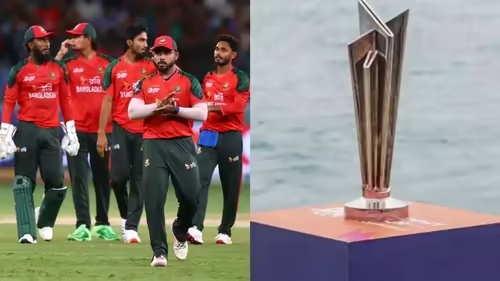
Bangladesh Out of T20 World Cup: A Shocking Exit and Scotland’s Historic Opportunity
In one of the most dramatic developments in recent cricket history, Bangladesh out of T20 World Cup is no longer speculation—it’s official. The International Cricket Council (ICC) has confirmed that Bangladesh will not participate in the upcoming ICC Men’s T20 World Cup 2026, which kicks off on February 7 across India and Sri Lanka. In their place, Scotland has been named as the replacement, marking a pivotal moment for both nations and the tournament itself.
The decision stems from Bangladesh’s refusal to travel to India due to cited security concerns—a stance the ICC firmly rejected after its own comprehensive risk assessments found “no direct or credible threat” to visiting teams . This unprecedented withdrawal has sent shockwaves through the global cricket community and raises serious questions about the intersection of politics, security, and sport.
Table of Contents
- Why Did Bangladesh Withdraw?
- ICC’s Response and Official Statement
- Scotland Steps Into the Spotlight
- Group C Now Features England, West Indies, and More
- Broader Implications for International Cricket
- Conclusion: A New Chapter for the T20 World Cup
- Sources
Why Did Bangladesh Withdraw?
The Bangladesh Cricket Board (BCB) had expressed deep reservations about touring India for the T20 World Cup, citing ongoing regional tensions and potential security risks to its players and staff. While the BCB did not publicly name specific threats, internal communications reportedly pointed to heightened geopolitical sensitivities following recent events in South Asia .
Despite repeated assurances from the ICC and the Board of Control for Cricket in India (BCCI)—including detailed security briefings and commitments from Indian authorities—the BCB stood firm. Their decision was met with criticism from several quarters, with many arguing that it sets a dangerous precedent for future international tournaments hosted in politically complex regions.
ICC’s Response and Official Statement
The ICC acted swiftly and decisively. After conducting its own independent security review in consultation with global risk management experts, the council concluded that “the tournament venues in India present no elevated risk beyond normal operational parameters” .
With Bangladesh unwilling to reconsider, the ICC invoked its contingency protocols and officially replaced them with the next highest-ranked eligible team from the qualification pathway: Scotland. The governing body emphasized its commitment to maintaining the integrity and competitive balance of the event, stating that all participating teams must adhere to the agreed-upon hosting framework.
Scotland Steps Into the Spotlight
For Scotland, this is more than just a last-minute call-up—it’s a historic opportunity. The Scottish national team, known for its gritty performances in global qualifiers, now finds itself on cricket’s biggest T20 stage alongside giants like England and the West Indies.
This marks only the second time Scotland has qualified for a men’s T20 World Cup (their first appearance was in 2021), but never before have they entered under such extraordinary circumstances. Captain Richie Berrington and his squad are expected to arrive in India early for acclimatization, with the entire nation rallying behind them. As per ESPNcricinfo, Scotland’s recent form in bilateral series against Associate nations has been promising, giving fans hope for a competitive showing .
Group C Now Features England, West Indies, and More
With Scotland’s inclusion, the revised Group C lineup for the T20 World Cup 2026 is now:
- England
- West Indies
- Nepal
- Italy
- Scotland
This group promises thrilling matchups. While England and the West Indies are clear favorites, Nepal’s passionate fanbase and Italy’s rising talent could make for compelling upsets. Scotland, now playing with house money, may adopt an aggressive, fearless approach—exactly the kind of unpredictability that makes T20 cricket so exciting.
Broader Implications for International Cricket
The fallout from Bangladesh out of T20 World Cup extends far beyond one tournament. It highlights a growing challenge for the ICC: balancing sporting diplomacy with real-world geopolitical realities. If teams can withdraw based on subjective security assessments—even when contradicted by official risk evaluations—it could undermine the stability of future global events.
Moreover, this incident underscores the importance of robust contingency planning. The smooth transition to Scotland demonstrates the value of a clear qualification hierarchy, but it also exposes vulnerabilities in the system. For deeper insights into ICC tournament regulations, see our [INTERNAL_LINK:ICC Event Hosting and Security Protocols Explained].
Conclusion: A New Chapter for the T20 World Cup
The removal of Bangladesh and the entry of Scotland has rewritten the narrative of the T20 World Cup 2026 before a single ball is bowled. While Bangladesh’s absence is a significant loss—both competitively and culturally—Scotland’s inclusion brings fresh energy and an underdog story that fans love. As the cricketing world watches, one thing is certain: this tournament will be remembered not just for who wins, but for how it began.
Sources
- Times of India: Original Article
- ESPNcricinfo – Scotland Cricket Team Profile: https://www.espncricinfo.com/team/scotland-24
- International Cricket Council (ICC) Official Site: https://www.icc-cricket.com/