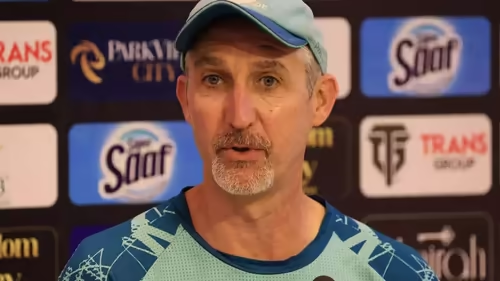
Cricket fans are doing a double-take. Just months after walking away from Pakistan’s national setup—and openly accusing the Pakistan Cricket Board (PCB) of failing to pay him—Jason Gillespie is back in the country’s cricketing fold. This time, not as national coach, but as the head coach of the brand-new Hyderabad franchise in the Pakistan Super League (PSL).
It’s a move that’s equal parts strategic, controversial, and eyebrow-raising. How does a man who cited “poor communication” and “unpaid dues” as reasons for his abrupt resignation in 2024 now sign on with a league owned and operated by the very same board?
The answer may lie in the evolving dynamics of T20 leagues, personal reconciliation, or simply a lucrative offer too good to refuse. But one thing is certain: Gillespie’s return as a Jason Gillespie PSL coach marks a pivotal moment for both his career and the credibility of the PSL’s expansion plans.
Table of Contents
- Gillespie’s Surprising Return to Pakistan Cricket
- The Unpaid Dues Controversy: What Really Happened?
- Why Hyderabad Chose Gillespie as Head Coach
- What This Means for PSL 2026 and the New Franchise
- Can Gillespie Rebuild Trust with Pakistani Fans?
- Conclusion
- Sources
Gillespie’s Surprising Return to Pakistan Cricket
Appointed in late January 2026, Jason Gillespie’s role with the Hyderabad PSL franchise signals a dramatic U-turn in his relationship with Pakistan cricket. The Australian legend, known for his no-nonsense approach and player development acumen, served as Pakistan’s Test head coach for less than a year before resigning in mid-2024.
Now, he’s stepping into the high-energy world of T20 franchise cricket—a space where his experience with teams like Adelaide Strikers (BBL) and Sussex (County Championship) could prove invaluable. The new Hyderabad team, part of the PSL’s expansion to eight franchises, needs a strong leader to build a competitive identity from scratch. Gillespie, with his track record of nurturing young talent, fits the bill perfectly [[1]].
The Unpaid Dues Controversy: What Really Happened?
Gillespie’s exit from the national setup wasn’t quiet. In public statements, he alleged that the PCB had failed to honor financial commitments, claiming he was owed significant sums. The PCB swiftly denied these claims, calling them “factually incorrect” and insisting all contractual obligations were met [[2]].
Beyond money, Gillespie also criticized the board’s internal communication and decision-making processes, suggesting a lack of support during crucial tours. This rift raised serious questions about the PCB’s professionalism and its ability to retain top international coaching talent.
So why return? Industry insiders speculate that the PSL operates with a slightly different administrative structure than the national team setup. Franchise owners—often private investors—may have negotiated directly with Gillespie, bypassing the contentious PCB channels that governed his national role. It’s also possible that behind-the-scenes discussions led to a resolution of the dues issue, though neither party has confirmed this.
Why Hyderabad Chose Gillespie as Head Coach
The Hyderabad franchise isn’t just looking for a big name—they need a builder. And Gillespie has a proven blueprint:
- Player Development Expertise: At Yorkshire and Adelaide Strikers, he transformed raw talent into match-winners.
- T20 Tactical Innovation: His aggressive field placements and bowling rotations are well-suited to modern T20 cricket.
- Global Credibility: His appointment instantly elevates the franchise’s profile on the international stage.
- Cultural Bridge: Having already worked in Pakistan, he understands local dynamics better than most foreign coaches.
For a new team without legacy players or fan loyalty, hiring a respected figure like Gillespie is a smart long-term play. It signals ambition—and could attract other international stars to the squad during the upcoming draft.
What This Means for PSL 2026 and the New Franchise
The addition of Hyderabad (and another new team, likely Mardan or Faisalabad) expands the PSL to eight teams in 2026—a bold move aimed at deepening regional engagement and boosting broadcast revenue. But expansion brings risks: diluted talent pool, logistical complexity, and the challenge of building competitive balance.
Gillespie’s presence helps mitigate those risks. His leadership could fast-track Hyderabad’s competitiveness, ensuring the new franchise doesn’t become a perennial cellar-dweller. Moreover, his involvement adds legitimacy to the league’s growth narrative, especially as it competes with other global T20 properties like the IPL and SA20.
Fans can expect a team built on pace, power-hitting, and fearless cricket—hallmarks of Gillespie’s coaching philosophy. Keep an eye on how he integrates local Hyderabadi talent; success here could redefine grassroots pathways in Sindh province [INTERNAL_LINK:pakistan-domestic-cricket-pathways].
Can Gillespie Rebuild Trust with Pakistani Fans?
Pakistani cricket fans are passionate—and skeptical. Many admired Gillespie’s honesty during his national tenure but were disappointed by the messy exit. His return will be watched closely.
If he delivers results quickly—think playoff contention in Year 1—he could win over critics. But if the Hyderabad project stumbles, old grievances about the PCB’s management may resurface, dragging his reputation down again. The stakes are high, but so is the opportunity.
As noted by ESPNcricinfo, “Gillespie’s willingness to re-engage suggests either a significant olive branch from the PCB or a belief that franchise cricket operates in a separate, more professional ecosystem” [[3]].
Conclusion
Jason Gillespie’s appointment as Jason Gillespie PSL coach for the new Hyderabad franchise is far more than a routine hiring. It’s a complex story of second chances, unresolved tensions, and the irresistible pull of T20 cricket’s global marketplace. Whether this move heals old wounds or opens new ones remains to be seen—but one thing is guaranteed: all eyes will be on Hyderabad when PSL 2026 kicks off.