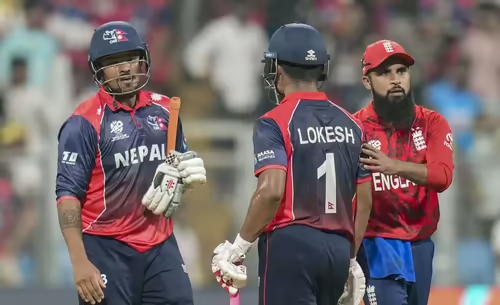
The cricketing world is still buzzing about Nepal’s electrifying performance against England in the T20 World Cup 2026—a match that showcased heart, skill, and the raw potential of the game’s emerging nations. But amid the social media praise and fleeting headlines, one voice cut through the noise with a sharp, necessary truth.
Former India opener and respected analyst Aakash Chopra didn’t just applaud Nepal’s effort. He called out the hypocrisy of the system. In a powerful statement, he urged the International Cricket Council (ICC) and full-member nations to “stop the lip service” and instead provide sustained, meaningful opportunities for teams like Nepal to grow beyond the occasional World Cup appearance.
Table of Contents
- Chopra’s Blunt Message to the ICC
- Nepal’s T20 World Cup Heroics: Why It Matters
- The Problem with Token Participation
- What Real Support Actually Looks Like
- Success Stories from Other Associate Nations
- The Path Forward for Global Cricket
- Conclusion: Beyond the Applause
- Sources
Chopra’s Blunt Message to the ICC
Speaking on his widely followed analysis platform, Aakash Chopra minced no words. “We all clapped when Nepal played well against England. We posted reels, we used hashtags, we called them ‘inspirational.’ But what happens after the World Cup ends?” he asked rhetorically.
His core argument is simple yet damning: associate teams are given a stage every four years, only to be forgotten for the next 1,460 days. “This isn’t development,” Chopra asserted. “This is tokenism. If you truly believe in globalizing cricket, you don’t just invite them to the party—you give them a seat at the table year-round.”
Nepal’s T20 World Cup Heroics: Why It Matters
Nepal’s match against England wasn’t just competitive—it was historic. Chasing a stiff target, they came within 15 runs of pulling off one of the biggest upsets in T20 World Cup history. Players like Kushal Malla and Dipendra Singh Airee displayed power-hitting and composure that rivaled top-tier professionals.
This performance wasn’t a fluke. It was the result of years of grassroots investment, passionate fan support, and a generation of players who grew up idolizing the game despite limited resources. Their near-victory proved that the gap between full members and top associates is narrowing—but only if they’re given consistent exposure.
The Problem with Token Participation
Currently, the pathway for associate nations is fraught with obstacles:
- Limited Fixtures: Most associate teams play fewer than 10 international matches a year, often against other associates.
- No Bilateral Series: Full-member nations rarely schedule official bilateral series against them, denying crucial revenue and experience.
- Financial Instability: Without regular high-profile games, boards struggle to secure sponsorships or government funding.
- Player Exodus: Talented players often leave the sport early due to lack of career viability.
As Chopra pointed out, “You can’t build a house by laying bricks once every four years. Cricket needs constant nurturing.”
What Real Support Actually Looks Like
Chopra proposed concrete steps for genuine development:
- Mandatory Bilateral Series: Each full-member nation should play at least one bilateral T20I or ODI series per year against an associate team.
- Inclusion in Regional Leagues: Expand tournaments like the Lanka Premier League or SA20 to include franchise slots for associate players.
- ICC-Funded Development Tours: Funded tours where associate teams train and play in high-performance environments.
- Revenue Sharing: A small percentage of ICC event profits should be allocated directly to associate board development programs.
Success Stories from Other Associate Nations
There’s precedent for this model working. The Netherlands, after consistent exposure in European T20 leagues and occasional tours against full members, produced stars like Bas de Leede and Logan van Beek. Similarly, Namibia’s inclusion in South Africa’s domestic structures helped them reach the Super 12 stage in the 2021 T20 World Cup.
These examples prove that when given real opportunity—not just a World Cup ticket—associate nations thrive. As noted by the International Cricket Council, its “10-Year Strategic Plan” aims to grow the game globally, but critics argue implementation remains superficial without binding commitments from full members.
The Path Forward for Global Cricket
The future of cricket’s global appeal depends on its inclusivity. With sports like football and basketball dominating worldwide, cricket risks becoming a regional sport if it doesn’t empower new markets. Nepal, with its 30 million passionate fans, represents a massive untapped audience.
Investing in Nepal isn’t charity—it’s smart business. Regular matches would boost broadcast rights, merchandise sales, and digital engagement across South Asia. For more on how associate nations are reshaping the game, see our feature on The Rise of Associate Nations in Modern T20 Cricket.
Conclusion: Beyond the Applause
Aakash Chopra’s message is a wake-up call. Applauding Nepal’s spirit is easy. Building a system where they—and teams like Scotland, Uganda, and UAE—can compete regularly is hard. But it’s necessary. True respect isn’t shown in viral tweets after a World Cup match; it’s shown in signed fixture calendars, development grants, and open doors. Until then, the “lip service” will continue—and so will the wasted potential of a global game that could be so much more.
Sources
- Times of India. “‘Stop the lip service’: Ex-India cricketer’s blunt message after Nepal stun the T20 WC.” https://timesofindia.indiatimes.com/…
- ICC Official Website. “ICC 10-Year Strategic Plan: Growing the Game Globally.” https://www.icc-cricket.com/
- ESPNcricinfo. “Nepal vs England, T20 World Cup 2026 – Match Report.” https://www.espncricinfo.com/…
- Cricbuzz. “Aakash Chopra criticizes ICC for lack of support to associate nations post-Nepal’s T20 WC show.” https://www.cricbuzz.com/…