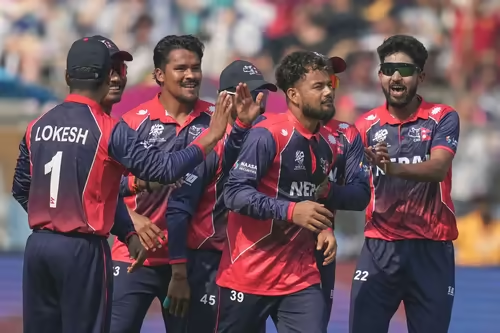
They didn’t win on the scoreboard—but they won everywhere else.
In their very first T20 World Cup match, Nepal didn’t just show up; they stood tall against the reigning champions, England, in a performance that redefined what it means to be an ‘underdog.’ Chasing 186 on a high-pressure stage at Mumbai’s Wankhede Stadium, Nepal came within four runs of pulling off one of the biggest upsets in tournament history. And while the result reads as a loss, the emotion, the skill, and the sheer spectacle told a different story—one of arrival, pride, and undeniable potential.
What made it even more special? The deafening sea of blue and red in the stands. Thousands of Nepali fans—expats, students, families—transformed the iconic venue into what Nepal pacer Karan KC poignantly called “a home ground.” Their chants, drums, and unwavering belief weren’t just background noise; they were the heartbeat of a team playing for more than just victory.
Table of Contents
- The Match That Defied Expectations
- Wankhede Turned Kirtipur: The Fan Factor
- Batting Bravery Against English Firepower
- England’s Relief—and Respect
- Why This Loss Is a Turning Point for Nepal
- The Global Message from Mumbai’s Stands
- Conclusion: Not a Defeat, But a Declaration
- Sources
The Match That Defied Expectations
On paper, this was a mismatch. England, stacked with T20 superstars like Jos Buttler, Jofra Archer, and Adil Rashid, were expected to cruise past debutants Nepal. But cricket, especially in its shortest format, thrives on chaos—and Nepal embraced it with fearless intent.
After England posted 185/8—built on Buttler’s fluent 68—most assumed the contest was over. But Nepal’s openers had other plans. Young gun Kushal Malla launched a blistering assault, scoring 47 off just 29 balls, including five fours and two sixes. He took on Archer’s pace and Rashid’s guile with equal confidence, setting a tone of aggressive optimism.
When Malla fell, Dipendra Singh Airee (39 off 24) kept the chase alive, and even lower-order batters like Rohit Paudel and Gulshan Jha refused to surrender. With 10 needed off the final over, the entire stadium held its breath. Though they finished at 181/9, the margin—just four runs—felt like a moral victory for a nation playing its first-ever World Cup match.
Wankhede Turned Kirtipur: The Fan Factor
For Nepali cricket fans, Kirtipur—the home of the Tribhuvan University International Cricket Ground—is sacred. But on this night, Mumbai became its spiritual extension.
An estimated 25,000+ supporters flooded the Wankhede, many traveling from across India and neighboring countries. They waved flags, beat traditional madal drums, and sang folk songs adapted into cricket chants. Every boundary triggered a wave of blue; every dot ball was met with collective groans that echoed through the stands.
“It felt like a home ground,” said fast bowler Karan KC post-match. “We could hear our names, our songs—it gave us goosebumps and extra energy.” This wasn’t just support; it was a cultural statement. Vendors outside sold momos and sel roti, turning the match into a festival of Nepali identity on foreign soil.
Batting Bravery Against English Firepower
Facing one of the most intimidating bowling lineups in world cricket, Nepal’s batters displayed remarkable composure:
- Kushal Malla targeted short balls with audacious pull shots and clever ramps over fine leg.
- Dipendra Airee used his brute strength to clear the mid-wicket fence twice, keeping the required rate manageable.
- Even tailenders rotated strike intelligently in the death overs, refusing to give up until the very last ball.
Their approach blended modern T20 aggression with disciplined shot selection—a testament to their preparation and growing technical maturity.
England’s Relief—and Respect
Post-match, England captain Jos Buttler didn’t gloat. Instead, he offered genuine respect: “Nepal played outstandingly well. We knew they had talent, but their execution under pressure was exceptional. We got away with it tonight.”
This humility from the champions speaks volumes. It signals a shift in the global game—where associate nations are no longer pushovers but legitimate threats capable of toppling giants on their day.
Why This Loss Is a Turning Point for Nepal
Historically, Nepal has punched above its weight in regional tournaments but struggled for global recognition. This performance changes that narrative. Falling just four runs short against the world’s best proves they belong at this level.
As argued by analysts like Aakash Chopra, such moments must translate into sustained opportunity—regular bilateral series, inclusion in franchise leagues, and ICC-backed development programs. This match is Nepal’s strongest case yet for being treated as a serious cricketing nation, not just a World Cup novelty.
The Global Message from Mumbai’s Stands
Nepal’s fan turnout is a blueprint for cricket’s global future. The sport’s growth in non-traditional markets hinges on diaspora engagement. From Afghan communities in Australia to West Indian enclaves in London, these passionate groups turn matches into cultural events.
The International Cricket Council (ICC) has long championed “cricket for all,” and Nepal’s Wankhede spectacle is living proof that the strategy works—when given a platform, passion follows. This wasn’t just a match; it was a demonstration of cricket’s unifying power across borders.
Conclusion: Not a Defeat, But a Declaration
Yes, Nepal lost by four runs. But in every other way, they won. They won respect, attention, and a place in T20 World Cup folklore. They showed the world that heart, skill, and fan passion can challenge even the mightiest. For a team making its debut, there’s no greater legacy than that. This wasn’t an end—it was a beginning.
Sources
- Times of India. “‘It felt like a home ground’: Nepal pacer reflects after narrow loss to England.” https://timesofindia.indiatimes.com/…
- ICC Official Website. “Nepal Men’s Team Profile – T20 World Cup 2026.” https://www.icc-cricket.com/
- ESPNcricinfo. “England vs Nepal, T20 World Cup 2026 – Match Report.” https://www.espncricinfo.com/…
- Cricbuzz. “Nepal’s dream debut ends in heartbreak as they fall 4 runs short against England.” https://www.cricbuzz.com/…