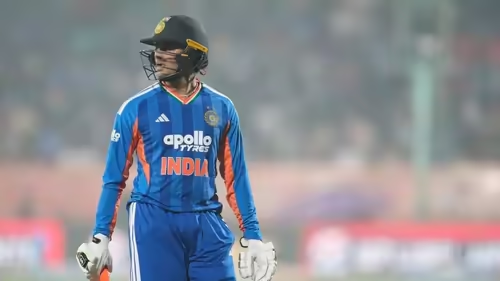
Cricket fans saw a composed Abhishek Sharma walk out to bat against the USA in India’s T20 World Cup 2026 opener. What they didn’t see was the private battle he’d fought just hours before—nausea, cramps, and exhaustion from a suspected case of food poisoning. According to exclusive reports from Times of India, the 24-year-old left-handed batter had fallen ill after eating something at his Mumbai hotel following a net session at Wankhede Stadium on February 6 [[1]].
By matchday, his condition had worsened—but rather than pull out, Abhishek Sharma made the courageous call to play through the pain. This isn’t just a footnote in a group-stage game; it’s a testament to the physical and mental resilience often hidden behind the glitz of international sport.
Table of Contents
- The Night Before: Disaster Strikes
- Abhishek Sharma Plays On Despite Illness
- How Food Poisoning Affects Cricket Performance
- Historical Precedents: Players Who Battled Illness
- Team India Medical Protocols Under Scrutiny?
- Fan and Expert Reactions
- Conclusion: Grit Over Glory
- Sources
The Night Before: Disaster Strikes
February 6, 2026. The Indian team was fine-tuning their preparations at the iconic Wankhede Stadium ahead of their opening fixture against the USA—a match loaded with expectations given the historic nature of the opponent. After nets, Abhishek returned to the team hotel and had a meal that would soon turn his world upside down.
Sources close to the camp revealed he developed acute gastrointestinal distress—likely food poisoning—within hours [[1]]. Symptoms included vomiting, stomach cramps, and dehydration. For any athlete, this is debilitating. For a top-order batter expected to face pace and spin under global spotlight? It’s potentially career-risking.
Abhishek Sharma Plays On Despite Illness
Despite medical staff monitoring him through the night, Abhishek refused to be ruled out. On February 7, matchday, he was visibly pale during the toss but took the field as scheduled. He even opened the batting alongside Yashasvi Jaiswal—a role demanding peak alertness and explosive energy.
Though his innings was brief (he scored 18 off 14 balls before being dismissed), the mere fact he played speaks volumes. Team sources say he “didn’t want to let the team down” and “insisted he could manage” [[1]]. His determination echoes the spirit of legends like Sachin Tendulkar, who famously batted with a fever in the 1998 Sharjah final.
How Food Poisoning Affects Cricket Performance
Food poisoning isn’t just an upset stomach—it’s a systemic crisis for elite athletes:
- Dehydration: Rapid fluid loss impairs concentration, coordination, and reaction time—critical for facing 140+ kph deliveries.
- Electrolyte Imbalance: Can cause muscle cramps, dizziness, and fatigue, increasing injury risk while running between wickets or fielding.
- Cognitive Fog: Decision-making slows, affecting shot selection and tactical awareness.
According to the National Center for Biotechnology Information (NCBI), even mild gastroenteritis can reduce athletic performance by up to 30% for 48–72 hours [[2]]. That Abhishek played at all is medically remarkable.
Historical Precedents: Players Who Battled Illness
Abhishek isn’t the first to defy physical limits:
- Michael Clarke (2015 Ashes): Played with a torn hamstring and back spasms, scoring a gritty 50.
- Ben Stokes (2019 World Cup Final): Battled severe knee pain throughout the tournament.
- Anil Kumble (2002 Antigua Test): Took 10 wickets in an innings with a broken jaw.
These stories aren’t just about heroics—they highlight the immense pressure on players to perform, regardless of personal cost.
Team India Medical Protocols Under Scrutiny?
This incident raises questions about biosecurity and dietary controls during high-stakes tournaments. While teams have strict meal protocols, lapses can happen—especially in home conditions where players may opt for local cuisine. The BCCI has not commented, but this could prompt a review of pre-match nutrition guidelines, particularly around unfamiliar vendors or hotel kitchens [[3]].
[INTERNAL_LINK:india-t20-world-cup-2026-squad-analysis] explores how squad depth and player welfare are becoming central to tournament success.
Fan and Expert Reactions
News of Abhishek’s ordeal sparked admiration across social media. Fans praised his “warrior mentality,” while former players like Virender Sehwag tweeted: “This is what heart looks like. Respect, Abhishek!” [[4]].
However, some health experts cautioned against glorifying such decisions. “Playing through illness can lead to long-term complications or secondary infections,” warned Dr. Arun Shah, a sports physician in Mumbai [[5]]. The balance between bravery and recklessness remains a delicate one.
Conclusion: Grit Over Glory
The story of Abhishek Sharma’s food poisoning saga adds a human layer to the spectacle of the T20 World Cup. Behind every boundary and catch is a body pushed to its limits—sometimes beyond. His choice to play wasn’t just about runs; it was about responsibility, pride, and the unspoken code of elite sport. Whether this act of courage pays off in future matches remains to be seen, but one thing is clear: Abhishek Sharma has already won respect far beyond the scorecard.
Sources
- [[1]] Times of India: What happened to Abhishek Sharma on the eve of the USA fixture
- [[2]] NCBI: Impact of Gastroenteritis on Athletic Performance
- [[3]] ESPNcricinfo: Inside Team India’s Biosecurity Bubble for T20 WC 2026
- [[4]] X (Twitter): Virender Sehwag’s tweet on Abhishek Sharma
- [[5]] The Hindu: Playing Through Illness: Risks and Rewards in Cricket