Table of Contents
- Axar’s Bold Statement on Captaincy
- Debunking the English Fluency Myth in Indian Cricket
- What Really Makes a Great Captain?
- How Media Fuels Harmful Stereotypes
- Axar Patel’s Own Leadership Credentials
- Why This Conversation Matters for Indian Cricket
- Final Thoughts
- Sources
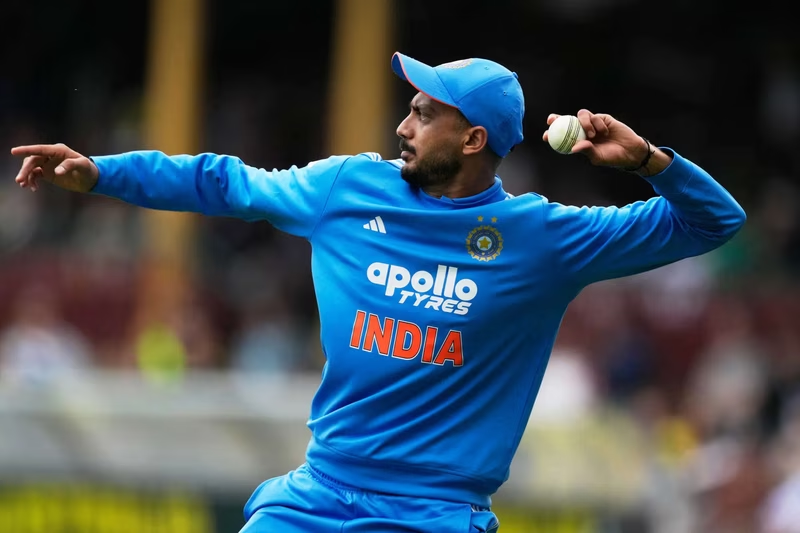
The debate over who “looks” or “sounds” like a captain has been simmering in Indian cricket circles for years. Now, Axar Patel has thrown it into sharp focus with a refreshingly honest and necessary perspective. In a recent interview, the experienced all-rounder firmly declared: “Captaincy isn’t about English or image.” For Patel, the essence of leadership lies far deeper—in understanding your teammates, building trust, and getting the best out of them, regardless of the language you speak .
This statement isn’t just about personal opinion; it’s a direct challenge to deeply ingrained biases that have shaped public and media narratives for decades. Let’s unpack why his words matter so much.
Axar’s Bold Statement on Captaincy
Axar Patel didn’t shy away from the controversy. He pointed out a troubling reality: a player’s leadership potential is often judged more by their command of English and their public persona than by their on-field acumen or man-management skills. “People think that if you speak English, you are more eligible to be a captain. That’s not true,” he asserted .
His core argument is simple yet profound. A captain’s primary job is to lead a diverse group of individuals—each with their own background, language, and personality—and unify them toward a common goal. This requires empathy, emotional intelligence, and cricketing nous, not a polished accent or a photogenic smile.
Debunking the English Fluency Myth in Indian Cricket
The idea that English fluency equals leadership capability is a colonial hangover that has no place in modern, diverse India. India has 22 officially recognized languages and hundreds of dialects. To suggest that a captain must be fluent in a foreign language to lead a team of players from Tamil Nadu, Punjab, Bengal, and Gujarat is not just illogical—it’s exclusionary.
Consider some of India’s most successful captains:
- Mahendra Singh Dhoni: Hailed from Ranchi and was famously soft-spoken, yet he led India to three ICC trophies with unmatched calm and tactical genius.
- Gundappa Viswanath: Though not a full-time captain, his leadership was defined by grace and cricketing integrity, not oratory skills.
- Rahul Dravid: Known as “The Wall,” his leadership was built on discipline and deep cricketing knowledge, not his command of the English language.
Their legacy proves that Axar Patel captaincy philosophy is rooted in a long and successful tradition.
What Really Makes a Great Captain?
According to Axar, the true markers of a great leader are far more practical and human:
- Man-Management: Knowing how to communicate with and motivate 15 different personalities.
- Tactical Acumen: Making smart, in-the-moment decisions under pressure.
- Leading by Example: Showing commitment, discipline, and resilience on the field.
- Building Trust: Creating an environment where players feel valued and supported.
These are the qualities that win matches and build winning cultures, not the ability to give a slick press conference.
How Media Fuels Harmful Stereotypes
Axar also took aim at the role of media and social media in shaping public perception. “The perception is created by the media. They highlight what they want to highlight,” he noted .
In an age of hot takes and viral clips, a player’s image can be reduced to a single interview or a social media post. Nuance is lost, and genuine cricketing ability is often overshadowed by superficial traits like fluency or style. This creates an unfair and often inaccurate narrative about a player’s leadership potential, which can influence fan opinion and even selection decisions.
Axar Patel’s Own Leadership Credentials
It’s worth noting that Axar isn’t just speaking theoretically. He has significant leadership experience himself. He has captained Delhi Capitals in the IPL and has led Gujarat in domestic cricket . His calm demeanor, sharp cricketing brain, and ability to manage high-pressure situations have been evident on numerous occasions.
His comments, therefore, come from a place of personal experience and deep reflection. He’s seen firsthand how leadership is judged—and often misjudged—within the ecosystem of Indian cricket.
Why This Conversation Matters for Indian Cricket
Axar’s intervention is a critical step toward a more inclusive and merit-based definition of leadership in Indian sports. By challenging these stereotypes, he’s opening the door for talented players from all linguistic and cultural backgrounds to be seen for their true potential.
For young cricketers across the country, this is a powerful message: your value isn’t determined by how well you speak English, but by your skill, your heart, and your ability to inspire your teammates. This is the kind of shift that can strengthen the entire fabric of Indian cricket from the grassroots to the national team. For more on the future of Indian leadership, check out our [INTERNAL_LINK:players] section.
Final Thoughts
Axar Patel’s comments on Axar Patel captaincy and the role of language are a long-overdue reality check. True leadership in cricket—and in life—is about substance, not style. It’s about connection, not communication in a specific language. By calling out this pervasive stereotype, Patel has not only defended his own worth but has also championed a more authentic and inclusive vision for the future of Indian cricket. The captain’s armband should go to the best leader, not the best speaker.
Sources
- Times of India – Original Article
- Axar Patel’s quotes on captaincy and language ,
- Context on media’s role in shaping player perception
- Axar’s domestic and IPL captaincy record
- ICC Official News