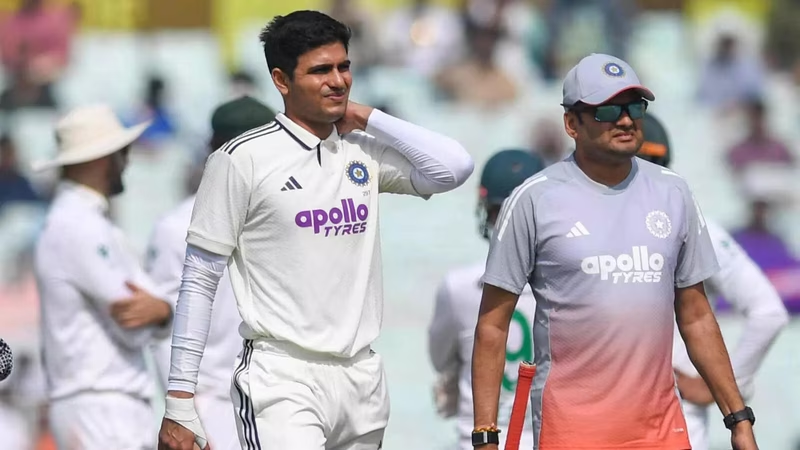
In a major blow to India’s campaign against South Africa, Test captain Shubman Gill is now at the center of a high-stakes fitness race. While he’s been officially discharged from the hospital following a sudden neck spasm that forced him out of the first Test in Visakhapatnam, his availability for the upcoming Guwahati clash remains highly uncertain .
Table of Contents
- The Hospital Scare and Its Consequences
- Shubman Gill Injury: What We Know
- Impact on India’s Batting Lineup
- Potential Replacements for the Guwahati Test
- Why This Captaincy Crisis Is Different
- Conclusion
- Sources
The Hospital Scare and Its Consequences
The drama unfolded just hours before the toss in Visakhapatnam. Gill, who was set to lead India in the opening Test of the series, experienced a severe neck spasm during the pre-match warm-up. The pain was significant enough to warrant an immediate hospital visit, where he was kept under observation .
His last-minute withdrawal left the Indian team scrambling. Without their captain and a key top-order batter, the side looked disjointed. The result? A shocking 30-run defeat—their first Test loss at home in over two years. The absence of Gill’s calm leadership and elegant strokeplay was felt in every department, especially during the batting collapse where India was bowled out for just 153 in their second innings .
Shubman Gill Injury: What We Know
According to BCCI sources, Gill’s issue is a muscular spasm in the cervical region, commonly triggered by poor sleeping posture, overexertion, or sudden awkward movement . While not a long-term injury, the location—near the spine and critical nerves—makes it extremely sensitive.
Crucially, team doctors have reportedly advised against air travel
Impact on India’s Batting Lineup
Gill’s potential absence creates a massive void at the top of the order. His role isn’t just about runs; he’s the anchor who sets the platform for players like Yashasvi Jaiswal and Virat Kohli. Without him, the batting order loses its balance and stability.
Consider the ripple effects:
- Leadership vacuum: Gill’s calm on-field demeanor has been a key asset. His deputy, Jasprit Bumrah, is a bowling captain—a very different dynamic.
- Top-order fragility: India’s openers have been inconsistent. Gill at No. 3 provided crucial stability that’s now missing.
- Mental blow: Losing a match you’re expected to win at home, especially without your captain, can dent team morale significantly.
Potential Replacements for the Guwahati Test
If Gill is ruled out, the selectors have a tough call to make. Here are the most likely options:
- Ruturaj Gaikwad: The current white-ball vice-captain is in fine form and has previous Test experience. He’s the frontrunner to step in as an opener, pushing Jaiswal to No. 3.
- Abhimanyu Easwaran: A reliable domestic performer with a solid first-class record, though his previous Test came in 2021.
- Shreyas Iyer: If fit, he could slot in at No. 4, allowing Kohli to move up—but his recent back issues are a concern.
Any change will disrupt the carefully crafted batting hierarchy India has built over the past year, as detailed in our [INTERNAL_LINK:Players] profiles.
Why This Captaincy Crisis Is Different
This isn’t just another injury. Gill, at 25, is the future of Indian cricket—a leader groomed for the long haul across all formats. His sudden unavailability highlights a vulnerability in India’s leadership depth. With Rohit Sharma retired from Tests and Virat Kohli playing a reduced role, the burden on Gill was immense.
As noted by cricket historian and analyst Suresh Menon in a recent column for The Hindu, “The transition to a post-Kohli, post-Rohit era hinges on Gill’s health and form. A prolonged absence could force a reset in India’s Test roadmap .” This underscores the high stakes beyond just one match.
Conclusion
While it’s a relief that Shubman Gill has been discharged, the uncertainty surrounding his Shubman Gill injury casts a long shadow over India’s second Test preparations. The medical team’s caution on air travel is a major red flag. Whether he’s passed fit or not, this incident is a stark reminder of the physical and mental toll of modern cricket—and just how quickly fortunes can change in a high-pressure series.