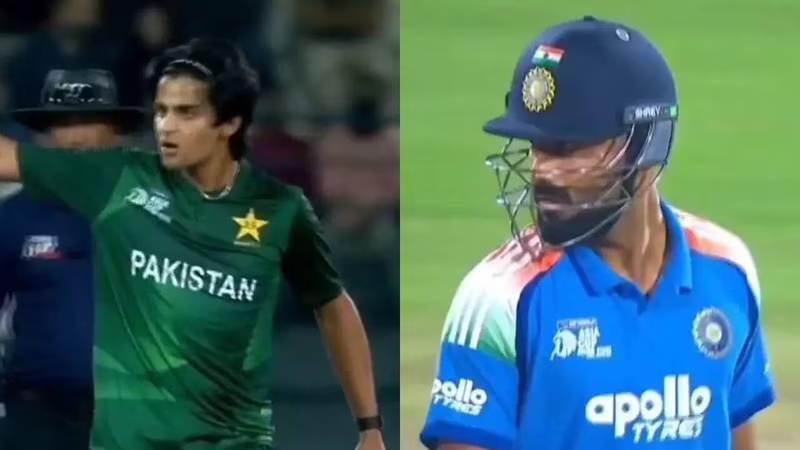
The India A vs Pakistan Shaheens match at the Rising Stars Asia Cup in Doha wasn’t just about runs and wickets—it was a raw display of emotion, national pride, and the simmering intensity that defines one of sport’s most storied rivalries. What started as a competitive fixture quickly escalated into a flashpoint when Pakistani bowler Saad Masood delivered an aggressive send-off to Indian batter Naman Dhir, who responded not with words, but with a searing, unblinking stare that’s now gone viral .
Table of Contents
- The Moment That Sparked a Thousand Tweets
- Context: No Handshake and High Stakes
- Who Are Naman Dhir and Saad Masood?
- The Fine Line Between Passion and Aggression
- How the Rising Stars Asia Cup Reflects Bigger Dynamics
- Conclusion
- Sources
The Moment That Sparked a Thousand Tweets
The incident occurred during India A’s innings. After Naman Dhir was dismissed by Saad Masood—caught behind for a fighting 27—the Pakistani pacer didn’t just walk back to his mark. Instead, he turned, pointed aggressively at Dhir, and shouted a loud, animated message as the Indian batter walked off .
What happened next stunned onlookers: Dhir stopped mid-stride, turned around, and locked eyes with Masood. For a full five seconds, he stood his ground, returning the glare with icy composure. No words were exchanged—just a silent, powerful statement of defiance. The image of that stare has since become a symbol of the emotional weight these contests carry, even at the emerging-talent level.
Context: No Handshake and High Stakes
This wasn’t an isolated outburst. The tension had been building from the very first over. In a notable departure from cricketing tradition, the two teams skipped the customary pre-match handshake—a ritual meant to embody sportsmanship .
Given the broader geopolitical context and the historic intensity of India-Pakistan encounters, this omission set the tone for a fiercely contested, emotionally charged game. The stakes were high: both teams were battling for a semifinal berth in the prestigious Rising Stars Asia Cup, a tournament showcasing the next generation of Asian cricketing talent.
Who Are Naman Dhir and Saad Masood?
While their names may not yet be household staples, both players are rising stars in their respective systems:
- Naman Dhir: A right-handed batter from Delhi, Dhir is known for his gritty middle-order resilience. He was part of India’s victorious U-19 World Cup squad and has been a consistent performer in domestic age-group cricket.
- Saad Masood: A right-arm medium-fast bowler from Pakistan, Masood grabbed headlines with a two-wicket haul in this match. His aggressive on-field demeanor mirrors a new generation of Pakistani quicks unafraid to wear their emotions on their sleeve.
Their clash, therefore, wasn’t just personal—it represented the competitive fire that fuels the future of this rivalry, as we track in our [INTERNAL_LINK:Players] development series.
The Fine Line Between Passion and Aggression
Clean aggression has always been part of cricket—think Allan Border’s grit or Wasim Akram’s fiery spells. But in today’s hyper-connected world, every gesture is magnified. Experts are divided on Masood’s send-off:
- Supporters argue it’s part of competitive spirit—a way to celebrate a hard-earned wicket in a high-pressure game.
- Critics, including former international umpire Simon Taufel, caution that such behavior can “escalate tensions unnecessarily and undermine the spirit of the game,” especially among young players still learning emotional control.
Dhir’s silent stare, meanwhile, was widely praised as a masterclass in composure—answering fire not with fire, but with unwavering resolve.
How the Rising Stars Asia Cup Reflects Bigger Dynamics
This incident is a microcosm of a larger truth: cricket between India and Pakistan has never been just a game. Even in developmental tournaments like the India A vs Pakistan Shaheens contest, the weight of history, national expectation, and media scrutiny creates an environment where emotions run high.
The Asian Cricket Council (ACC), which organizes the Rising Stars Asia Cup, promotes the event as a platform for unity and talent development . Yet, the reality on the ground often reflects the complex diplomatic and cultural realities of the region. These young players aren’t just representing teams—they’re representing nations with a deep, complicated history.
Conclusion
The staredown between Naman Dhir and Saad Masood will be remembered long after the scorecard fades. It encapsulates the duality of the India A vs Pakistan Shaheens rivalry: fierce competition on one hand, and the unspoken burden of legacy on the other. While the send-off crossed a line for some, Dhir’s silent response reminded us that the strongest statements are often made in stillness. As these young talents progress, how they channel this intensity—into excellence rather than enmity—will shape the future of cricket’s most electric rivalry.