Why Sudharsan & Jurel Batted With One Pad Before the Guwahati Test
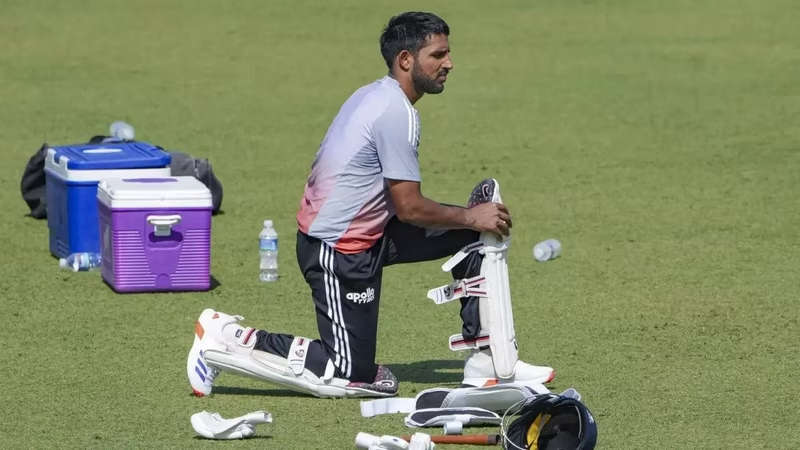
As India reels from a shocking first-Test defeat to South Africa, the team’s preparation for the crucial second Test in Guwahati has taken a fascinating—some might say old-school—turn. Young batters **Sai Sudharsan** and **Dhruv Jurel** were spotted in training batting with only one pad: their back leg protected, their front leg bare.
This isn’t a fashion statement or a gear malfunction. It’s a deliberate, time-tested **one pad batting drill** designed to force batters onto the front foot and use their bat—not their pad—as their primary line of defense against spin. And in the context of India’s current crisis, it’s a tactical masterstroke that could define the series.
Table of Contents
- What Is the One Pad Batting Drill?
- Why India Is Reviving This Old-School Technique
- Sai Sudharsan in Line for Debut
- How the Drill Builds Front-Foot Confidence
- Historical Roots: From Gavaskar to Dravid
- South Africa’s Spin Threat: Keshav Maharaj
- Can This Drill Turn the Series Around?
- Sources
What Is the One Pad Batting Drill?
The **one pad batting drill** is a classic coaching method where a batter removes the protective pad from their front leg during net sessions. The logic is brutally simple: if you don’t commit to the front foot and play with a straight bat, you’ll get hit—and it will hurt.
This discomfort creates instant behavioral correction. Batters learn to:
- Move decisively onto the front foot against full and good-length deliveries.
- Keep their head over the ball and eyes level.
- Use the bat’s face to defend, minimizing pad play that invites LBW appeals.
It’s not about pain for pain’s sake—it’s about rewiring instinct under pressure.
Why India Is Reviving This Old-School Technique
India’s batting collapse in Centurion exposed a deep-rooted issue: batters repeatedly falling onto the back foot against South Africa’s spinners, especially Keshav Maharaj. Multiple dismissals came from hesitant prods, half-cocked defenses, and poor footwork—classic symptoms of soft technique.
With the series at 0–1 and pride on the line, head coach Gautam Gambhir and batting coach Vikram Rathour are taking no chances. Reviving this drill signals a return to fundamentals—a humble acknowledgment that sometimes, the oldest solutions are the best ones.
Sai Sudharsan in Line for Debut
Sai Sudharsan, the elegant left-hander from Tamil Nadu, is widely expected to make his Test debut in Guwahati, possibly replacing the injured Shubman Gill or an out-of-form batter. Known for his cover drives, Sudharsan has occasionally been criticized for getting tied down against quality spin in domestic cricket.
This drill is his crash course in overseas resilience. If he can internalize front-foot dominance, he won’t just survive—he could thrive.
How the Drill Builds Front-Foot Confidence
Modern cricket, especially T20s, rewards back-foot play—pulls, cuts, and sweeps. But Test cricket, particularly in challenging conditions, demands the opposite. The **one pad batting drill** directly counters this imbalance by:
- Creating muscle memory for forward presses.
- Reducing LBW risk by promoting bat-first contact.
- Improving balance through committed foot movement.
For young players like Sudharsan and Jurel—who may face long spells against spin—this foundation is non-negotiable.
Historical Roots: From Gavaskar to Dravid
This technique isn’t new. Legendary Indian batters like **Sunil Gavaskar** and **Rahul Dravid** reportedly used similar methods during their formative years. Gavaskar’s famed defense against the West Indies pace battery was built on relentless net sessions that prioritized discipline over flair.
As Dravid once said: “Technique isn’t what you do when you’re comfortable. It’s what you do when you’re under fire.” The one-pad drill embodies that philosophy.
For further reading on classical batting techniques, the ECB’s coaching resources offer excellent historical context.
South Africa’s Spin Threat: Keshav Maharaj
While South Africa is known for pace, left-arm spinner **Keshav Maharaj** has become their secret weapon in subcontinental conditions. In the first Test, he exploited India’s back-foot bias brilliantly, picking up key wickets through drift, subtle turn, and sharp LBW appeals.
Guwahati’s pitch may offer more bounce, but Maharaj’s control and ability to flight the ball will test India’s resolve. The one-pad drill is a direct counter to his strengths—if executed well.
Can This Drill Turn the Series Around?
One net session won’t win a Test match. But the symbolism is powerful. By embracing discomfort in training, Sudharsan, Jurel, and the rest of the squad are signaling a willingness to go back to basics—to fight with technique, not just talent.
If even two batters convert this drill into match-day discipline, it could be the difference between another collapse and a series-levelling win. In cricket, as in life, sometimes you have to feel the sting to earn the glory.
For more on India’s tactical shifts, see our [INTERNAL_LINK:ind-vs-sa-test-series-analysis].
Sources
- Times of India: “Why Sudharsan and Jurel batted with one pad ahead of Guwahati Test.” https://timesofindia.indiatimes.com/…/125415849.cms
- ECB Coaching Hub: “Traditional Batting Drills for Modern Players.” https://www.ecb.co.uk/play-cricket/coaching
- ESPNCricinfo: “Keshav Maharaj’s Rise as SA’s Lead Spinner.”