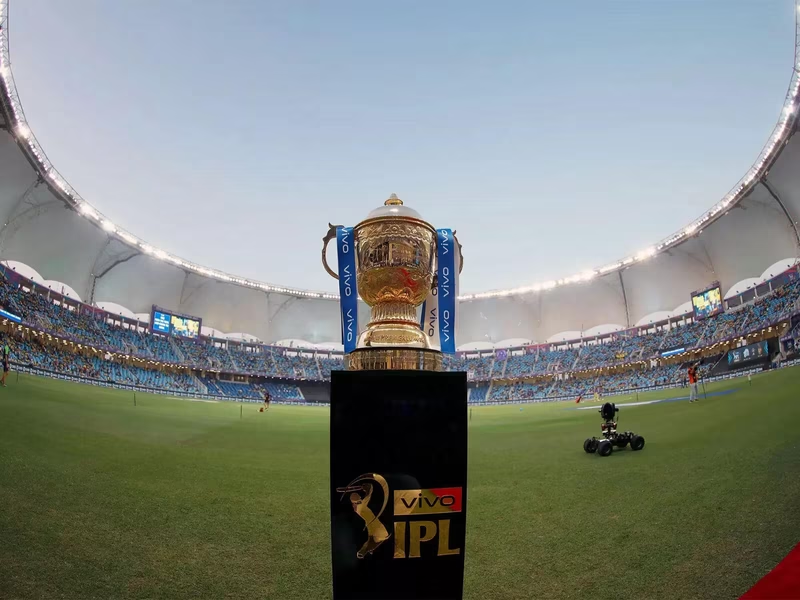
The IPL is the richest, most-watched T20 league on the planet—but according to former India champion Robin Uthappa, it’s time for a grown-up makeover. In a striking interview that’s sent shockwaves through cricket circles, Uthappa has called for the BCCI to “stop it” and completely rethink how teams are built, suggesting the iconic IPL auction should be replaced with a draft system and a continuous trade window .
His proposal isn’t just a tweak—it’s a full-scale reimagining of the league’s DNA, designed to foster long-term team identity, player loyalty, and competitive balance in an era where the IPL is fast outgrowing its startup roots.
Table of Contents
- Uthappa’s Bold Vision for the IPL
- Why the IPL Auction Might Be Outdated
- How a Draft and Trade System Would Work
- International Cricket and the Six-Month IPL
- Precedents in Other Global Leagues
- Counterarguments and Challenges
- Conclusion: Is the IPL Ready for Revolution?
- Sources
Uthappa’s Bold Vision for the IPL
“Stop it,” Uthappa bluntly declared, referring to the current auction model that sees players treated like commodities, bought and sold every few years with little regard for team cohesion . He argues the league has matured beyond its initial “survival phase” and now needs structures that encourage legacy, fan connection, and strategic team-building—not just deep-pocketed bidding wars.
His core idea? Replace the biennial IPL auction with a rookie draft for emerging talent and introduce a year-round trade window that allows teams to adjust rosters mid-season or between windows—much like the NBA or NFL.
Why the IPL Auction Might Be Outdated
While the auction has created unforgettable drama (remember the ₹18 crore bids?), critics like Uthappa say it’s creating systemic problems:
- Lack of Team Identity: Players switch franchises every 2–3 years, making it hard for fans to form lasting emotional bonds.
- Short-Term Thinking: Teams often prioritize big names over balanced squads, leading to inconsistent performances.
- Player Uncertainty: Even top performers live in fear of being released, harming mental well-being and long-term planning.
- Financial Imbalance: Wealthier franchises can absorb high-salary risks, while smaller teams struggle to compete.
The auction, once revolutionary, may now be holding the IPL back from becoming a truly world-class sporting institution.
How a Draft and Trade System Would Work
Uthappa envisions a two-pronged system:
- Rookie Draft: Domestic and international emerging players (e.g., U-19 stars, breakout Ranji performers) enter a centralized draft pool. Franchises pick in reverse order of the previous season’s standings—rewarding weaker teams with first access to talent.
- Trade Window: A designated period (e.g., pre-season and mid-season) where teams can negotiate player swaps, salary adjustments, or short-term loans—subject to salary cap rules.
Existing stars would remain under contract, but over time, the draft would become the lifeblood of team-building, fostering organic development and long-term planning.
International Cricket and the Six-Month IPL
Uthappa didn’t stop at structural reform. He also floated the idea of expanding the IPL into a six-month league, with international fixtures “interspersed” within the calendar . This would require unprecedented coordination with the ICC and national boards—but reflects a growing belief that the IPL is no longer just a “domestic” event; it’s a global cricketing pillar.
Imagine an IPL that runs from March to August, with national teams playing bilateral series during designated breaks. It’s ambitious—but not impossible in a rapidly evolving sports economy.
Precedents in Other Global Leagues
Uthappa’s model isn’t born in a vacuum. It’s inspired by proven systems:
- NBA (USA): Combines an annual draft with a mid-season trade deadline to maintain parity.
- NFL (USA): Uses a strict salary cap and draft order based on performance to ensure competitive balance.
- NRL (Australia): Employs a player draft for young talent alongside a robust trade system.
These leagues have thrived because they balance star power with systemic fairness—a lesson the IPL may need to heed as it enters its next decade.
Counterarguments and Challenges
Of course, such a shift faces massive hurdles:
- The BCCI earns significant revenue from auction spectacle and media rights tied to bidding drama.
- Franchises have built business models around auction flexibility.
- India’s cricket ecosystem lacks a formal player development database needed for a fair draft.
- International boards may resist ceding more control to a private league.
Yet, as Uthappa insists, “If you’re serious about legacy, not just profit—you have to evolve.”
Conclusion: Is the IPL Ready for Revolution?
Robin Uthappa’s call to replace the IPL auction may seem radical today—but every great sports league has faced a moment of reinvention. From the NFL’s merger with the AFL to the NBA’s adoption of the 3-point line, progress often looks disruptive before it becomes standard. The IPL stands at that crossroads. Will it cling to its auction-era past, or embrace a future built on stability, identity, and sustainability? The answer could define the next 10 years of global cricket. For more on IPL history, explore our deep dive into [INTERNAL_LINK:Cricket History – IPL Evolution].
Sources
- Times of India: ‘Stop it’: Ex-India cricketer’s bold call to replace IPL auction with draft and trade window
- ESPNcricinfo: The Future of IPL Governance and Player Retention
- NBA Official: How the NBA Draft and Trade System Works