Table of Contents
- The Shocking Confession: “I Chucked Intentionally”
- What is Chucking and Why is it Illegal?
- The ECB Ban: A Step-by-Step Breakdown
- Shakib’s Defense: Exhaustion and the Pressure Cooker
- A History of Controversy: Has This Happened Before?
- What Next for Shakib Al Hasan?
- Conclusion: A Cautionary Tale for Cricket
- Sources
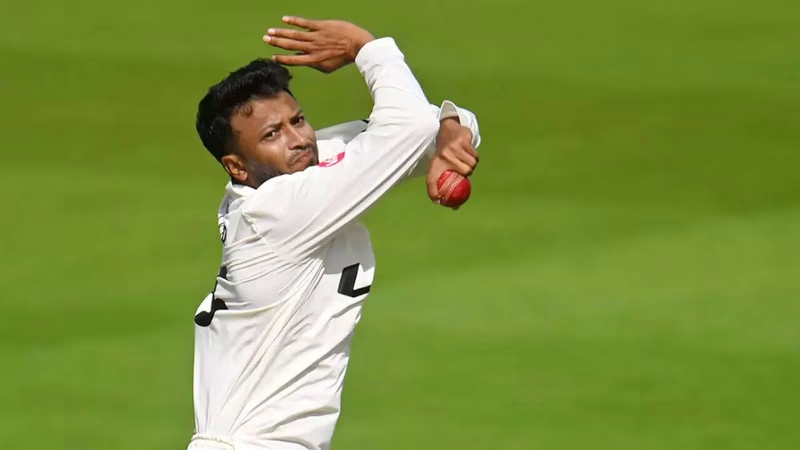
Cricket fans around the globe were left stunned by a recent, jaw-dropping admission from one of the sport’s most decorated all-rounders. Shakib Al Hasan, the Bangladeshi maestro, has openly confessed to intentionally using an illegal bowling action—a practice known as ‘chucking’—during a match for Surrey in the English County Championship. This confession wasn’t just a casual remark; it was the direct cause of his formal Shakib Al Hasan chucking ban by the England and Wales Cricket Board (ECB). But what drove a player of his caliber to such a risky move? Let’s dive deep into the heart of this cricketing controversy.
The Shocking Confession: “I Chucked Intentionally”
In an uncharacteristically candid moment, Shakib Al Hasan admitted that under the immense strain of extreme physical fatigue, he made a conscious decision to bend the rules. He was bowling for Surrey in a crucial County match when his body simply gave out. Faced with the pressure to perform, he chose to ‘chuck’ the ball, prioritizing short-term effectiveness over the long-term legality of his action . This is a staggering revelation from a player known for his skill and integrity, highlighting the intense, often invisible, pressures faced by professional athletes at the highest level.
What is Chucking and Why is it Illegal?
For those outside the cricketing world, “chucking” might sound like a minor infraction. In reality, it strikes at the very core of the game’s fairness. According to the International Cricket Council (ICC), chucking is an illegal bowling action where a bowler straightens their elbow beyond the permitted 15-degree limit during the delivery stride .
Essentially, the rule exists to ensure that the ball is bowled, not thrown. A legal delivery requires the bowler’s arm to remain virtually straight from the point of the backswing through to the release. This distinction is crucial because a thrown ball can generate unnatural speed and spin, giving the bowler an unfair advantage over the batsman . The ICC’s strict 15-degree tolerance accounts for the natural flex that occurs in any human motion, but anything beyond that is deemed illegal.
The ECB Ban: A Step-by-Step Breakdown
Shakib’s confession wasn’t made in a vacuum. It came in the wake of a formal investigation that led to a concrete penalty:
- Match Report: During his appearance for Surrey, his bowling action came under scrutiny by match officials.
- Independent Testing: He was required to undergo a biomechanical assessment at the renowned Loughborough University, the official testing center for such cases in England .
- The Verdict: The independent analysis concluded that his action exceeded the legal limits, officially classifying it as illegal .
- The Suspension: On December 10, 2024, the ECB formally suspended him from bowling in all competitions they govern. This means he is ineligible to bowl in any English domestic tournament until he can pass a re-assessment proving his action is now legal .
Shakib’s Defense: Exhaustion and the Pressure Cooker
While the rules are clear-cut, the human element behind Shakib’s actions adds a layer of complexity. His primary defense is extreme physical fatigue. After a grueling international schedule and the demands of T20 leagues worldwide, his body was pushed to its absolute limit during his County stint .
In his own words, the physical toll was so great that maintaining his technically correct, legal action became impossible. Faced with the choice of not bowling at all or finding a way to get the ball to the other end, he opted for the latter—even if it meant breaking the rules. It’s a desperate act from a player who felt he had no other option in the heat of the moment, a testament to the unsustainable physical demands often placed on modern cricketers.
A History of Controversy: Has This Happened Before?
Shakib isn’t the first high-profile cricketer to face a chucking ban. Legends like Muttiah Muralitharan and more recently, Sunil Narine and Saeed Ajmal, have all had their actions scrutinized and, in some cases, temporarily banned. Each case is unique, but they all underscore the fine line between a unique, wristy action and an illegal one.
What makes Shakib’s case particularly notable is his upfront confession. Most players contest the findings or attribute the issue to a technical glitch. Shakib’s admission of intent, while perhaps a breach of protocol, demonstrates a level of personal accountability that is both rare and, in a strange way, commendable.
What Next for Shakib Al Hasan?
The immediate future for Shakib is clear: he must work with biomechanics experts to remodel his bowling action to fit within the legal parameters. Once he believes he has corrected the issue, he can apply for a re-assessment at Loughborough University. Passing this test is his only path back to bowling in ECB competitions.
For now, he remains a potent batsman and can still play as a pure batter or a fielder. However, his value as a world-class all-rounder—the very core of his identity—is on hold. His situation is a prime example for any fantasy cricket manager on [INTERNAL_LINK:fantasy-cricket-strategy] who must now weigh his potential points without his bowling contributions. The timeline for his return is uncertain, but given his determination, a comeback is certainly on the cards.
Conclusion: A Cautionary Tale for Cricket
The story of the Shakib Al Hasan chucking ban is more than just a disciplinary action. It’s a powerful narrative about the collision between human limits and the rigid structures of professional sport. His intentional act, born from exhaustion, serves as a stark warning to cricket boards about player workload management. It also reinforces the importance of the ICC’s and ECB’s regulations in maintaining a level playing field for everyone. While his confession is shocking, it has opened a necessary conversation about the immense pressures on today’s elite athletes.
Sources
- Times of India: “I chucked intentionally”: Shakib al Hasan’s shocking confession on ban
- ICC Regulations on Illegal Bowling Actions: ICC Official Document
- ECB Official Statement on Player Suspensions: England and Wales Cricket Board
- ESPN Cricinfo: Shakib Al Hasan’s Player Profile and News