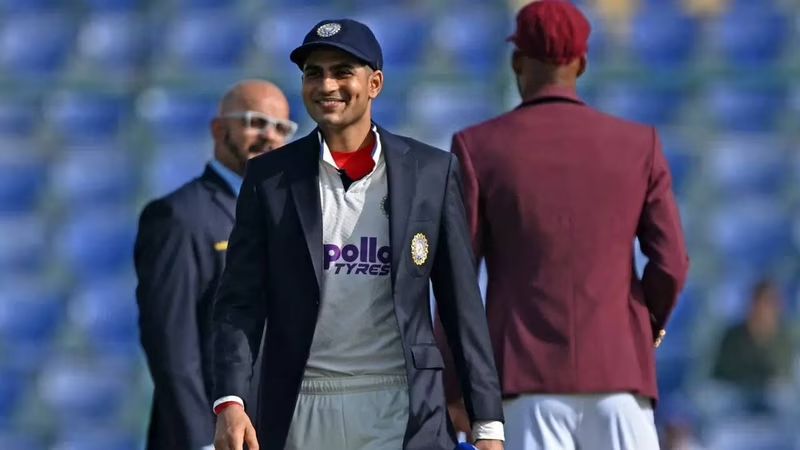
Amid India’s worst Test series run in years, a blunt verdict from across the border has reignited a fierce debate: Is Shubman Gill ready—or even suitable—to be India’s all-format captain? Former England left-arm spinner Monty Panesar doesn’t think so. In a candid assessment, Panesar called out Gill’s technique, mindset, and leadership potential with one stinging phrase: “lazy shots.”
His comments arrive at a pivotal moment. India has just suffered back-to-back Test whitewashes—3-0 in New Zealand and 2-0 at home against South Africa—under the new coaching regime of Gautam Gambhir. With the captaincy mantle in flux following Rohit Sharma’s impending retirement, Gill’s name has been floated as a potential successor. But Panesar’s critique suggests that leap may be premature .
Table of Contents
- Monty Panesar’s Blunt Take on Shubman Gill’s Technique
- Why “Lazy Shots” Disqualify Him from All-Format Captaincy
- India’s Test Form Collapse: A Leadership or Systemic Crisis?
- Gautam Gambhir Under the Microscope
- The White-Ball Mirage vs. Red-Ball Reality
- So, Who Should Lead India Across All Formats?
- Final Thoughts: Talent Isn’t Enough Without Discipline
- Sources
Monty Panesar’s Blunt Take on Shubman Gill’s Technique
Speaking to the media, Panesar didn’t mince words. “Shubman plays lazy shots,” he stated flatly. “You can’t afford that in Test cricket. And if you’re making those technical errors as a batter, how can you be expected to lead a team through a five-day battle?”
He specifically cited Gill’s tendency to play away from his body early in his innings, leading to edges behind the wicket—a flaw exposed repeatedly by New Zealand’s seamers and South Africa’s pace attack. In Panesar’s view, this isn’t just poor form; it’s a lack of discipline that undermines his credibility as a future leader.
Why “Lazy Shots” Disqualify Him from All-Format Captaincy
The core of Panesar’s argument hinges on the different demands of each format:
- Test cricket requires patience, resilience, and technical perfection—qualities Gill has struggled to display consistently.
- ODIs and T20s reward aggression and adaptability—areas where Gill shines.
Panesar contends that excelling in white-ball cricket doesn’t automatically translate to red-ball leadership. “Being a good T20 captain doesn’t mean you can manage the psychology, strategy, and endurance required in a Test series,” he explained .
He emphasized that an all-format captain must set the standard with the bat—especially in adversity. And right now, Gill’s own struggles (averaging under 30 in his last 10 Tests) make him a questionable role model .
India’s Test Form Collapse: A Leadership or Systemic Crisis?
India’s recent Test record is alarming:
- Lost 3-0 in New Zealand (March 2025)
- Whitewashed 2-0 by South Africa at home (Dec 2025)
- Winless in 5 consecutive overseas Tests
While Rohit Sharma remains captain, the team’s body language and tactical rigidity have drawn criticism. Panesar suggests the problem may run deeper than just the skipper—it could be a cultural shift under the new coaching staff.
Gautam Gambhir Under the Microscope
Panesar didn’t spare new head coach Gautam Gambhir either. While acknowledging Gambhir’s success with white-ball teams (notably guiding Gujarat Titans to an IPL title), he was clear-eyed about his red-ball inexperience.
“Gambhir has proven himself as a white-ball coach,” Panesar noted, “but Test cricket is a different beast. He needs more time—and more results—before we judge his tenure fairly” .
This is a crucial point. The transition from IPL mentor to national Test coach is notoriously difficult. Gambhir is now under immense pressure to rebuild India’s crumbling Test identity.
The White-Ball Mirage vs. Red-Ball Reality
Shubman Gill’s reputation has been built largely on white-ball exploits: a stellar ODI series in Australia, a record-breaking T20I century, and consistent run-making in the IPL. But Test cricket has been his Achilles’ heel.
Since 2023, he’s scored just one Test century (against Bangladesh) and has repeatedly fallen to deliveries targeting the corridor of uncertainty. Against quality pace in seaming conditions, his game looks unrefined—a stark contrast to his elegant white-ball persona.
For more on format-specific performance gaps, see our analysis at [INTERNAL_LINK:format-transition-challenges].
So, Who Should Lead India Across All Formats?
If not Gill, then who? Panesar didn’t nominate a successor but implied that leadership should emerge from consistent red-ball performers. Names like Jasprit Bumrah (already vice-captain), Ravindra Jadeja, or even a returning Virat Kohli have been whispered—but none are perfect fits.
The reality is that India may need separate captains for different formats—a model Australia and England have successfully adopted. Pushing a white-ball star into the Test role could backfire spectacularly.
Final Thoughts: Talent Isn’t Enough Without Discipline
Monty Panesar’s critique of Shubman Gill captaincy aspirations isn’t personal—it’s philosophical. In Test cricket, every shot carries weight. Every lapse in concentration is punished. Leadership isn’t just about charisma; it’s about embodying the discipline the game demands.
Gill has the talent to be a great batter. But to lead India in all formats? As Panesar bluntly puts it: not yet. And maybe not ever—unless he sheds the “lazy” label and proves he can master the longest, toughest format of them all.