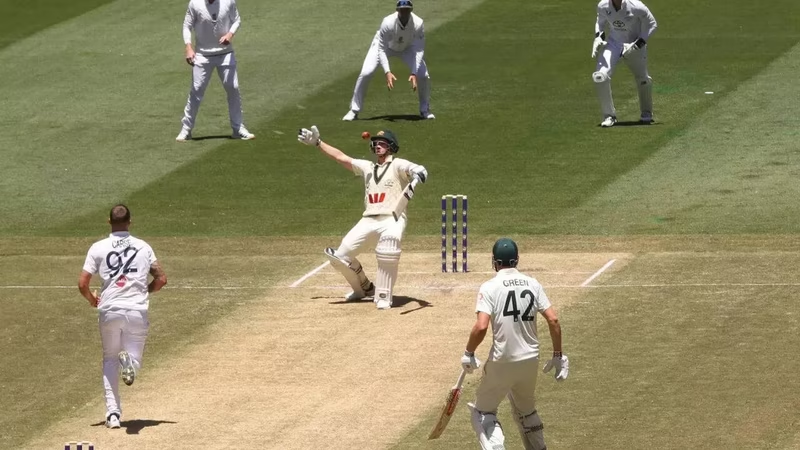
The roar of the Boxing Day crowd at the Melbourne Cricket Ground (MCG) was quickly replaced by a tense silence when the ICC dropped its verdict: the pitch for the fourth Ashes Test was officially deemed ‘unsatisfactory’. The iconic venue has now been slapped with a MCG demerit point, sparking fears among fans that their beloved stadium could be heading for a ban from international cricket .
But is the situation as dire as it sounds? Let’s cut through the noise and break down exactly what this means for the future of cricket at the ‘G’.
Table of Contents
- What is an ‘Unsatisfactory’ Pitch?
- The MCG Demerit Point and the ICC’s Punishment System
- Will the MCG Actually Be Banned?
- The MCG’s Troubled Pitch History
- What Happens Next for the MCG?
- Conclusion
- Sources
What is an ‘Unsatisfactory’ Pitch?
The ICC doesn’t hand out pitch ratings lightly. Their official four-tier system is designed to ensure a fair contest between bat and ball. The categories are: very good, satisfactory, unsatisfactory, and unfit .
An ‘unsatisfactory’ rating is a serious mark against a venue. It typically means the pitch offered excessive and unpredictable seam movement or variable bounce, which significantly favored one side—in this case, the bowlers—over an extended period, making a proper contest impossible . The fourth Ashes Test at the MCG was over in just two days, with 36 wickets falling, a clear red flag for the ICC match referee Jeff Crowe who submitted the damning report .
The MCG Demerit Point and the ICC’s Punishment System
The MCG demerit point isn’t just a symbolic gesture; it’s a formal penalty within the ICC’s Pitch and Outfield Monitoring Process. Here’s how the system works:
- A pitch rated as ‘Unsatisfactory’ results in the venue receiving one demerit point .
- A pitch rated as ‘Unfit’ results in the venue receiving three demerit points .
- These demerit points remain active on the venue’s record for a rolling five-year period .
The ultimate consequence is severe: if a venue accumulates a total of six demerit points within that five-year window, it faces a mandatory 12-month ban from hosting any international cricket match . This system was designed to hold host boards, like Cricket Australia, accountable for the quality of their most important asset—the pitch .
Will the MCG Actually Be Banned?
For now, MCG fans can breathe a sigh of relief. A single MCG demerit point is a serious warning, but it is far from the six-point threshold that triggers a ban . The stadium would need to rack up five more demerit points over the next five years to face suspension—a highly unlikely scenario if the issues are addressed seriously.
The current point serves as a major wake-up call for the MCG’s curators. The ICC’s message is clear: the traditional, bowler-friendly ‘Australian pitch’ is welcome, but not at the cost of fairness and a balanced contest. The goal is a surface that is challenging but not chaotic.
The MCG’s Troubled Pitch History
This isn’t the first time the ‘G’ has been in the ICC’s crosshairs. The stadium has a long-standing reputation for pitches that can be overly seamer-friendly. Back in 2018, the MCG was placed on an official notice by the ICC after another Ashes Test, where the pitch was again criticized for being too one-dimensional .
While it avoided a demerit point that time, this latest incident confirms a pattern of inconsistency. It stands in stark contrast to other Australian venues like Perth, whose pitch for its Ashes Test received a glowing ‘very good‘ rating from the ICC . This comparison puts even more pressure on the MCG to up its game.
What Happens Next for the MCG?
Cricket Australia now has a clear mandate: invest in its ground staff, review its entire pitch preparation strategy, and move away from the high-risk, ultra-green approach that led to this fiasco. The focus must shift to producing pitches that are true, offer consistent bounce, and allow for a multi-day contest.
The stakes are high. The MCG is more than just a stadium; it’s a global cricketing landmark. Losing the right to host the marquee Boxing Day Test would be a massive blow to its legacy and to Australian cricket as a whole. The onus is on the administrators to ensure that the next time the world watches a Test in Melbourne, the headlines are about the players’ brilliance, not the pitch’s flaws. For more on the ICC’s disciplinary framework, see our deep dive on [INTERNAL_LINK:icc-code-of-conduct-explained].
Conclusion
In the end, the MCG demerit point is less a death knell and more a stern, final warning. It’s the ICC’s way of saying that the era of pitches dictating the result before a ball is even faced is over. The MCG has a five-year grace period to correct its course. If it fails, the unthinkable—a ban from international cricket—could become a reality. But if they act decisively, the ‘G’ can continue its legacy as a fortress of world cricket, just with a fairer, more balanced playing surface.
Sources
- International Cricket Council. (2024). ICC Pitch and Outfield Monitoring Process. https://www.icc-cricket.com
- ESPNcricinfo. (2022, January 1). ICC rates MCG pitch ‘unsatisfactory’ after two-day Test. https://www.espncricinfo.com
- The Guardian. (2022, January 1). The Ashes: MCG pitch ruled ‘unsatisfactory’ by ICC. https://www.theguardian.com
- Times of India. (2022, January 1). ‘Unsatisfactory’ pitch: Will MCG face ban after demerit point? https://timesofindia.indiatimes.com
- Cricket.com.au. (2022, January 1). ICC hands down verdict on MCG pitch after Boxing Day Test. https://www.cricket.com.au
- ABC News. (2022, January 2). ICC Gives Perth Pitch “Very Good” Rating After Two-Day Ashes Thriller. https://www.abc.net.au