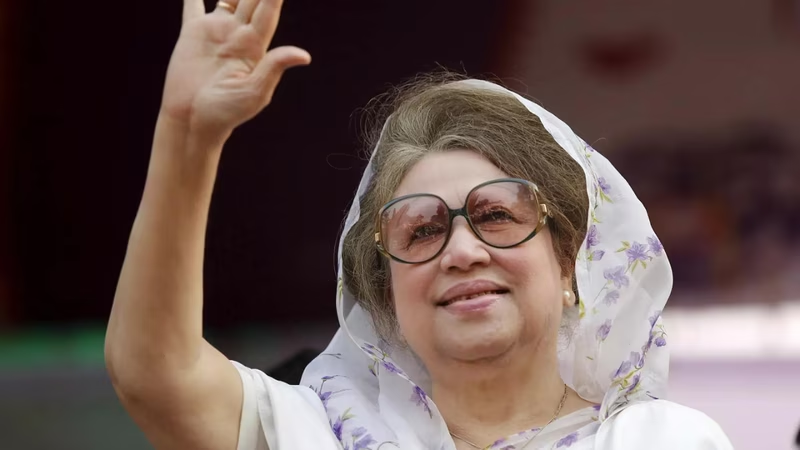
BPL Double-Header Cancelled as Bangladesh Mourns Khaleda Zia: Cricket Pays Tribute
In a solemn and unprecedented move, the Bangladesh Cricket Board (BCB) has officially cancelled Tuesday’s scheduled double-header of the Bangladesh Premier League (BPL) as the nation enters a period of national mourning following the death of former Prime Minister Begum Khaleda Zia. The decision, announced late Monday night, reflects not just protocol—but deep respect for a political leader whose tenure left an indelible mark on the country’s sporting landscape, especially cricket .
While fans had eagerly awaited high-stakes T20 clashes between top franchises, the cancellation underscores a rare moment where sport steps aside for state and sentiment. Both matches—Fortune Barishal vs. Sylhet Strikers and Comilla Victorians vs. Rangpur Riders—will be rescheduled, though new dates remain pending. But beyond logistics, this pause invites reflection: just how instrumental was Khaleda Zia in shaping modern Bangladesh cricket?
Table of Contents
- BPL Cancelled Due to Khaleda Zia Death: The Official Decision
- Who Was Khaleda Zia—and Why Cricket Mourns Her?
- Khaleda Zia’s Contributions to Bangladesh Cricket
- Historical Precedents: When Sport Stops for National Mourning
- Fan and Player Reactions to the Cancellation
- What Happens Next: BPL Rescheduling and Protocol
- Broader Implications: Cricket and Politics in Bangladesh
- Conclusion: A Nation United in Grief and Respect
- Sources
BPL Cancelled Due to Khaleda Zia Death: The Official Decision
In a brief but poignant statement, the BCB said: “In light of the sad demise of Begum Khaleda Zia, former Prime Minister of the People’s Republic of Bangladesh, and in observance of national mourning, all cricketing activities under BCB jurisdiction are suspended for Tuesday, December 31, 2025.” The board added that the decision was made “with profound respect for her legacy and her support for the development of cricket in Bangladesh” .
This includes not only the two high-profile BPL matches but also practice sessions, media interactions, and promotional events associated with the league. The BCB confirmed that refunds would be issued for ticket holders, and broadcast partners have been notified of the revised schedule.
Who Was Khaleda Zia—and Why Cricket Mourns Her?
Begum Khaleda Zia, who served as Prime Minister of Bangladesh in 1991–1996 and 2001–2006, was not just a political titan—she was a pivotal enabler of Bangladesh’s cricketing rise. During her first term, Bangladesh gained ODI status in 1997. In her second, the national team qualified for its first Cricket World Cup in 1999 and earned Test status in 2000—a historic milestone .
Unlike many leaders who viewed sport as secondary, Zia actively championed cricket as a tool for national unity and global identity. She personally inaugurated stadiums, met with players, and ensured government backing for infrastructure projects—even during periods of political turmoil.
Khaleda Zia’s Contributions to Bangladesh Cricket
Her tangible impact includes:
- Approval of the Sher-e-Bangla National Stadium upgrade in Mirpur, now Bangladesh’s premier cricket venue.
- Government funding for grassroots academies in the early 2000s, which produced players like Shakib Al Hasan and Mushfiqur Rahim.
- Backing for Bangladesh’s ICC membership bid, ensuring diplomatic support at global forums.
- Personal attendance at key matches, including the 1999 World Cup qualifiers—boosting morale and media attention.
As former BCB president Nazmul Hasan once noted, “Without Khaleda Zia’s political will in the 90s, Bangladesh cricket might have remained a regional afterthought.”
Historical Precedents: When Sport Stops for National Mourning
While rare, cricket has paused before for national figures:
- India (2010): Ranji Trophy matches were postponed after the death of President Dr. A.P.J. Abdul Kalam.
- South Africa (2013): Domestic matches halted during Nelson Mandela’s state funeral.
- Pakistan (2021): PSL briefly suspended during national mourning for a military leader.
However, canceling a major T20 league mid-season—especially one as commercially driven as the BPL—is exceptional, highlighting Zia’s unique stature.
Fan and Player Reactions to the Cancellation
Initial disappointment among fans quickly gave way to understanding. “Cricket can wait. She built the foundation we play on,” tweeted young all-rounder Tanzid Hasan. International stars like David Warner and Shahid Afridi also posted tributes, acknowledging Zia’s role in Bangladesh’s cricketing emergence.
On social media, the hashtag #KhaledaZiaCricketLegacy trended across South Asia, with archival photos of her presenting trophies to the 1997 U-19 World Cup-winning team resurfacing—proof of her early belief in the sport’s potential.
What Happens Next: BPL Rescheduling and Protocol
The BPL is now working with franchises to find new dates, likely during the league’s buffer week in mid-January 2026. The BCB assured that “standings and player eligibility will remain unaffected.”
Meanwhile, a minute’s silence is expected to be observed at the next match across all BPL venues. Some franchises are also considering wearing black armbands as a mark of respect—a gesture common in international cricket during periods of mourning.
Broader Implications: Cricket and Politics in Bangladesh
This moment also reflects the deep entanglement of cricket and politics in Bangladesh. From Sheikh Mujibur Rahman’s early support to Sheikh Hasina’s recent infrastructure pushes, successive governments have used cricket as a soft-power vehicle. Khaleda Zia’s era, however, was unique for its timing—she backed cricket when Bangladesh was still fighting for global recognition.
As [ESPNcricinfo](https://www.espncricinfo.com/) has documented, “Bangladesh’s cricket story is inseparable from its political narrative.” Zia’s death, then, isn’t just a political event—it’s a chapter closing in the sport’s own history.
Conclusion: A Nation United in Grief and Respect
The cancellation of the BPL due to Khaleda Zia’s death is more than a logistical adjustment—it’s a national homage. In pausing the country’s most-watched sporting league, Bangladesh has sent a clear message: some legacies transcend the boundary rope. As the cricketing world waits for rescheduled fixtures, it also honors a leader who believed that a small nation with a bat and ball could stand tall on the world stage.