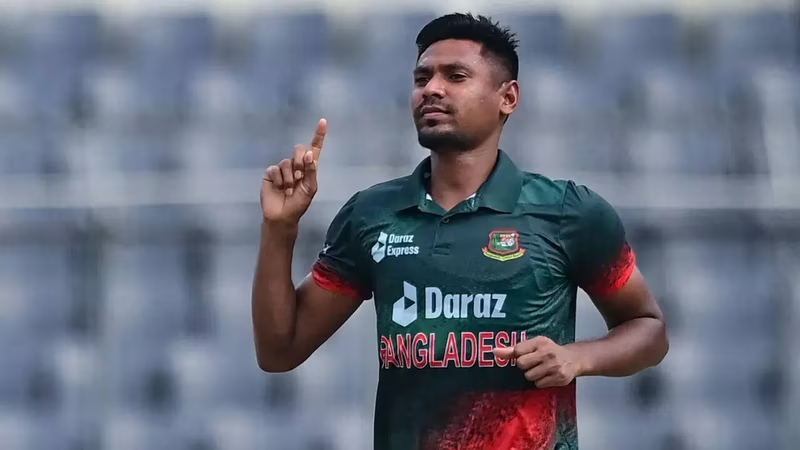
In a dramatic escalation of the ongoing cricketing rift between South Asia’s neighbors, Bangladesh has officially asked the International Cricket Council (ICC) to relocate its scheduled T20 World Cup 2026 matches from India to a neutral venue—preferably Sri Lanka. The request, directed by Bangladesh’s Ministry of Sports and backed by the Bangladesh Cricket Board (BCB), comes on the heels of star pacer Mustafizur Rahman’s sudden release from his IPL franchise and worsening bilateral relations between Dhaka and New Delhi .
This unprecedented move isn’t just about logistics—it’s a political statement wrapped in a sporting demand. With the T20 World Cup less than six months away, the ICC now faces a potential crisis that could shake the tournament’s integrity, fan engagement, and diplomatic underpinnings. For millions of fans, this isn’t just about where matches are played—it’s about respect, safety, and the future of cricket as a unifying force.
Table of Contents
- Mustafizur Rahman Controversy: The Spark
- T20 World Cup Shift from India: BCB’s Formal Request
- Why Sri Lanka? The Choice of Neutral Ground
- Political Backdrop: Deteriorating Indo-Bangladesh Relations
- ICC in a Tight Spot: Logistics and Diplomacy
- Fan and Commercial Impact
- Conclusion: Can Cricket Rise Above Politics?
- Sources
Mustafizur Rahman Controversy: The Spark
The controversy ignited in late 2025 when Kolkata Knight Riders (KKR) dropped Mustafizur Rahman ahead of the IPL 2026 mega auction. While franchises routinely reshape squads, the timing and lack of explanation raised eyebrows. Mustafizur—a consistent performer with over 100 IPL wickets—was not traded, retained, or even offered a base price in the auction pool .
In Bangladesh, this was perceived not as a sporting decision but as a political snub. Media outlets and public figures alleged that Mustafizur’s release was linked to recent diplomatic friction between India and Bangladesh, including trade disputes and border tensions. The BCB, under immense public pressure, escalated the issue beyond the IPL—tying it directly to the safety and dignity of its national players on Indian soil.
T20 World Cup Shift from India: BCB’s Formal Request
On January 3, 2026, Bangladesh’s Sports Ministry formally instructed the BCB to submit a request to the ICC to move all Bangladesh-related fixtures—including group matches and potential knockout games—from Indian venues like Kolkata, Ahmedabad, and Mumbai .
BCB President Aminul Islam Bulbul stated: “We cannot guarantee the physical and psychological safety of our players in the current environment. This is not a sporting issue alone—it is about national dignity.” The board emphasized that the request is “not against India as a nation, but against the prevailing atmosphere of disrespect.”
Why Sri Lanka? The Choice of Neutral Ground
Sri Lanka has emerged as Bangladesh’s preferred alternative for several reasons:
- Geographical & Cultural Proximity: Similar time zones, climate, and travel ease for players and fans.
- Cricketing Infrastructure: Venues like R. Premadasa Stadium (Colombo) and Pallekele are ICC-approved for major tournaments.
- Political Neutrality: Sri Lanka maintains balanced relations with both India and Bangladesh, making it a diplomatically safe choice.
- Precedent: The 2022 Asia Cup was successfully hosted in Sri Lanka amid similar India-Pakistan tensions.
Political Backdrop: Deteriorating Indo-Bangladesh Relations
Cricket tensions mirror deeper geopolitical strains. Over the past year, India and Bangladesh have clashed over:
- Water-sharing disputes on the Teesta River,
- Trade imbalances and non-tariff barriers,
- Border incidents involving alleged smuggling and security violations.
These issues have fueled nationalist sentiment in both countries. In this charged climate, sports become a proxy battlefield. The BCCI’s earlier cancellation of its 2025 tour of Bangladesh and its absence from ACC meetings in Dhaka only deepened Dhaka’s sense of isolation .
ICC in a Tight Spot: Logistics and Diplomacy
The ICC now walks a tightrope. On one hand, it must uphold its commitment to host nations—India is a co-host and a major financial contributor to the tournament. On the other, ignoring legitimate safety concerns could set a dangerous precedent. The ICC’s own regulations state that “member safety is paramount” .
Potential outcomes include:
- Partial Relocation: Only Bangladesh’s matches moved, while the rest of the schedule remains intact.
- Mediation: The ICC facilitates talks between BCCI and BCB to defuse tensions.
- Denial: The request is rejected, risking Bangladesh’s participation—a worst-case scenario.
Fan and Commercial Impact
A venue shift would have ripple effects:
- Indian Fans: Lose high-demand matches like India vs Bangladesh if relocated.
- Broadcasters: Disney-Star and other rights holders may seek compensation for disrupted ad planning.
- Ticketing: Thousands of pre-sold tickets in Indian cities could become void, triggering refunds and backlash.
- Sponsors: Global brands like Pepsi and Adidas may reassess visibility if key rivalries are moved.
For strategies on how mega-events handle such disruptions, see our deep dive on [INTERNAL_LINK:icc-crisis-management-t20-world-cup].
Conclusion: Can Cricket Rise Above Politics?
The demand for a T20 World Cup shift from India is more than a logistical headache—it’s a test of whether cricket can remain a sport of unity in an age of division. While Bangladesh’s concerns about player safety are valid, the solution must balance principle with pragmatism. The ICC’s response in the coming weeks will shape not just the 2026 tournament, but the very ethos of international cricket for years to come.