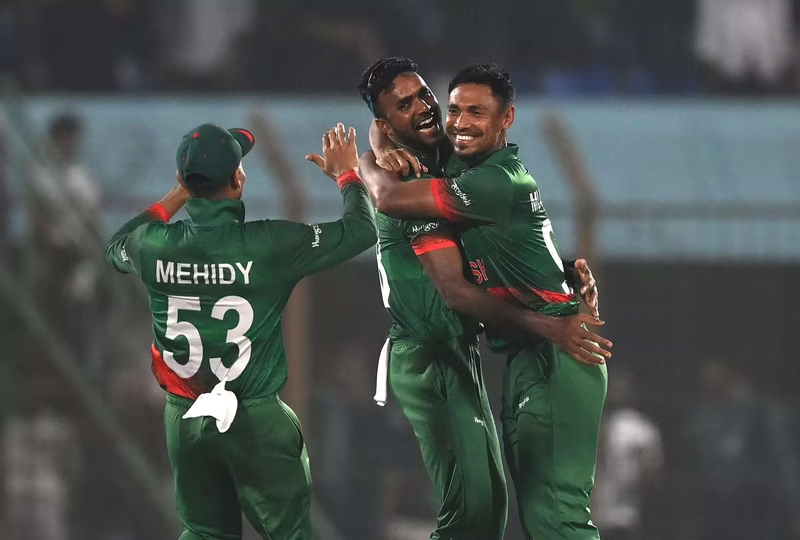
The build-up to the 2026 ICC Men’s T20 World Cup has been thrown into turmoil as Bangladesh has officially escalated its security concerns, delivering a blunt message to the sport’s governing body: “The ICC does not understand the situation.” This isn’t just a complaint—it’s a full-blown diplomatic row over player safety, national dignity, and the very logistics of the upcoming tournament.
At the heart of the controversy is the early release of star pacer Mustafizur Rahman from his IPL franchise, a move that Dhaka is now interpreting as a smoking gun proving that the security environment in India is too volatile for its national team.
Table of Contents
- Bangladesh’s Official Stance and the Mustafizur Connection
- The ICC’s Position and the Complexity of Relocation
- Historical Precedents for Match Relocations
- The Political and Diplomatic Dimensions of the Dispute
- What This Means for the T20 World Cup Schedule
- Final Thoughts: A Test for Global Cricket Governance
- Sources
Bangladesh’s Official Stance and the Mustafizur Connection
Asif Nazrul, the Youth and Sports Adviser to the Bangladesh government, has taken a hardline position, stating in no uncertain terms that there can be “no compromise on player security and national dignity” .
His primary evidence? The early release of Mustafizur Rahman from his Indian Premier League (IPL) team. While the IPL franchise cited “personal reasons” for the release, Nazrul and the Bangladesh Cricket Board (BCB) see it as a quiet acknowledgment of underlying security issues that were not being publicly addressed.
Nazrul argues that if a high-profile player in a supposedly secure, private league feels compelled to leave early, the prospect of the entire national team playing in a high-stakes, high-profile event like the T20 World Cup is simply too great a risk to bear .
The ICC’s Position and the Complexity of Relocation
The International Cricket Council (ICC) has so far maintained that India, as the host nation, is fully prepared to ensure the safety and security of all participating teams. The ICC’s official stance is that its security protocols are robust and have been vetted by independent experts .
However, relocating an entire group stage from one country to another—especially at this late stage—is a logistical nightmare. It involves reconfiguring travel plans, hotel bookings, broadcast schedules, and ticketing arrangements for thousands of fans. The ICC’s official website outlines its comprehensive event management framework, but it’s clear that such a last-minute change would test that framework to its limits .
Historical Precedents for Match Relocations
While rare, the history of international cricket is not without examples of matches or entire tournaments being moved due to security concerns:
- 2009: Pakistan vs. Sri Lanka Attack. The attack on the Sri Lankan team bus in Lahore led to Pakistan being stripped of its hosting rights for future ICC events for over a decade.
- 2016: ICC World T20. The ICC had detailed contingency plans to move matches out of India if needed, though they were not ultimately required.
- 2021: T20 World Cup. The tournament was moved from India to the UAE and Oman due to the COVID-19 pandemic, proving the ICC can orchestrate a major relocation when necessary.
These precedents show that while difficult, relocation is not impossible. Bangladesh is likely banking on this history to strengthen its case.
The Political and Diplomatic Dimensions of the Dispute
This row extends far beyond the cricket pitch. For Bangladesh, the issue is intertwined with national pride and its bilateral relationship with India. The government in Dhaka is under immense domestic pressure to be seen as protecting its sporting heroes.
A perceived failure to do so could be politically damaging. By publicly challenging the ICC and demanding a specific relocation to Sri Lanka—a neutral and familiar venue for the team—Nazrul is performing a delicate act of domestic and international statesmanship.
What This Means for the T20 World Cup Schedule
If the ICC were to concede to Bangladesh’s demands, it would have a cascading effect on the entire tournament structure. Bangladesh is in a specific group with other teams whose schedules would also need to be adjusted.
Sri Lanka, as the proposed alternative, would need to rapidly prepare its venues, which may have been allocated for other purposes. The financial implications for broadcasters, sponsors, and local organizers would be significant. It’s a high-stakes game of diplomatic and logistical chess.
For more on the inner workings of the global cricket calendar, see our analysis on [INTERNAL_LINK:how-icc-tournaments-are-scheduled].
Final Thoughts: A Test for Global Cricket Governance
The Bangladesh government’s ultimatum is more than just a security concern; it’s a direct challenge to the ICC’s authority and its ability to manage a complex, global event amid geopolitical sensitivities. The phrase “the ICC does not understand the situation” is a stark indictment that goes to the heart of trust between a member nation and the sport’s governing body. The world will be watching closely to see if the ICC can find a diplomatic solution that ensures both player safety and the integrity of the T20 World Cup.
Sources
Bangladesh’s Youth and Sports Adviser Asif Nazrul stated there can be “no compromise on player security and national dignity.”
Nazrul cited Mustafizur Rahman’s early release from his IPL franchise as evidence of an unsafe environment.
The ICC maintains that its security protocols for the T20 World Cup in India are robust and comprehensive.
The ICC’s official event management and security guidelines are publicly available on their website.
Original Reporting: ‘ICC does not understand the situation’: Bangladesh escalate T20 WC row.