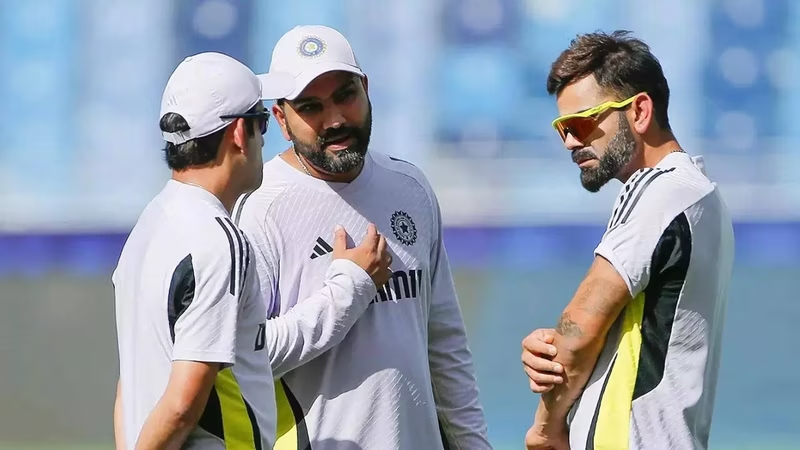
Forget retirement rumors—Virat Kohli and Rohit Sharma aren’t bowing out quietly. Instead, they’re huddled in a high-stakes war room with new head coach Gautam Gambhir, laser-focused on one last mission: winning the 2027 World Cup.
On the eve of India’s second ODI against New Zealand, batting coach Sitanshu Kotak dropped a bombshell: “They definitely make plans. Now that they’re playing only one format, they want India to win everywhere when they are there.”
This isn’t just casual banter. It’s a strategic declaration from two of cricket’s greatest icons who’ve deliberately narrowed their focus to white-ball cricket—and specifically, the 50-over pinnacle event in South Africa. With Test cricket behind them, Kohli and Sharma are channeling every ounce of experience, influence, and ambition into ensuring their legacy ends not with a whimper, but with World Cup glory.
Table of Contents
- Why the 2027 World Cup Matters So Much
- The One-Format Strategy: A Calculated Bet
- Gambhir, Kohli & Sharma: The New Leadership Triangle
- Can They Last Until 2027? The Age Challenge
- What This Means for India’s Next Generation
- Conclusion: The Final Chapter Begins
- Sources
Why the 2027 World Cup Matters So Much
For Kohli and Sharma, the 2023 ODI World Cup final loss on home soil was a gut punch. Both played pivotal roles in getting India to the final, yet the ultimate prize eluded them. Now, with time running out, the 2027 World Cup represents more than just another tournament—it’s their final shot at redemption in the format where they’ve dominated for over a decade.
Winning in South Africa would not only complete their trophy cabinets but also cement their status as all-time greats who delivered when it mattered most. As former captain Sourav Ganguly once said, “World Cups define legacies in Indian cricket.” And Kohli and Sharma know it.
The One-Format Strategy: A Calculated Bet
By stepping away from Test cricket after the 2024–25 Border-Gavaskar Trophy, both players made a bold, pragmatic choice. No longer burdened by red-ball demands, they can now:
- Optimize training for ODI-specific skills (power-hitting, death-over management, fielding intensity).
- Manage workload meticulously to avoid burnout before major ICC events.
- Mentor young batters like Yashasvi Jaiswal and Ruturaj Gaikwad in real-time during bilateral series.
This isn’t retirement—it’s specialization. And it’s a masterstroke if their bodies hold up.
Gambhir, Kohli & Sharma: The New Leadership Triangle
Gautam Gambhir’s appointment as head coach marked a seismic shift. Known for his aggressive mindset and no-nonsense attitude, he shares a generational bond with Kohli and Sharma—having played alongside them during India’s 2011 World Cup triumph.
Kotak’s comment confirms this trio is now driving India’s ODI vision. Unlike previous setups where coaches and senior players operated in silos, this collaborative model—where veterans actively shape strategy—could be the key to unlocking consistent success in high-pressure tournaments. As ESPNcricinfo notes, Gambhir’s emphasis on “ruthless consistency” aligns perfectly with Kohli and Sharma’s competitive DNA .
Can They Last Until 2027? The Age Challenge
Let’s be real: by 2027, Rohit Sharma will be 40, and Virat Kohli will be 38. History shows few cricketers maintain elite ODI form past 37 (Sachin Tendulkar being a rare exception). Yet both have defied norms before.
Kohli’s 2023 World Cup campaign—765 runs at an average of 95.62—proved age hasn’t dulled his hunger . Sharma, despite recent dips, remains one of the most explosive openers in the game. Their fitness regimes are legendary, and their mental drive is unmatched. But biology is the ultimate opponent—and it’s a race against time.
What This Means for India’s Next Generation
Far from blocking youth, Kohli and Sharma’s extended presence could accelerate India’s transition. Imagine Shubman Gill learning how to chase 300+ targets from Kohli, or Jaiswal studying Sharma’s trigger movements before a World Cup semi-final.
Their involvement ensures stability during a crucial rebuild phase. While Hardik Pandya leads the T20 side, the ODI unit gets two living legends as on-field mentors—bridging the gap between eras without a sudden leadership vacuum. As BCCI’s recent roadmap suggests, this dual-track approach is intentional .
Conclusion: The Final Chapter Begins
The revelation from Sitanshu Kotak isn’t just news—it’s a mission statement. Virat Kohli and Rohit Sharma, backed by Gautam Gambhir, are all-in on the 2027 World Cup. They’re not clinging to the past; they’re engineering a finale worthy of their careers.
For fans, it means two more years of witnessing greatness with purpose. For Indian cricket, it’s a high-reward gamble that could end in historic triumph—or mark the graceful sunset of an era. Either way, the road to South Africa just got a lot more compelling.
Stay updated on team developments with our [INTERNAL_LINK:india-odi-squad-analysis]. For official ICC tournament timelines, visit the ICC website.
Sources
- Times of India: Original Article
- ESPNcricinfo on Gambhir’s coaching philosophy: https://www.espncricinfo.com/
- ICC Men’s Cricket World Cup 2023 Stats: https://www.icc-cricket.com/
- BCCI Long-Term Player Development Reports (public summaries)