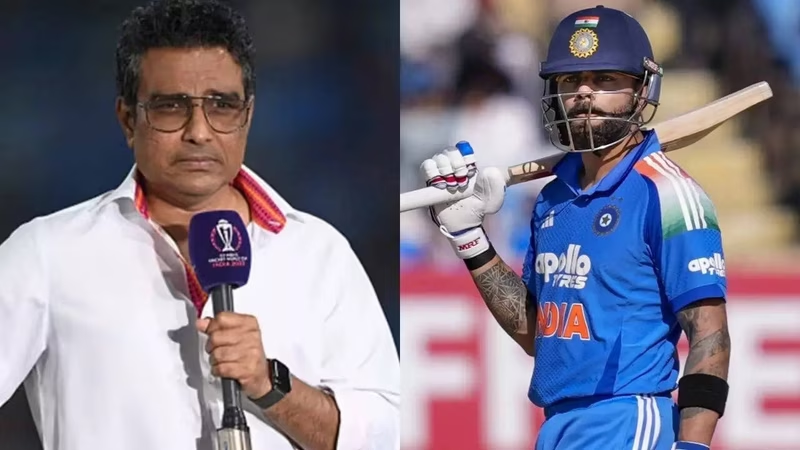
A fiery debate has erupted in the Indian cricketing world after veteran commentator Sanjay Manjrekar claimed that Virat Kohli’s decision to continue playing ODIs—while stepping back from Tests and T20Is—was a strategic move to pick the “easiest format” to score runs. The remark didn’t just raise eyebrows; it sparked outright fury from former India star Harbhajan Singh, who slammed the comment as not only factually wrong but deeply disrespectful to both Kohli and the sport itself. In an era where every run is hard-fought, the idea that Virat Kohli ODI runs come easy is a notion that deserves a closer, more honest look.
Table of Contents
- The Controversial Remark: Sanjay Manjrekar’s Claim
- Harbhajan Singh’s Fiery Defense of Kohli
- Is Scoring Runs in ODIs Really Easy?
- Kohli’s ODI Record: A Legacy of Excellence
- Why This Debate Matters for Cricket
- Conclusion
- Sources
The Controversial Remark: Sanjay Manjrekar’s Claim
The controversy began when Sanjay Manjrekar, known for his often provocative takes, suggested on air that Virat Kohli’s choice to remain active in the 50-over format was a calculated one. He implied that ODIs present a more forgiving environment for batters compared to the relentless pressure of Test cricket or the high-stakes volatility of T20Is . This comment came hot on the heels of Kohli’s masterful 93 against New Zealand—a knock that showcased his trademark composure and timing under pressure . To many, Manjrekar’s take felt like a dismissal of the skill, temperament, and consistency required to excel in the ODI arena, especially at the highest level.
Harbhajan Singh’s Fiery Defense of Kohli
Harbhajan Singh, a World Cup-winning legend with over 400 international wickets, was quick to push back. In a passionate social media post, he stated, “Scoring runs is never easy in any format… Virat Kohli is a match-winner in any format he plays.” He went on to emphasize that Kohli’s ability to chase down targets and anchor the innings in high-pressure situations is what makes him invaluable to the Indian team . Harbhajan’s defense wasn’t just about loyalty; it was a statement of respect for the immense difficulty of international batting, regardless of the format. He called Manjrekar’s comments “ill-informed” and a disservice to the game’s complexities.
Is Scoring Runs in ODIs Really Easy?
To suggest that the ODI format is the “easy” path is to fundamentally misunderstand modern limited-overs cricket. Today’s ODIs are a high-octane blend of strategy, power-hitting, and nerveless execution. Consider these challenges:
- Fielding Restrictions: While the first 10 overs offer some protection, batters must still face the new ball from world-class fast bowlers in swinging conditions.
- Middle-Overs Minefield: The middle overs (11-40) are dominated by spinners and clever seamers on dry pitches, demanding exceptional shot selection and patience.
- Death Overs Pressure: Finishing an innings requires clearing the boundary against yorkers and slower balls at a time when the scoreboard pressure is immense.
- Chasing Under Lights: Modern ODIs are often played as day-night games, adding another layer of complexity with changing light and dew affecting the ball.
Far from being easy, the ODI format demands a unique and complete set of skills that few players in history have mastered as consistently as Virat Kohli.
Kohli’s ODI Record: A Legacy of Excellence
Let’s let the numbers speak for themselves. Virat Kohli’s ODI career is nothing short of legendary:
- Over 13,800 runs in ODIs, with an average hovering around 57 .
- A record 50 centuries in the format, the most by any player in history.
- He holds the record for the most runs in a single World Cup edition (673 in 2019).
- His strike rate in successful chases is significantly higher than his overall rate, proving his ability to accelerate when the team needs it most.
This isn’t the resume of someone taking the “easy” route. It’s the work of a generational talent who has redefined batting in the 50-over game. His recent 93 against a top-tier New Zealand attack is just the latest example of his enduring class .
Why This Debate Matters for Cricket
This isn’t just about two pundits clashing. It’s about how we value different formats and the athletes who excel in them. Dismissing any international format as “easy” undermines the years of dedication, training, and mental fortitude required to succeed at the highest level. It also risks creating a false hierarchy that can alienate fans and players alike. As cricket continues to evolve with multiple formats coexisting, it’s crucial to appreciate the unique demands and brilliance each one showcases. [INTERNAL_LINK:evolution-of-odi-cricket] provides a deeper look into how the 50-over game has transformed into the strategic powerhouse it is today.
Conclusion
Sanjay Manjrekar’s offhand remark about Virat Kohli ODI runs being “easy” has opened a much-needed conversation about respect, expertise, and the true nature of the sport. Harbhajan Singh’s robust defense serves as a powerful reminder that greatness in cricket, in any form, is never accidental or effortless. Kohli’s continued dominance in ODIs is a testament to his skill, adaptability, and unwavering competitive spirit—not a sign of taking the path of least resistance. As fans, our job is to celebrate that excellence, not diminish it with lazy generalizations.